In Vietnamese by Mai Thảo
Translator: Nguyễn Thị Phương Trâm
- The boat on Sông Hồng – Chuyến tàu trên sông Hồng
- The moon in my childhood – Vầng trăng thơ ấu
- Okay, one hand only – Chấp một tay
- Father and offspring – Người cha và người con
- Turning ten – Lên mười
- The old professor – Người thầy học cũ
- The madman at the bottom of the slope on Tam Đảo – Người điên dưới chân sườn Tam Đảo
- Photographs of Miss Thời – Những tấm hình của chị Thời
- The first stars – Những vì sao thứ nhất
- dirt – cục đất
- unnecessary – thừa
- awareness – ý thức
- way above humanity – trên loài người cách biệt
- bough – cành
- not a sound – không tiếng
- I can see myself in the shrines – ta thấy hình ta những miếu đề
- where I live now – nơi ta đang ở
- almost a decade – năm thứ mười
- December – tháng chạp
- signal – tín hiệu
- the guy who writes for money – thằng viết mướn
- since the dark ages you have been delusional – em đã hoang đường từ cổ thoại
- tripping – chuyến
- new year’s eve – trừ tịch
- one spare – lẻ một
- sometimes – có lúc
- Doãn Quốc Sỹ’s Reed Forest – rừng Doãn Quốc Sỹ
- waiting for a friend – đợi bạn
- the bush at first light – cỏ sớm
- the two bushes – hai cỏ
- writing again – viết văn trở lại
- happy birthday – mừng tuổi
- the end of the year – cuối năm
- disposition – tinh tướng
- nine gates – chín cửa
- discerning the soil – nghe đất
- the past – quá khứ
- searching for the sea – tìm biển
- alone – một mình
- Do – công việc
- accepting the illness – dỗ bệnh
- sixty one – sáu mốt
- on the bus – trên bus
- home to Virginia – về Virginia
- yellow flowers in San Jose Valley – thung lũng hoa vàng San Jose
- park
- Santa Ana Winds
- waiting a thousand year – chờ đợi nghìn năm
- facing a monument – trước tượng
- home – quê nhà
- each day is a – mỗi ngày một
- the call to wake up – gọi thức
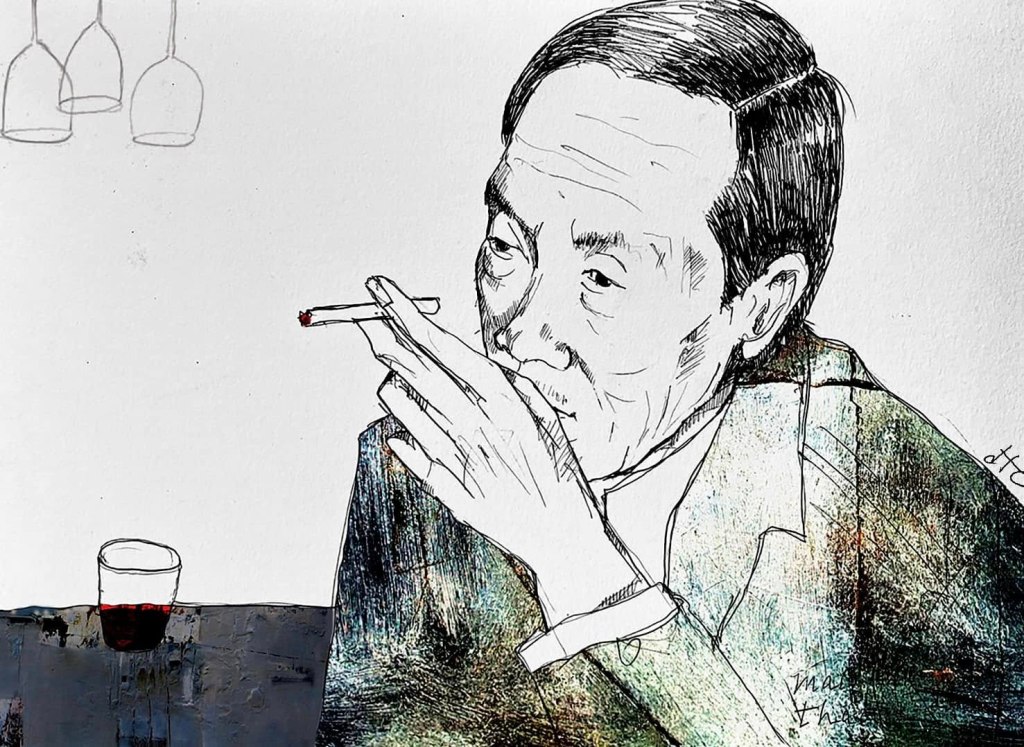
Mai Thảo [1927-1998] real name is Nguyen Dang Quy, another pen name: Nguyen Dang, he was born on June 8, 1927 in Con market, Quan Phuong Ha commune, Hai Hau district, Nam Dinh province (originally from Tho Khoi village, Gia Lam district, Bac Ninh province, the same hometown and related to the painter Le Thi Luu), his father was a merchant and wealthy landowner. Mai Thao absorbed his mother’s love of literature from Bac Ninh. As a child, he studied at a village school, went to Nam Dinh high school and then Hanoi (studied at Do Huu Vi school, later Chu Van An). In 1945, he followed the school to Hung Yen. When the war broke out in 1946, the family evacuated from Hanoi to Con market, in the “House of the Salt Water Region”, from then on Mai Thao left home to Thanh Hoa to join the resistance, wrote for newspapers, participated in art troupes traveling everywhere from Lien Khu Ba, Lien Khu Tu to the Viet Bac resistance zone. This period left a deep mark on his literature. In 1951, Mai Thao abandoned the resistance and went into the city to do business. In 1954, he migrated to the South. He wrote short stories for the newspapers Dan Chu, Lua Viet, and Nguoi Viet. He was the editor-in-chief of the newspapers Sang Tao (1956), Nghe Thuat (1965), and from 1974, he oversaw the Van newspaper. He participated in the literature and art programs of radio stations in Saigon from 1960 to 1975. On December 4, 1977, Mai Thao crossed the sea. After 7 days and nights at sea, the boat arrived at Pulau Besar, Malaysia. In early 1978, he was sponsored by his brother to go to the United States. Shortly after, he collaborated with Thanh Nam’s Dat Moi newspaper and several other overseas newspapers. In July 1982, he republished the Van magazine, and was editor-in-chief until 1996, when due to health problems, he handed it over to Nguyen Xuan Hoang; Two years later he died in Santa Ana, California on January 10, 1998.
Nguyễn Thị Phương Trâm, the blogger, poet, and translator, was born in 1971 in Phu Nhuan, Saigon, Vietnam. The pharmacist currently lives and works in Western Sydney, Australia.


 Nguyễn Thị Phương Trâm
Leave a comment