Thơ Lê Vĩnh Tài
Translation by Nguyễn Thị Phương Trâm
A poet drinking at a cemetery. Surrounded by holes. Ah, no. They are graves.
Because he is a poet all he can see in front of him are words. According to the lecturers in the classes that taught him how to write poetry, he knew that words are the bullets. At the start he was rather surprised, but after a while he discovered that each poet has a gun, some use machine guns to collect their awards. Guns are used to shoot people, and people whether they know them or not, one word and these poet, they will shoot on command.
A face pops out of one of the graves. Just shoot according to the lecture. Words like bullets. Bloody.
Some crying: they’re terrible. How are we suppose to compile the anthology after that? Delete these poems?
But some found they are rather delightful, since he sees that they are smiling. He finds it encouraging: The Creator had made us this way. We are creators, we are making history. Full of life is the arts.
But it is only later that he finds out that the Creator is dead, ah no, the Creator do not exist.
Even after finding out that the Creator do not exist, but because of the lectures he heard, he would still sit there night after night waiting for something to bite. Spit the bullets.
He is always alert and ready, and words are cheap. He’s full of words. Each time he sees a head pops out of a hole he would shoot.
And always it is a person he knows very well. And sometimes now and then they would let him tag along for a free drink.
Stepping on the podium to accept his award, he says he only has words, all the constant shooting has nothing to do with him, someone somewhere where there were a lot of trouble gave him a gun. He is evasive when it comes to whoever it is that made the guns, because he didn’t want to reveal whoever it is that is always giving orders. More than often, they might be the one acting in the name of history.
And always making it seems as though they had nothing to do with it.
NGƯỜI KHÔNG LIÊN QUAN
Một nhà thơ ngồi uống rượu ở nghĩa trang. Xung quanh là những cái hố. À, không. Chúng là những cái huyệt.
Vì là nhà thơ nên trước mặt hắn chỉ toàn là những con chữ. Theo như bài giảng của các thầy trong lớp dạy làm thơ, hắn biết các con chữ là những viên đạn. Lúc đầu hắn hơi ngạc nhiên, sau này hắn mới biết là nhà thơ nào cũng có súng, có ông còn xài cả súng máy để dễ bề lãnh thưởng. Súng thì chỉ để dùng bắn vào con người, mà con người thì dù chẳng quen biết gì, cứ có lệnh là các ông nhà thơ sẵn sàng bắn.
Từ một cái huyệt hắn chợt thấy ló lên một khuôn mặt. Theo bài giảng của thầy thì hắn bắn thôi. Chữ bay như đạn. Đầy máu.
Có người rên rỉ: khủng khiếp quá. Sau này chúng ta làm tuyển tập như thế nào? Xóa những bài thơ này à?
Nhưng cũng có người thấy thích, vì hắn thấy có đứa mỉm cười. Nó động viên hắn: Thượng đế đã khiến chúng ta trở nên như thế. Chúng ta là những người sáng tạo, chúng ta đang làm nên lịch sử. Nghệ thuật luôn giàu sức sống như vậy.
Nhưng sau này hắn mới biết là Thượng đế đã chết, à không, Thượng đế không tồn tại.
Dù biết Thượng đế không tồn tại, nhưng vì theo bài giảng đã được học, hắn vẫn cứ ngồi hàng đêm để chờ con mồi. Nhả đạn.
Lúc nào hắn cũng sẵn sàng, với lại chữ cũng rẻ. Hắn đầy chữ. Mỗi khi nhìn thấy một gương mặt người ló ra khỏi hố là hắn bắn.
Và luôn luôn đấy là một người mà hắn cực kỳ quen biết. Có khi hắn còn đi theo nhậu ké.
Khi lên lãnh thưởng, hắn nói mình chỉ có chữ, việc bắn liên tục vậy là do có người nào đó ở nơi nào đó nhiều mưa gió đã đưa hắn cây súng. Hắn quanh co mãi về người làm ra súng, vì hắn muốn giấu mọi người về một kẻ luôn luôn ra lệnh. Nhiều khi kẻ đó còn nhân danh lịch sử.
Và luôn luôn làm như mình là kẻ không liên quan.
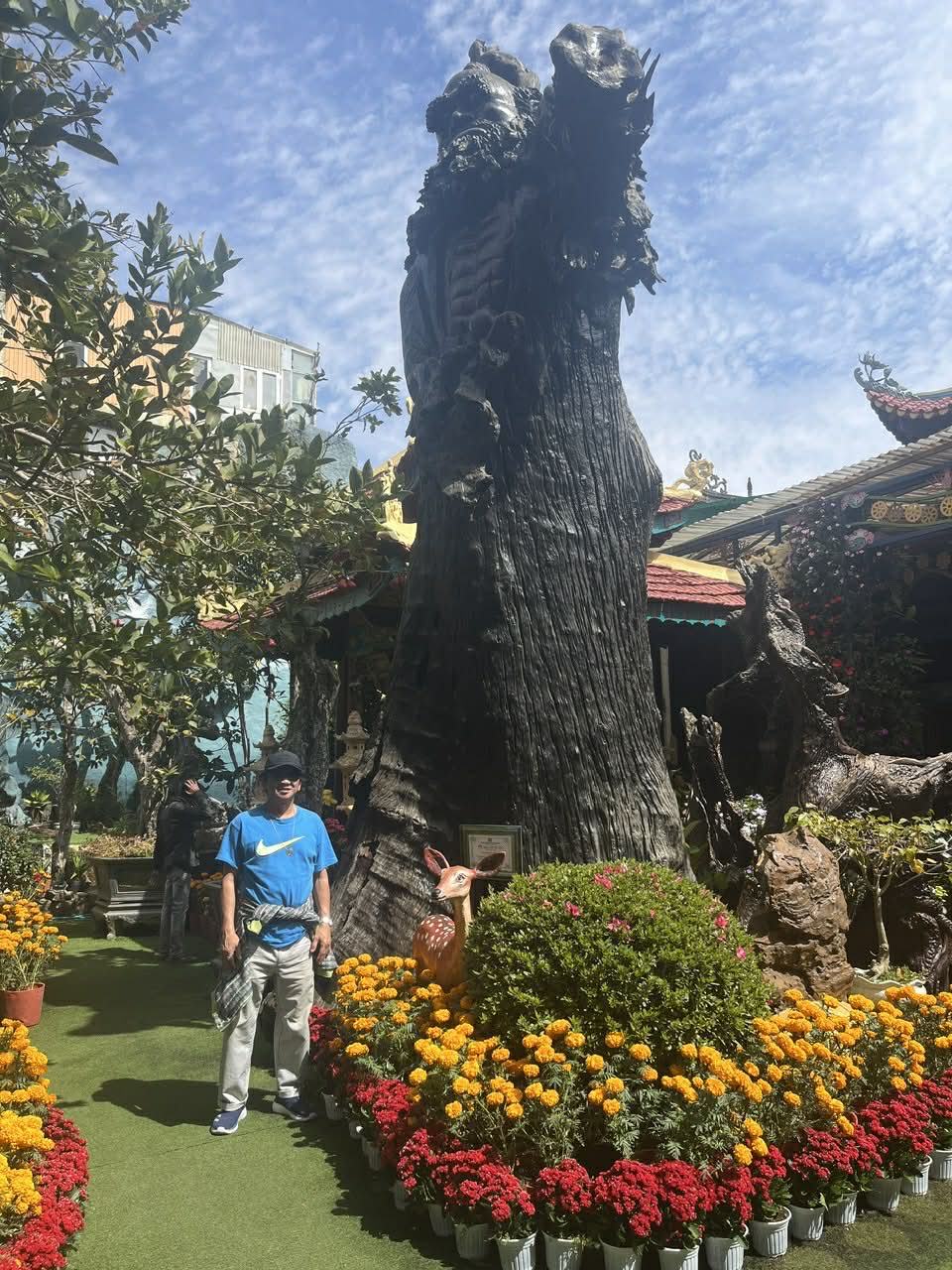
Lê Vĩnh Tài, the poet and translator born in 1966 in Buon Ma Thuot, Daklak, Vietnam. The retired doctor is still a resident of the Western Highlands and a businessman in Buon Ma Thuot.
Nguyễn Thị Phương Trâm, the blogger, poet, and translator, was born in 1971 in Phu Nhuan, Saigon, Vietnam. The pharmacist currently lives and works in Western Sydney, Australia.
 Nguyễn Thị Phương Trâm
Leave a comment