CUỐI NGÀY, NHÌN RA, TỪ MỘT NGÔI ĐỀN BÊN BỜ SÔNG | Jia Dao

賈島 Jia Dao (779–843)

Nước
phủ kín chân trời dưới những đám mây;
sương mù trên núi
làm mờ ngôi làng phía xa.

Khi trở về tổ, những chú chim
để lại dấu vết trên cát;
đi trên sông, một chiếc thuyền
không để lại dấu vết trên sóng.

Tôi ngắm nhìn dòng nước
và cảm nhận sự dịu nhẹ của nó;
ngắm nhìn những ngọn núi
cho đến khi tinh thần mệt mỏi.

Mặc dù vẫn chưa muốn
dừng suy ngẫm,
hoàng hôn đã buông xuống
tôi phải cưỡi ngựa trở về.

LATE IN THE DAY, GAZING OUT
FROM A RIVER PAVILION


Chia Tao (779–843)Translations by Mike O’ConnorIn: The Clouds Should Know Me By Now: Buddhist Poet Monks of ChinaWisdom Publications, 1998, pp. 11-42.

Water to the horizon
veils the base of clouds;
mountain mist
blurs the far village.

Returning to nest, birds
make tracks in the sand;
passing on the river, a boat
leaves no trace on the waves.

I gaze at the water
and know its gentle nature;
watch the mountains
until my spirit tires.

Though not yet ready
to leave off musing,
dusk falls,
and I return by horse.


Jia Dao [779-843] CHIA TAO WAS A BUDDHIST POET of the Middle T’ang dynasty. Born into an impoverished family near today’s Beijing, he became a Ch’an (Zen) monk early in his youth, with the religious name Wupen. While scant biographical detail of his monastic days exists, his official biography does note that upon arriving at the Eastern Capital, Lo-yang, Chia Tao wrote a poem protesting a curfew forbidding monks to go out after noon. The poem caught the sympathetic eye of the eminent Confucian poet Han Yu (768–824) and led to the latter becoming Chia Tao’s poetry mentor.

Lê Vĩnh Tài, the poet and translator born in 1966 in Buon Ma Thuot, Daklak, Vietnam. The retired doctor is still a resident of the Western Highlands and a businessman in Buon Ma Thuot.

KÝ ỨC VỀ SỰ RA ĐI CỦA MỘT NGƯỜI BẠN TỪ YEH, NGÀY CUỐI CÙNG CỦA KỲ TRĂNG THỨ HAI | Jia Dao

賈島 Jia Dao (779–843)

Giữa những cây liễu nở hoa,
chúng ta kiềm ngựa lại;
khi chia tay, chúng ta tự do
uống tất cả những thứ rượu mình muốn.

Nhưng gió mùa xuân
vẫn từ từ thổi về phương bắc;
mây và ngỗng trời
không bay về phương nam.

Ngày mai
là ngày đầu tiên – tháng thứ ba của năm
rồi!

Chạm roi vào con ngựa gầy và đi
vào màu sắc của hoàng hôn;
sương mù đang bốc lên
trên những đỉnh núi.

MEMENTO ON THE DEPARTURE
OF A FRIEND FROM YEH,
LAST DAY OF THE SECOND MOON


Translations by Mike O’Connor In: The Clouds Should Know Me By Now: Buddhist Poet Monks of China Wisdom Publications, 1998, pp. 11-42.

In flowering willows,
we rein in our horses;
at parting, we are free
to drink all the wine we desire.

But the winds of spring
sweep slowly north;
clouds and wild geese
do not fly south.

Tomorrow
dawns the first—
already the third
month of the year!

Touch whip to lean horse and go
into the colors of dusk;
mist is rising
on far peaks.


Jia Dao [779-843] CHIA TAO WAS A BUDDHIST POET of the Middle T’ang dynasty. Born into an impoverished family near today’s Beijing, he became a Ch’an (Zen) monk early in his youth, with the religious name Wupen. While scant biographical detail of his monastic days exists, his official biography does note that upon arriving at the Eastern Capital, Lo-yang, Chia Tao wrote a poem protesting a curfew forbidding monks to go out after noon. The poem caught the sympathetic eye of the eminent Confucian poet Han Yu (768–824) and led to the latter becoming Chia Tao’s poetry mentor.

Lê Vĩnh Tài, the poet and translator born in 1966 in Buon Ma Thuot, Daklak, Vietnam. The retired doctor is still a resident of the Western Highlands and a businessman in Buon Ma Thuot.

ĐÊM Ở MỘT NGÔI CHÙA TRÊN NÚI | Jia Dao

賈島 Jia Dao (779–843)

Những đỉnh núi cao chọc thủng
bầu trời lạnh lẽo;
quang cảnh
mà tu viện hướng tới.

Sao băng bay
vào những tán cây thưa thớt;
mặt trăng di chuyển theo một hướng,
mây theo hướng khác.

Rất ít người đến
đỉnh núi này;
không có sếu bay đến tụ tập
trên những cây thông vút cao.

Một nhà sư Phật giáo,
tám mươi tuổi,
chưa bao giờ nghe nói
về các vấn đề thế gian.

OVERNIGHT AT A BUDDHIST
MOUNTAIN TEMPLE


Translations by Mike O’Connor In: The Clouds Should Know Me By Now: Buddhist Poet Monks of China Wisdom Publications, 1998, pp. 11-42.

Massed peaks pierce
the cold-colored sky;
a view
the monastery faces.

Shooting stars pass
into sparse-branched trees;
the moon travels one way,
clouds the other.

Few people come
to this mountaintop;
cranes do not flock
in the tall pines.

One Buddhist monk,
eighty years old,
has never heard
of the world’s affairs.


Jia Dao [779-843] CHIA TAO WAS A BUDDHIST POET of the Middle T’ang dynasty. Born into an impoverished family near today’s Beijing, he became a Ch’an (Zen) monk early in his youth, with the religious name Wupen. While scant biographical detail of his monastic days exists, his official biography does note that upon arriving at the Eastern Capital, Lo-yang, Chia Tao wrote a poem protesting a curfew forbidding monks to go out after noon. The poem caught the sympathetic eye of the eminent Confucian poet Han Yu (768–824) and led to the latter becoming Chia Tao’s poetry mentor.

Lê Vĩnh Tài, the poet and translator born in 1966 in Buon Ma Thuot, Daklak, Vietnam. The retired doctor is still a resident of the Western Highlands and a businessman in Buon Ma Thuot.
NGHĨ VỀ MỘT HỌC GIẢ ĐÃ NGHỈ HƯU | Jia Dao

賈島 Jia Dao (779–843)

Từ khi bạn lên đường đến xứ Min,
mặt trăng đã tròn rồi lại tròn thêm một lần nữa.

Gió thu nổi lên trên sông Vị,
lá rụng phủ đầy Trường An.

Tôi nhớ lại buổi tối hôm đó,
đột nhiên sấm sét, rồi mưa lạnh.

Thật lạ là mái chèo gỗ của bạn vẫn chưa về;
tin tức về bạn chỉ kết thúc ở những đám mây trên đại dương.

MENG JUNG, GAINFULLY UNEMPLOYED


Translations by Mike O’ConnorIn: The Clouds Should Know Me By Now: Buddhist Poet Monks of ChinaWisdom Publications, 1998, pp. 11-42.

Your residence, Meng,
overlooks the river;
but you do not eat
the fish in it.

Your robe is common,
sewn of coarse cloth;
silk books alone
fill your bamboo shelves.

The solitary bird
loves the wood;
your heart also
not of the world.

You plan to row away
in a lone boat, and
build another hut—
in which mountains?


Jia Dao [779-843] CHIA TAO WAS A BUDDHIST POET of the Middle T’ang dynasty. Born into an impoverished family near today’s Beijing, he became a Ch’an (Zen) monk early in his youth, with the religious name Wupen. While scant biographical detail of his monastic days exists, his official biography does note that upon arriving at the Eastern Capital, Lo-yang, Chia Tao wrote a poem protesting a curfew forbidding monks to go out after noon. The poem caught the sympathetic eye of the eminent Confucian poet Han Yu (768–824) and led to the latter becoming Chia Tao’s poetry mentor.

Lê Vĩnh Tài, the poet and translator born in 1966 in Buon Ma Thuot, Daklak, Vietnam. The retired doctor is still a resident of the Western Highlands and a businessman in Buon Ma Thuot.

ĐÊM ĐÔNG TẠM BIỆT | Jia Dao

賈島 Jia Dao (779–843)

Khi trời vừa sáng, bạn hãy
nhanh chóng đi qua cây cầu của ngôi làng;

Hoa mận rơi
trên dòng suối và tuyết chưa tan.

Vào những ngày ngắn và lạnh,
thật buồn khi thấy một vị khách rời đi;

Dãy núi Ch’u vô tận,
còn đường thì xa xôi.

WINTER NIGHT FAREWELL


Translations by Mike O’Connor In: The Clouds Should Know Me By Now: Buddhist Poet Monks of China Wisdom Publications, 1998, pp. 11-42.

At first light, you ride
swiftly over the village bridge;

Plum blossoms fall
on the stream and unmelted snow.

With the days short and the weather cold,
it’s sad to see a guest depart;

The Ch’u Mountains are boundless,
and the road, remote.


Jia Dao [779-843] CHIA TAO WAS A BUDDHIST POET of the Middle T’ang dynasty. Born into an impoverished family near today’s Beijing, he became a Ch’an (Zen) monk early in his youth, with the religious name Wupen. While scant biographical detail of his monastic days exists, his official biography does note that upon arriving at the Eastern Capital, Lo-yang, Chia Tao wrote a poem protesting a curfew forbidding monks to go out after noon. The poem caught the sympathetic eye of the eminent Confucian poet Han Yu (768–824) and led to the latter becoming Chia Tao’s poetry mentor.

Lê Vĩnh Tài, the poet and translator born in 1966 in Buon Ma Thuot, Daklak, Vietnam. The retired doctor is still a resident of the Western Highlands and a businessman in Buon Ma Thuot.

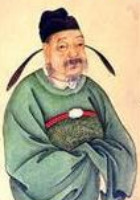
JIA DAO

賈島 Jia Dao (779–843)


Jia Dao [779-843] CHIA TAO WAS A BUDDHIST POET of the Middle T’ang dynasty. Born into an impoverished family near today’s Beijing, he became a Ch’an (Zen) monk early in his youth, with the religious name Wupen. While scant biographical detail of his monastic days exists, his official biography does note that upon arriving at the Eastern Capital, Lo-yang, Chia Tao wrote a poem protesting a curfew forbidding monks to go out after noon. The poem caught the sympathetic eye of the eminent Confucian poet Han Yu (768–824) and led to the latter becoming Chia Tao’s poetry mentor.

Lê Vĩnh Tài, the poet and translator born in 1966 in Buon Ma Thuot, Daklak, Vietnam. The retired doctor is still a resident of the Western Highlands and a businessman in Buon Ma Thuot.