only the sunrise was a diluted orange | Lê Vĩnh Tài

Phu Quoc, Vietnam. Photography: Nguyễn Thị Phương Trâm

A poem in Vietnamese by Lê Vĩnh Tài
Translator: Nguyễn Thị Phương Trâm

all the poems were in a sky blue
only the winning poem was in red

all the moons were blue
only the sunrise was a diluted orange

all the leaves were bending over smiling
people were the only ones looking up crying

the day Mother rode the golden wind
headed for the sky turned into a silver star

all the poems were singing
in harmony, the blues

April 2021

tất cả những bài thơ đều màu xanh da trời
chỉ bài thơ được giải là màu đỏ

tất cả mặt trăng cũng đều màu xanh
chỉ có bình minh màu cam pha loãng

tất cả lá cây đều cúi xuống mỉm cười
chỉ con người hay nhìn lên và khóc

ngày Mẹ cưỡi cơn gió màu vàng
bay lên trời thành ngôi sao màu bạc

tất cả bài thơ đều hát
chỉ một màu xanh


Lê Vĩnh Tài, the poet and translator born in 1966 in Buon Ma Thuot, Daklak, Vietnam. The retired doctor is still a resident of the Western Highlands and a businessman in Buon Ma Thuot.

Nguyễn Thị Phương Trâm, the blogger, poet, and translator, was born in 1971 in Phu Nhuan, Saigon, Vietnam. The pharmacist currently lives and works in Western Sydney, Australia.

reading Vietnamese poetry | Lê Vĩnh Tài

Mai. Photography: Nguyễn Thị Phương Trâm

A poem in Vietnamese by Lê Vĩnh Tài
Translator: Nguyễn Thị Phương Trâm

reading Vietnamese poetry means
you’re a National treasure
the poets
and their dreams of worldly fame
they chase after those already tired
exhausted readers


products Made in Vietnam
are National treasures
you must be economical
not in some abnormal
possessed comical
ictus

as a National treasure
you can not
flex your muscle
and manipulate the mood
sell your words…
as easy as someone else’s
National treasure…

May 2019
_____

đọc thơ Việt là yêu
nước, nhưng các nhà
thơ
lại cứ mơ
làm nhà thơ quốc tế
bạn đọc chạy theo
mệt quá thể


dùng hàng Việt là yêu
nước, nhưng anh phải kinh
bang tế thế
chứ không phải là cơn lên
đồng như
thế

lòng ái quốc
anh không thể
lên gân
hay lạm dụng cảm xúc tập thể
để bán hàng hơi dễ
bằng sự yêu
nước
của người khác


Lê Vĩnh Tài, the poet and translator born in 1966 in Buon Ma Thuot, Daklak, Vietnam. The retired doctor is still a resident of the Western Highlands and a businessman in Buon Ma Thuot.

Nguyễn Thị Phương Trâm, the blogger, poet, and translator, was born in 1971 in Phu Nhuan, Saigon, Vietnam. The pharmacist currently lives and works in Western Sydney, Australia.

the finite and the infinite | Lê Vĩnh Tài

Nhà Thờ Đá, Ninh Bình, Việt Nam. Photography by Nguyễn Thị Phương Trâm

A poem in Vietnamese by Lê Vĩnh Tài
Translator: Nguyễn Thị Phương Trâm

the finite and
the infinite

now and
the future

forever changing

and still
never ceasing

demanding
challenging each one of us

a string of silence

fluid and
enduring

.

today, I’m fresh and new
I’m around somewhere
in the dark

only from these hands
my hands
my voice
could there be the answers

I know something is not right
when I find your voice ahead of mine
I want your hand when my fumbling hand fails
I’m living my life thanks to you

one hand and one voice
the answer
echoing in the dark

and my reply was
I’m all I need

February 2023

hữu hạn và
vô hạn

hiện tại và
tương lai

mãi mãi thay đổi

nhưng vẫn
không ngừng

đòi hỏi và
đòi lại từ chúng ta

một chuỗi
những tĩnh lặng

trôi chảy và
cố định

.

hôm nay tôi tươi mới
tôi xung quanh
trong bóng tối

chỉ có đôi tay của tôi
chỉ có giọng nói của tôi
trả lời các câu hỏi

tôi biết tôi không ổn khi tìm giọng nói của bạn
trước cả giọng nói của tôi
tôi muốn bàn tay bạn khi bàn tay vụng về của tôi thất bại
tôi đang sống cuộc sống của mình nhờ bạn

một bàn tay và một giọng nói
vang lên trong bóng tối
là câu trả lời

và tôi đã trả lời
tôi là tất cả những gì tôi cần


Lê Vĩnh Tài, the poet and translator born in 1966 in Buon Ma Thuot, Daklak, Vietnam. The retired doctor is still a resident of the Western Highlands and a businessman in Buon Ma Thuot.

Nguyễn Thị Phương Trâm, the blogger, poet, and translator, was born in 1971 in Phu Nhuan, Saigon, Vietnam. The pharmacist currently lives and works in Western Sydney, Australia.

still a dollar in my pocket | Lê Vĩnh Tài

Nhà thờ đá, Ninh Bình, Việt Nam. by Nguyễn Thị Phương Trâm

A short story in Vietnamese by Lê Vĩnh Tài
Translator: Nguyễn Thị Phương Trâm

Trying to recall all the colours, I managed to remember a few colours.

For instance, light has a green hue of the wind. Once sitting in my room (so it’s the past), the wind (so it’s the future) messed up my dark blue black hair? Or the wind (so it’s also the future) had turned it into a pile of green hay? Green hair, that’s the colour of dreams or the colour of a kind of bird?

I know this bird. In the past, when the green of peace had ended steeped in smokey grey, I heard the chatter of all the colours by my window: “We’re very fortunate. The red government will (so it’s the future) take care of our green feathers. Don’t worry too much, because there’s no one left to die. They will (so it’s the future) let all the prisoners go.”

So why is the future red? So then what is the colour of the past? And why is there death? Even after peace, a bird still needs to find a place of integrity, to apply for death, so it doesn’t have to go to prison or to be re-educated? Sometimes I see the wounded face of the bird. It must have tried to escape by sea. The boat was too small and too many people had tried to climb on; hence it sank (though there’s already the word had, but it’s the present). I want to witness how it will suffocate and die, anything like the gurgling of someone being hanged?

Once the bird said: “You have your bird. Don’t think that your bird is black. It’s enough that your bird is green because the city where you reside is peaceful, it has a garden.”

A garden? I know too well its colour, because at every dawn and sunset like any passer-by might see. The garden is the colour of melancholy. When the garden changes from sadness to red then instead of flowers people plant wild yam. The innocent children would walk past it, follow slower by the grown-ups. Since the grown-ups have other things on their mind like news and current affairs, the colours of splintering wood plank with ears, the tone of dried bamboo roofs and the voice the colour all choked up and gasping, their hands holding a bunch of old scrunched up stamps, the colour of sweat and tears.

And I saw her.

She lay in the garden,  hidden like a green bird, trying to hide in a place easiest to be discovered, to be seen.

She was young, and the hues of her hair were a little yellow, like the colour of rot, a light browning like the colour of a scabbing wound. Perhaps because her hair (so it’s the past) was coated in grime. I yearned for some distant rainfall for her hair to add romance when she’s curled up on the grass. After that, she would rise, shaded from the sun in a war helmet, walk by an old house in the garden, with a wall the colour of smoking flames. She walked away with a star on her helmet, her hand holding up a red aluminium tin can.

Because of her, now there were two of us. I was aware then that I still had a dollar in my pocket.

I refused to look into her aluminium tin, I was worried I might drop something in it, like maybe an echo of pity, and she (so it’s the future) will hate it.

I remember long ago; my mother took me to a magnificent city the colour of peace. So we walked from the past to the present, possibly to the colours of a rainbow or some other colour I can’t remember. But I still remember the man with a beard wearing an indigo shirt and a hat the colour of leaves. I remember the way he leaned forward, hands opened up ready to catch everything. Above the moustache were two eyes constantly searching rapidly in the blinking of an eye. In an unfilled body, he thanked my mother in a sombre voice. And his colour was cold like lead, the colour of a scimitar.

For the time being, there were no hats in the colour of leaves to throw the dollar in. Her red aluminium tin was not a hat.

I could still feel the dollar in my pocket, and she was sleeping, dead asleep, I didn’t know how to wake her. Perhaps she doesn’t want to look at a wall the colour of fire and smoke. Or, was I too late, the smoke had dissipated, and she was exhausted? I looked at her, made a promise to myself that if she wanted my help, I would help her, but the colour of silence or the shade of insincerity appeared, stopped me. I also knew that when you mix these two colours, the hue of her body will change from fear to violence, to cover up the shades of poverty.

Perhaps I’ll return to the garden tomorrow.

I thought if I see her, I’ll immediately drop a dollar in her red aluminium tin, ignoring the echo from her yellow hair. I will look into the aluminium tin like looking through a telescope, to look back at the old man with the beard, the way he bows begging in a style unlike her now squirming.

I made up my mind to wake her up, even if she was still dead asleep. Hence, I always keep the dollar in my pocket, looking for the garden, passing her old house the colour of smoke, but she’s no longer there.

Perhaps she’s looking for her child, the child hues of innocence who left to look for food because of hunger when she was busy worrying about changing colours, from green to red. She likes to savour and delve into the memory of the old man, elated and happy with the red colour of the wind of the meadows of those long days passed, even though it causes people to die a lush green, the colour of malaria.

Now I don’t know how to forget, don’t know how to remember, don’t know how to be sad. But I still look for her. I came across many gardens, many homes the colour of smoke because I know there are lots of gardens and there are lots of homes in this world. Smoke and fire have covered everything, but not all places were destroyed equally.

Some people say a King has seen her and rubbed clean all her hues so she may serve him. Besides the fresh green colour of the garden she was also the fresh blue colour of the sea, hence many men adored her, they woo her with loud praises: oh sea oh isles of boiling water oh, or oh the ocean in my heart, the ingratiating sweet words swaying her this way and that, they pull and they tug. As for me, I don’t believe there’s such a thing as a King in current times. If there is, this King won’t even own a dollar, and if the red tin does not have an echo of a coin then how could she agree? Hence I feel reassured by the idea of forever looking for her. I will stop when I see her, because I know I still have a dollar in my pocket.

In this story, she is not the country, hence, of course, that ignorant child is not the citizens of a nation, bombs the hues of smoke, and the dollar is not the colour of the debts to be repaid by future generations.

I’m still me, a tattered delusional poet, enthusiastic and busy with many issues in general, the question of her and me. As for the aluminium tin, daily I pretend I can not see it.

.

April 2019

*****

VẪN CÒN MỘT ĐỒNG XU TRONG TÚI

Tôi hay nhớ những màu mình từng nhìn thấy, một chút, dù chỉ một chút thôi.

Chẳng hạn, ánh sáng thường có màu xanh của gió. Có lần tôi đã ngồi trong phòng (thì quá khứ), gió sẽ (thì tương lai) tung bay làm mái tóc của tôi xanh biếc? Hay gió sẽ (cũng thì tương lai) biến chúng thành đám rơm màu xanh? Tóc màu xanh, đó là màu của sự mơ hồ, hay màu của một loài chim?

Tôi biết loài chim này. Ở thì quá khứ, khi màu xanh hoà bình đã kết thúc màu xám ám khói, tôi nghe được các màu sắc nói chuyện bên cửa sổ: “Chúng ta thật là may mắn. Chính phủ màu đỏ sẽ (thì tương lai) chăm sóc bộ lông màu xanh của chúng ta. Đừng lo lắng quá, vì không còn ai chết nữa. Người ta sẽ (thì tương lai) thả hết tù binh.”

Sao thì tương lai lại màu đỏ? Vậy thì quá khứ màu gì? Và tại sao lại chết? Chẳng lẽ đã hoà bình rồi chú chim cũng phải tìm một nơi nào đó, kín đáo làm đơn xin tự tử để không phải đi tù hay cải tạo? Đôi khi tôi muốn nhìn thấy khuôn mặt của chú chim khi bị thương. Chắc chú cố trốn thoát và bay ra biển. Thuyền nhỏ quá mà nhiều người leo lên nên đã bị chìm (dù có chữ đã, nhưng nó lại là thì hiện tại). Tôi muốn nhìn thấy chú đau đớn vì ngạt thở như thế nào, có giống như cú rướn lên của con người khi sắp bị treo cổ không?

Có lần chú chim nói: “Bạn cũng có riêng cho mình một con chim rồi cơ mà. Bạn đừng tưởng con chim của bạn màu đen. Con chim của bạn chỉ cần màu xanh là đủ, vì thành phố nơi bạn sống bây giờ rất thanh bình, nó có một khu vườn.”

Khu vườn? Tôi quá biết màu của nó, vì mỗi bình minh và mỗi hoàng hôn tôi vẫn cùng mọi người đi ngang qua đó. Khu vườn màu buồn thiu. Khi khu vườn đổi màu từ buồn thiu sang đỏ thì người ta chuyển từ trồng hoa sang trồng sắn. Trẻ em hồn nhiên đi qua, người lớn thì đi chậm hơn. Họ chăm chú trên trên các trang tin thời sự có màu của tấm bảng gỗ bị nứt với đôi tai có màu của mái che và giọng nói màu bị bóp nghẹt, tay họ nắm chặt mớ tem phiếu nát nhàu, màu mồ hôi nước mắt.

Và tôi đã nhìn thấy nàng.

Nàng nằm trong khu vườn, khuất lấp như cách chú chim màu xanh hay làm, đó là cố giấu mình ngay ở nơi dễ thấy nhất.

Nàng còn trẻ, màu tóc hơi vàng, nhưng màu vàng của tóc bị ố, hóa thành màu nâu nhạt như máu khô của vết thương. Có lẽ tóc nàng đã (thì quá khứ) bị bám quá nhiều bụi bẩn. Tôi ước gì có mưa sa trên tóc cho thêm lãng mạn khi nàng cuộn tròn trên thảm cỏ. Sau đó nàng ngồi dậy, đội chiếc mũ cối để che nắng, đi ngang qua ngôi nhà cũ trong khu vườn, với bức tường màu lửa khói. Nàng bước đi với ngôi sao trên mũ, và tay nàng cầm một cái ca nhôm màu đỏ, ngửa ra.

Có thêm nàng, nên bây giờ chúng tôi là hai người. Tôi vẫn biết mình còn một đồng xu trong túi.

Tôi không nhìn vào chiếc ca nhôm của nàng, sợ làm rơi một cái gì đó, nghe như tiếng vang, làm sự thương hại lộ ra, và nàng (thì tương lai) sẽ ghét.

Tôi nhớ ngày xưa, mẹ có lần đưa tôi lên thành phố màu bình yên và lộng lẫy. Chúng tôi đi từ thì quá khứ đến thì hiện tại, hình như để tô màu cầu vồng hay màu gì đó mà tôi đã quên. Nhưng tôi vẫn nhớ một người đàn ông để râu, mặc áo chàm với cái mũ màu lá. Nhớ cái cách ông ta ngửa tay ra và nghiêng người về phía trước để đón bắt mọi thứ. Phía trên chòm râu ấy là hai con mắt liếc nhanh như chớp. Ông ta cám ơn mẹ tôi với giọng nói nặng trĩu trong một cơ thể trống rỗng. Và màu của ông ta thì hơi lạnh như màu thép, màu mã tấu.

Bây giờ tôi không thấy chiếc mũ màu lá nào để ném đồng xu vào. Cái ca nhôm màu đỏ của nàng không phải là cái mũ.

Tôi vẫn cảm thấy mình có một đồng xu trong túi, và nàng thì đang ngủ, rất say, tôi không có cách nào để đánh thức nàng dậy. Có lẽ nàng không muốn nhìn bức tường màu lửa khói. Hay vì tôi đến khu vườn quá muộn, khói đã tan và nàng đã kiệt sức? Tôi ngắm nàng, tự hứa rằng nếu nàng muốn thì tôi sẽ giúp đỡ, nhưng màu im lặng hay màu giả vờ đã xuất hiện, ngăn tôi lại. Tôi cũng biết khi pha hai màu đó lại với nhau, cơ thể nàng đổi từ màu sợ hãi thành màu bạo lực, để che giấu màu nghèo đói.

Có lẽ ngày hôm sau tôi sẽ quay lại khu vườn.

Tôi nghĩ nếu thấy nàng, tôi sẽ lập tức thả vào cái ca nhôm màu đỏ của nàng một đồng xu, mặc kệ tiếng vang từ mái tóc màu vàng của nàng. Tôi sẽ cúi vào cái ca nhôm, nhìn xuyên qua đó như một cái ống nhòm, nhìn lại hình ảnh ông già râu tóc ngày xưa, cái cách ông cúi người xin ăn rất sành điệu không như nàng bây giờ hay uốn éo.

Tôi quyết sẽ đánh thức nàng, cả khi nàng đang mê ngủ. Vì thế tôi giữ đồng xu trong túi của mình, tìm đến khu vườn, đi ngang qua ngôi nhà cũ màu khói của nàng, nhưng nàng không còn ở đó nữa.

Có thể nàng đi tìm con nàng, đứa trẻ màu ngơ ngác đã bỏ đi kiếm ăn vì đói, khi nàng cứ lo thay màu, từ xanh sang đỏ. Nàng thích gặm nhấm ông già như một quá khứ, sướng mê tơi với màu lá đỏ lộng gió núi ngày nào của nàng, dù điều đó làm nhiều người chết xanh mướt màu sốt rét.

Tôi bây giờ không biết quên, không biết nhớ, không biết buồn. Nhưng tôi tiếp tục tìm nàng. Tôi đi qua nhiều khu vườn, nhiều ngôi nhà màu khói, vì tôi biết có rất nhiều khu vườn và có rất nhiều ngôi nhà trên đời này. Khói lửa đã từng bao trùm khắp nơi, nhưng không phải nơi nào cũng tan nát như nhau, vì sự thù hận không phải nơi nào cũng như nhau.

Có người nói một Ông Vua đã tìm thấy nàng và tẩy sạch màu của nàng, để nàng phụng sự cho ông ấy, Vì ngoài màu xanh của khu vườn nàng còn có cả màu xanh của biển, nên nhiều gã si tình muốn lấy lòng nàng vẫn hay gào lên: biển ôi đảo ôi nước sôi, hay biển ôi trong trái tim tôi, để có quạt mo phe phẩy nắm xôi. Tôi thì tôi không tin, đời làm gì còn có Ông Vua. Nếu có, thì Ông Vua làm gì có đồng xu, và nếu cái ca nhôm màu đỏ mà không có tiếng rơi của đồng xu âm vang thì làm sao nàng đồng ý? Thế nên tôi vẫn yên tâm mải miết đi tìm nàng. Tôi chỉ dừng lại khi tìm thấy nàng, vì tôi biết mình vẫn còn một đồng xu trong túi.

Trong câu chuyện này, nàng không phải là đất nước, nên dĩ nhiên đứa con ngơ ngác kiếm ăn của nàng không phải là nhân dân, màu khói không phải ôm bom, còn đồng xu không phải màu vay nợ rồi đổ cho con cháu.

Chỉ có tôi thì đúng là tôi, một gã nhà thơ rách nát hoang tưởng, nhưng cứ thích lo chuyện bao đồng, chuyện của mình với nàng. Riêng cái ca nhôm thì tôi lờ đi…


Lê Vĩnh Tài, the poet and translator born in 1966 in Buon Ma Thuot, Daklak, Vietnam. The retired doctor is still a resident of the Western Highlands and a businessman in Buon Ma Thuot.

Nguyễn Thị Phương Trâm, the blogger, poet, and translator, was born in 1971 in Phu Nhuan, Saigon, Vietnam. The pharmacist currently lives and works in Western Sydney, Australia.

you and him, the rain and sadness | Lê Vĩnh Tài

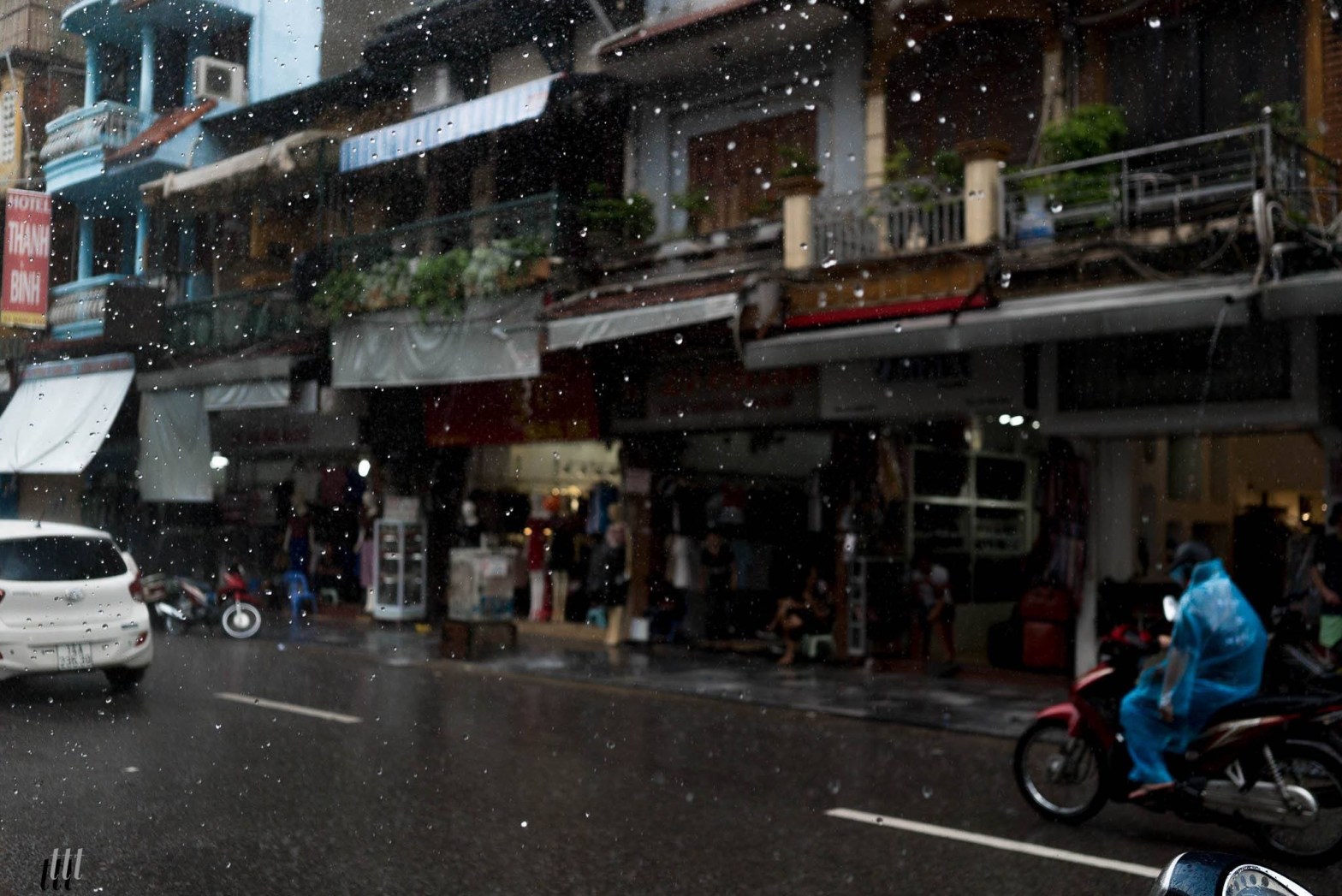
Rain in the Old Quarter, photography by Nguyễn Thị Phương Trâm

A short story in Vietnamese by Lê Vĩnh Tài
Translator: Nguyễn Thị Phương Trâm

You bite your lip, fiddle with a curl, and as it tightens around your finger, you try to hide your confusion.

It is raining outside. You hear the thunder. You pull up your skirt a bit higher as you run towards the back of the garden. You watch the raindrops sway in the wind, waving at the flashing lights. You stop running so you can look up at the clouds. The same finger fiddles with the same curl as you run, as you hold up the dripping skirt with your other hand, your skirt unfurls in a sudden gust of wind.

You adore nature, and he adores you. He is always worried about you, even when you are happy and content. He said: “Maybe you’re late.”

Because he knows you like to fly.

You and him, sitting on the grass, surrounded by endless sunlight. Quietly he asks you: “Have I ever told you about how I met you and the rain?” You giggle: “I want to hear it again.” And he begins to tell you a story that you have heard a thousand times: “You were exactly nine months old, with all the stars shining in your eyes. One day, I welcomed you through two swinging doors, barely ajar. Perhaps hearing it, you came out with the rain, about fifteen minutes before your mother had any pain from a contraction.” He laughed: “Can you believe it, baby, I was so afraid of the rain that I almost called the police, yet you continued to giggle in the rain. I could never from then on, leave the doors ajar ever again.” You know he’s talking about the bloody show and water breaking, endearingly he exclaimed: “Oh, my beautiful storm.”

He didn’t know then; that he is your storm.

Outside, the drops are more substantial. After that the storm is not just cold, sometimes it’s hot like tears. He said crying is a sign of weakness, “baby, don’t let anyone know you’re crying.” You shake your head: “Everyone cries at least once right?” He smiles, pinching your nose. He’s just pretending, he’s always known how you are a storm, all you have to do is run into the rain somewhere and it would be the sum of his joy.

Your childish thoughts understands that “constantly” does not mean “forever”. Rain does not always wet you. But if you’re wet, it’s as simple as changing your clothes as long as it doesn’t allow the loss of precious moments, because there isn’t enough time to share with anyone. You want to see the future, but there’s not enough time. You turn to look at the past; there’s nothing left but a green patch of grass. Fragile like your garden. As you would get hurt each time you fly, you dare cry not since it might wake up whoever’s sharing the room with you. You wish he were there to mop up your tears. Often you and he were like father and daughter.

He is curious: “Have you decided to leave with the rain? Baby, why can’t the rainfall be like your tears?” He is sitting right next to you as he speaks, but he never saw you. You’re not someone who only knows how to cry. You can’t make up your mind without him in your life. You sound selfish, but you know, if you can’t lean on him on long journeys, your family would fall apart. That includes the front gate and the wall of climbing jasmine.

But it is too late; you have to go. You made a promise to someone. It would be best if you had more than a garden and the rain.

Hence you’re beyond his field of vision. The tears in your eyes when you turn up at his place, you could feel the pressure behind your eye sockets, you would absently pat your head as though you have a mild headache. You’re tipsy, you had half a glass of wine or two. You know he no longer sees you, but he could still feel you. You run still towards the rain, even though you know in making a living you need more than love. You are in the end, one with the rain.

He disappears, evaporates, and you’re finally the rain after that. You know that without water vapours there’s no rain. Ah, so it is a poem about clouds. Hence, now you’re all dry, you’re as barren as the sunlight and the wind. But some people prefer it since you can crack easier, and will not break because you’re more tactile, you’re able to expand and contract. Each time the Sun rises, it would feel like you were igniting. And you are only able to lie still inside an air-conditioned room.

Only the garden and sadness continue to be as fresh as the rain.

____

May 2020

BẠN VÀ ANH, MƯA VÀ NỖI BUỒN…

Bạn xoắn một sợi tóc trong ngón tay, cắn môi mình để che giấu cảm xúc.

Bên ngoài trời vẫn đang mưa. Bạn nghe có tiếng sấm. Kéo váy cao lên. Chạy đến cuối khu vườn. Nhìn giọt mưa lắc lư trong gió, vẫy tay chào tia chớp. Có lúc đứng lại, nhìn đám mây. Ngón tay của bạn vẫn giữ hờ tóc và mép váy rũ rượi, cho đến khi nó bay lên, dang rộng ra vì một cơn gió.

Bạn yêu thiên nhiên và anh yêu bạn. Anh luôn lo âu cho bạn, cả khi bạn cảm thấy an toàn nhất. Anh nói: “Nhiều khi em bị muộn.”

Vì anh biết bạn thích bay…

Một lần bạn và anh ngồi trên cỏ, xung quanh là bất tận ánh mặt trời. Anh thầm thì: “Tôi đã kể câu chuyện tôi gặp em và mưa chưa nhỉ?” Bạn cười khúc khích: “Nhưng em muốn nghe lại.” Và anh bắt đầu câu chuyện mà bạn đã nghe một ngàn lần: “Em vừa đủ chín tháng tuổi, với những ngôi sao lấp lánh trong mắt. Một ngày, tôi đã đón em khi em chui ra khỏi hai cánh cửa đang khép hờ. Có lẽ em nghe mưa bên ngoài và đi ra với mưa, khoảng mười lăm phút trước khi mẹ lên cơn đau.” Anh cười: “Em có tin không, tôi đã sợ cơn mưa đến mức suýt nữa tôi gọi cảnh sát, còn em cứ cười khúc khích trong mưa. Từ đó tôi không bao giờ dám để ngỏ cánh cửa thêm lần nào nữa.” Bạn biết anh nói về nước ối, nhưng anh cứ trìu mến: “ Ôi, cơn mưa của tôi.”

Anh không biết rằng, vào lúc đó anh là cơn mưa của bạn.

Bên ngoài, mưa nặng hạt hơn. Sau này bạn biết cơn mưa không chỉ lạnh, nhiều khi nó nóng bỏng như nước mắt. Anh nói nước mắt là dấu hiệu của sự yếu đuối, “đừng bao giờ để ai biết em đang khóc.” Bạn lắc đầu: “Nhưng ai cũng phải khóc một lần nào đó trong đời chứ?” Anh mỉm cười, chạm ngón tay vào chóp mũi của bạn. Anh chỉ giả vờ vì anh thừa biết bạn là cơn mưa, chỉ cần bạn chạy ra đâu đó trong mưa là anh ngời ngời hạnh phúc.

Tâm trí trẻ con của bạn không hiểu rằng “luôn luôn” không phải là một từ có nghĩa là “mãi mãi”. Mưa không phải lúc nào cũng làm bạn ướt. Mà nếu có ướt thì thay quần, có gì đâu… Miễn đừng làm bạn mất đi những khoảnh khắc quý giá, vì bạn không còn thời gian để chia sẻ với ai. Bạn muốn nhìn thấy tương lai, nhưng thời gian sắp hết. Bạn quay nhìn quá khứ, chỉ còn đám cỏ xanh. Mong manh như khu vườn của bạn. Cũng như sau này khi bạn bay và bị đau, bạn không dám khóc vì tiếng thổn thức sẽ làm ai đó đang nằm trong phòng bạn thức giấc. Bạn ước anh xuất hiện và lau nước mắt cho bạn. Nhiều khi bạn thấy anh với bạn như cha với con gái.

Anh nói: “Em đã quyết định đi với cơn mưa? Tại sao mưa không rơi như nước mắt em?” Anh nói vậy vì bạn đang ngồi bên nhưng anh không bao giờ nhìn thấy bạn. Bạn không phải là người chỉ biết khóc. Bạn không thể tự quyết định đời mình mà không có anh. Nghe như bạn là người ích kỷ, nhưng bạn biết, nếu không dựa vào anh trong những chuyến đi xa, gia đình bạn có thể sụp đổ. Cả cánh cổng và giàn hoa thiên lý.

Nhưng tất cả quá muộn, bạn cần phải đi. Bạn đã hứa với một người. Bạn cần nhiều thứ hơn khu vườn và mưa.

Vì thế bạn biến khỏi tầm nhìn của anh. Trong nước mắt lúc thức dậy nơi bạn đến, bạn vỗ nhẹ đầu vì cảm thấy hơi nhức. Bạn có uống chút rượu. Và bạn biết bây giờ anh không còn nhìn thấy bạn, nhưng anh vẫn cảm thấy bạn. Biết rằng cuộc đời cần nhiều thứ chứ không chỉ những yêu thương, nhưng bạn vẫn cố chạy về phía mưa cho đến khi cuối cùng bạn với cơn mưa là một.

Sau đó, anh bốc hơi và bạn là cơn mưa. Bạn biết nếu không có hơi nước sẽ không bao giờ có mưa. Chao ôi là bài thơ về những đám mây… Vì vậy, bây giờ bạn cằn khô, xác xơ như gió và nắng. Nhưng có người lại thích vì như vậy bạn dễ nứt ra, nhưng không vỡ, vì bạn có thể đàn hồi và co bóp. Mỗi khi mặt trời lên, bạn thấy mình bốc hoả. Và chỉ những căn phòng lắp điều hoà mới làm bạn chịu nằm yên.

Chỉ khu vườn và nỗi buồn vẫn tiếp tục, mát như mưa…


Lê Vĩnh Tài, the poet and translator born in 1966 in Buon Ma Thuot, Daklak, Vietnam. The retired doctor is still a resident of the Western Highlands and a businessman in Buon Ma Thuot.

Nguyễn Thị Phương Trâm, the blogger, poet, and translator, was born in 1971 in Phu Nhuan, Saigon, Vietnam. The pharmacist currently lives and works in Western Sydney, Australia.

Oh Sleep | Lê Vĩnh Tài

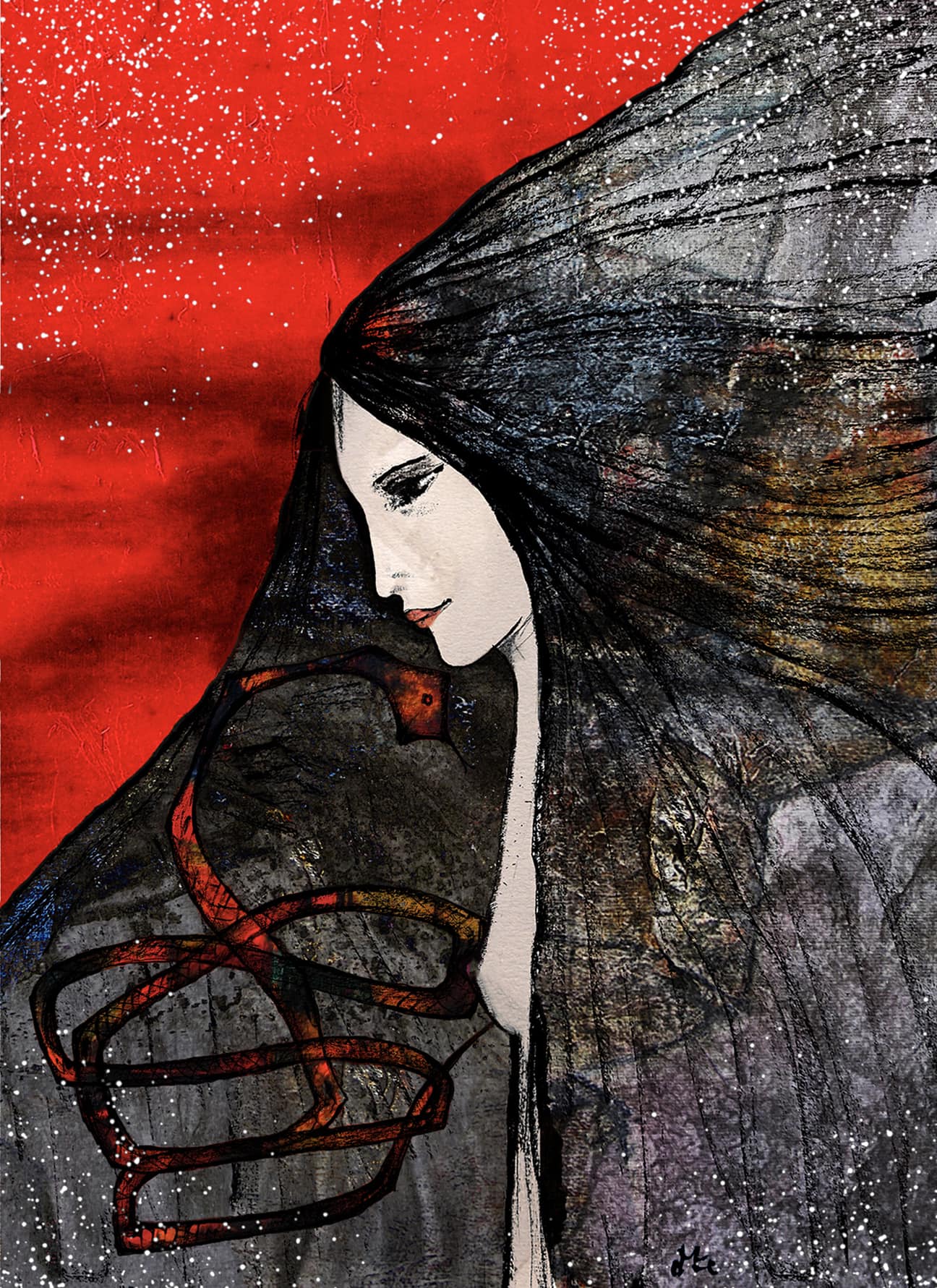
chút lãng mạn của tết mùa đông mưa tuyết rơi … minh hoạ ất tỵ.qsn. art by Đinh Trường Chinh

A poem in Vietnamese by Lê Vĩnh Tài
Translator: Nguyễn Thị Phương Trâm

The garden was as fresh
As the wind
Frequent were the sad summer
Colours

When shall it be winter
The dew and grass in the pure morning light
The first kiss
The grass besotted
The second
The third I’m accidentally
Me

The grass still a maiden green
The grass innocent
Pains!

Where now are
Those rising inclines leading us towards the light
As night loses colour
The dawn as two lovers
Came(in a rush)

But uhm
Yet awakened was the grass.
__________
April 2019

Khu vườn màu xanh
Như gió
Màu mùa hạ vẫn thường ngang đó
Buồn thiu

Bao giờ đến mùa đông
Cỏ và sương ban mai trong vắt
Hôn lần thứ nhất
Cỏ yêu
Lần thứ hai
Lần thứ ba anh ngỡ
Là anh

Cỏ vẫn xanh con gái
Cỏ dại
Và đau!

Bây giờ đang ở tận đâu
Những con dốc dắt ta lên ánh sáng
Đêm đang phai màu
Bình minh như hai kẻ yêu nhau
Ùa đến

Ừ quên
Cỏ vẫn chưa tỉnh ngủ.


Lê Vĩnh Tài, the poet and translator born in 1966 in Buon Ma Thuot, Daklak, Vietnam. The retired doctor is still a resident of the Western Highlands and a businessman in Buon Ma Thuot.

Nguyễn Thị Phương Trâm, the blogger, poet, and translator, was born in 1971 in Phu Nhuan, Saigon, Vietnam. The pharmacist currently lives and works in Western Sydney, Australia.

it’s twisted, hence, it might be the reason why you couldn’t see | Lê Vĩnh Tài

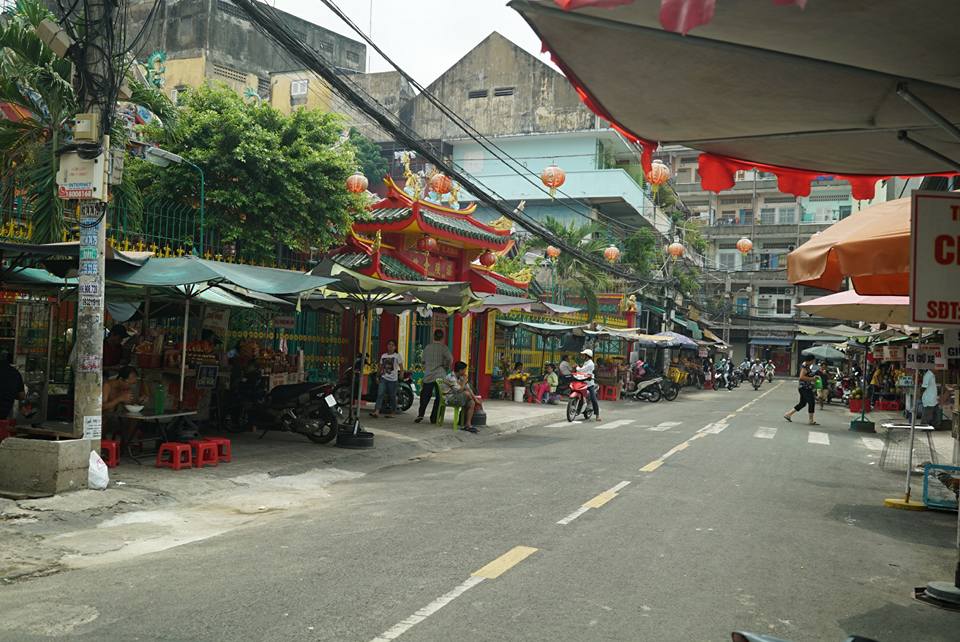
Chợ Lớn, Vietnam. Photography by Nguyễn Thị Phương Trâm

A poem in Vietnamese by Lê Vĩnh Tài
Translator: Nguyễn Thị Phương Trâm

IT’S TWISTED, HENCE, IT MIGHT BE THE REASON WHY YOU COULDN’T SEE


the poem
tattoo on my body
with my two hands
nurture the genteel souls
from the words I read
and the friends I implore
late at night
“Why won’t you stay?”


the poem
though you can’t see
it’s still tattooed on my body
every millimetre of flesh
entirely
from the bruising purple ink jar
the complement of this life


the poem
believes it’s a picture-perfect tattoo
when I stretch and flex
it shatters
like broken glass


the poem
it’s perfect even when
it is a fake

HUE

blue purple
twisting bruises like hair
in the bun of a galaxy

hue
yellow
beckoning the skin

black
like the pencil liner for her eyes

more serious is white
she is quiet

pink
the stuff of life
signs of trauma on veins
twisting browns

she
tries hard to hide
you
as a shadow
she couldn’t bear to look at

like how you
couldn’t handle her glance
the colour of pain


IN THE DIARY SO NOTED


I dream of lying in bed
fully cloth

but the dream had undressed me
in the dream
you’re a conqueror

you came
with fingers on my flesh like a blanket
fingers behind my head like a pillow

you fetter
more than scarlet
yet after you say
because I exploded


pain
is something you’ll never see

you are in me
like salt in the sea
like the sugar in the fruits in the trees…
.
November 2018

BỊ XOẮN, NÊN CÓ THỂ BẠN KHÔNG NHÌN THẤY


bài thơ
xăm trên thân thể của tôi
từ hai bàn tay tôi
cầm giữ những linh hồn dịu dàng
từ những lời tôi đọc
và những người bạn mà tôi níu kéo
khi đêm đã muộn
“tại sao bạn không ở lại với tôi?”


bài thơ
mặc dù bạn không nhìn thấy
nó vẫn bị xăm trên thân thể của tôi
mỗi milimét thịt da
tất cả
từ bình mực bầm tím
cuộc đời này miễn phí


bài thơ
nó tưởng mình là hình xăm hoàn hảo
khi tôi co duỗi
nó bị vỡ tan
như một cái ly vỡ


bài thơ
nó hoàn hảo cả khi nó
giả vờ…


MÀU


xanh tím
các vết bầm xoắn như một búi tóc
của thiên hà


màu
vàng
báo hiệu làn da


màu đen
như bút chì nàng kẻ mắt


trầm trọng hơn với
màu trắng
nàng im lặng


màu hồng
làm cuộc sống
những dấu hiệu bi thương trên tĩnh mạch
ngoằn ngoèo màu nâu


nàng
cố gắng che giấu
bạn
là cái bóng
làm nàng không thể nhìn


giống như bạn
không thể chịu được ánh mắt nàng
màu đau đớn…


CHỈ VIẾT TRONG NHẬT KÝ


tôi mơ ước mình đang nằm trên giường
và mặc quần áo


nhưng mơ ước đã cởi quần áo của tôi
trong giấc mơ
bạn là một kẻ xâm nhập


bạn đến
với ngón tay trên thịt tôi như tấm chăn
ngón tay ở phía sau đầu của tôi như chiếc gối


bạn kết nối
nhiều hơn màu đỏ
sau đó bạn lại nói
tại tôi bùng nổ


đau đớn
là điều mà bạn không bao giờ nhìn thấy


bạn ở trong tôi
như muối trong biển
như đường trong trái cây


Lê Vĩnh Tài, the poet and translator born in 1966 in Buon Ma Thuot, Daklak, Vietnam. The retired doctor is still a resident of the Western Highlands and a businessman in Buon Ma Thuot.

Nguyễn Thị Phương Trâm, the blogger, poet, and translator, was born in 1971 in Phu Nhuan, Saigon, Vietnam. The pharmacist currently lives and works in Western Sydney, Australia.

April is a fast passing shower | Lê Vĩnh Tài

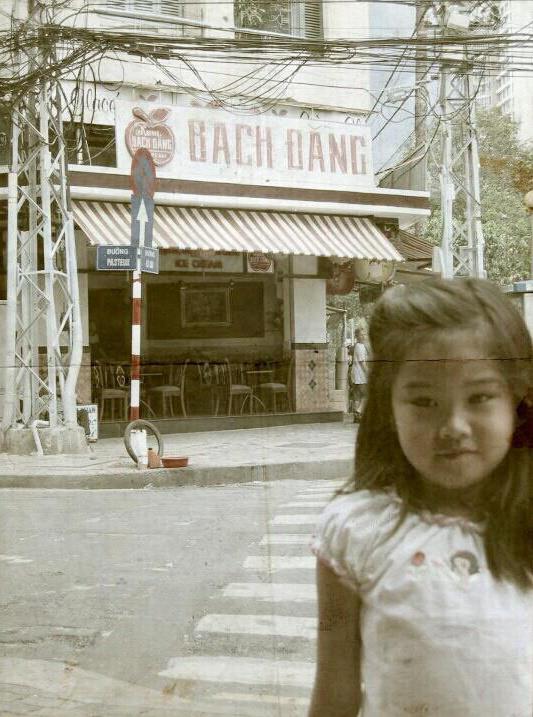
Saigon 2006, Vietnam. Photography: Nguyễn Thị Phương Trâm

A poem in Vietnamese by Lê Vĩnh Tài
Translator: Nguyễn Thị Phương Trâm

April is a fast passing shower
we could change hearts
steal some cheap plastic flowers
as we meet up in the night

we could together stare
at the passing rain
perhaps all we can do is close our eyes
and through it sleep

April
our time side by side is cut short
I couldn’t look directly into your eyes
silent like butterfly wings as the words past away

teardrops
we can but laugh and cry
waiting for the blood drenched each verse of April
slowly and steadily in each Facebook post…

tháng tư cơn mưa rào
chúng ta sẽ đổi những trái tim
lấy những bông hoa nhựa rẻ tiền
khi chúng ta gặp nhau trong đêm đó

chúng ta có thể cùng nhau ngắm những cơn mưa
có lẽ chúng ta chỉ có thể nhắm mắt
và ngủ quên

tháng tư
những phút bên nhau của chúng ta bị cắt ngắn
anh không thể nhìn thẳng vào mắt em
lời nói đã chết chìm trong cánh bướm

giọt nước mắt
chúng ta có thể cười và khóc cùng một lúc
chờ những bài thơ đầy máu của tháng tư
từ từ sẽ post…
_____
APRIL 2021


Lê Vĩnh Tài, the poet and translator born in 1966 in Buon Ma Thuot, Daklak, Vietnam. The retired doctor is still a resident of the Western Highlands and a businessman in Buon Ma Thuot.

Nguyễn Thị Phương Trâm, the blogger, poet, and translator, was born in 1971 in Phu Nhuan, Saigon, Vietnam. The pharmacist currently lives and works in Western Sydney, Australia.