one spare | Mai Thảo

A poem in Vietnamese by Mai Thảo
Translator: Nguyễn Thị Phương Trâm

a row of books on the shelf
out of place amongst those I love
books, torn between two worlds
thousands of paragraphs missing a page

lẻ một

Sách một dẫy nằm trơ trên giá
Cạnh người thân thế cũng trơ trơ
Sách, người hai cõi cùng hư hoại
Nơi một ngàn chương thiếu một tờ


Mai Thảo [1927-1998] real name is Nguyen Dang Quy, another pen name: Nguyen Dang, he was born on June 8, 1927 in Con market, Quan Phuong Ha commune, Hai Hau district, Nam Dinh province (originally from Tho Khoi village, Gia Lam district, Bac Ninh province, the same hometown and related to the painter Le Thi Luu), his father was a merchant and wealthy landowner. Mai Thao absorbed his mother’s love of literature from Bac Ninh. As a child, he studied at a village school, went to Nam Dinh high school and then Hanoi (studied at Do Huu Vi school, later Chu Van An). In 1945, he followed the school to Hung Yen. When the war broke out in 1946, the family evacuated from Hanoi to Con market, in the “House of the Salt Water Region”, from then on Mai Thao left home to Thanh Hoa to join the resistance, wrote for newspapers, participated in art troupes traveling everywhere from Lien Khu Ba, Lien Khu Tu to the Viet Bac resistance zone. This period left a deep mark on his literature. In 1951, Mai Thao abandoned the resistance and went into the city to do business. In 1954, he migrated to the South. He wrote short stories for the newspapers Dan Chu, Lua Viet, and Nguoi Viet. He was the editor-in-chief of the newspapers Sang Tao (1956), Nghe Thuat (1965), and from 1974, he oversaw the Van newspaper. He participated in the literature and art programs of radio stations in Saigon from 1960 to 1975. On December 4, 1977, Mai Thao crossed the sea. After 7 days and nights at sea, the boat arrived at Pulau Besar, Malaysia. In early 1978, he was sponsored by his brother to go to the United States. Shortly after, he collaborated with Thanh Nam’s Dat Moi newspaper and several other overseas newspapers. In July 1982, he republished the Van magazine, and was editor-in-chief until 1996, when due to health problems, he handed it over to Nguyen Xuan Hoang; Two years later he died in Santa Ana, California on January 10, 1998.

Nguyễn Thị Phương Trâm, the blogger, poet, and translator, was born in 1971 in Phu Nhuan, Saigon, Vietnam. The pharmacist currently lives and works in Western Sydney, Australia.

writing again | Mai Thảo

Mai Thảo và Vũ Hoàng Chương

A poem in Vietnamese by Mai Thảo
Translator: Nguyễn Thị Phương Trâm

writing again
in front of a line of people
silent and dying
beyond the barbwire and entrenched prison camp
communism
Thousands of people and Nguyễn Sỹ Tế is first in line
Phan Nhật Nam in the middle
and Tô Thuỳ Yên last in line

writing again
in The United States of America
the USA during those longest days
eating doing nothing dealing with the terror and the trauma of the soul
working eight hours a day
or pacing back and forth it’s all much the same
eat shit and sleep
sleep eat and shit
writing again

the first month of winter
in Minnesota
Vũ Khắc Khoan tripped and fell on his face
twice in the snow

falling on one’s face just means falling on one’s face
how do we stand tall anymore Khoan
how can we stand tall when Vietnam have fallen
and the way you fell on your face in the snow
like on paper, the way the nip of your pen
have been snapped

your friends and confidant encouraged you
to write again so you write
one chosen Sunday at Cornell University
I was there, rummaging through the pile of books
they had burned with the students buried alive
read my old books
old stories still fresh in my mind
comrades
traces of a lifetime
metaphysical obsessions
ingrained
rising from the burned books with the students buried alive
one rainy evening alone in the rain

the snow glaring and sunlight chilled to the bone
a soul valued at about a dollar tucked into
boots, fur, leather, wool, looming
the early mornings in Virginia
In Ngọc Dũng’s kitchen
Me blaring me looming
in a pile of clothes

Nghiêm Xuân Hồng in Huntington Beach
Võ Phiến in Los Angeles
quiet neighbourhoods
living without making a sound
black people standing tall fishing through the night
from a beach hidden by the fog
where land and country is out of sight
the seagulls took flight
the smoke stack of a ship coming home
a breath. garbage. and prostitutes
the Church’s type writer tap tapping
ridiculously at the carnal laughter

Mặc Đỗ in Houston had already lost an eye
trudging four thousands miles to see each other
heading for a house on top of a mountain
one at the bottom and one already there
both as youthful as the forest and old like the stream

Thanh Nam in Seattle throat
severed
deady cancer
walking stick on hand
felt hat hiding his bald head
faced the tears of Tuý Hồng
the last dialogue
in a house in darkness
if you guys are not busy next month
come back for my funeral

while Bùi Giáng is still in Sài Gòn
returning at night to the temple to compose poetry
while during the day he dance and laugh amongst fthe ruit and the veges
a crazy scholar this blinding century

as many are the Thanh Tâm Tuyền for hundred of years far and gone
as many are the Vũ Hoàng Chương who have passed on
as many are the friends they have murdered
Can you still write, you, the one they have left alive?

viết văn trở lại

Viết văn trở lại
Trước một hàng người
Im lặng và hấp hối
Sau kẽm gai cùng thẳm một trại giam
Cộng sản
Hàng ngàn người có Nguyễn Sỹ Tế ở đầu
Phan Nhật Nam ở giữa
Và Tô Thuỳ Yên ở cuối

Viết văn trở lại
ở Mỹ
Nước Mỹ của những ngày dài nhất
Sự ăn không ngồi rồi khủng khiếp của tâm hồn
Lao động tám tiếng một ngày
Hay nhàn du cũng vậy mà thôi
Ăn không ngồi rồi
Ngồi rồi ăn không
Viết văn trở lại

Mới tháng đầu của mùa đông này mà ở Minnesota
Vũ Khắc Khoan đã té sấp hai lần vì tuyết

Té sấp chỉ là vì té sấp
Chúng ta đứng thẳng thế nào được nữa Khoan
Đứng thẳng thế nào Việt Nam đã sập
Và cái té sấp của mày trên tuyết
Như trên giấy
Một ngòi bút bẻ gẫy

Bạn bè nhắc tri âm cũng nhắc
Viết lại đi vâng thì viết lại
Trọn một ngày chủ nhật ở đại học Cornell
Tôi tới đó
Xuống phần thư đọc lại sách mình
Những trang chưa xưa bài viết cũ
Bằng hữu
Những dấu tích một đời
Những ám ảnh siêu hình
Giàn giụa
Lên khỏi phần thư buổi tối mưa bay
Đi dưới mưa một mình

Tuyết sặc sỡ và nắng lạnh buốt
Ủng, lông, da, len, dạ một đồng lù lù
Những sớm mai ở Virginia
Trong bếp nhà Ngọc Dũng
Tôi một đống tôi sặc sỡ tôi lù lù

Ở Huntington Beach có Nghiêm Xuân Hồng
Và Los Angeles Võ Phiến
Mấy địa chỉ âm thầm
Sống không thành tiếng động
Những người da đen đứng câu cá suốt đêm
Dưới bãi biển mù sương
Đất nước khuất
Bầy hải âu cất cánh
Ống khói một con tàu trở về
Hơi thở. Rác. Và bọn gái điếm
Cái máy chữ Nhà Thờ
Đập nhễ nhại trận cười xác thịt

Ở Houston có Mặc Đỗ một mắt đã mù
Vượt bốn ngàn cây số tới thăm nhau
Đi với bạn lên ngôi nhà trên núi
Thằng đã tới thềm thằng còn ở dưới
Cùng trẻ như rừng cùng già như suối

Ở Seattle có Thanh Nam cuống họng
Đứt lìa
Chứng ung thư tàn độc
Cây gậy chống trên tay
Cái mũ dạ che cái đầu trọc lốc
Trước dòng lệ Tuý Hồng
Cuộc bút đàm lần cuối
Trong ngôi nhà bóng tối
Không bận gì tháng tới
Về đây đưa đám tao

Và ở Sài Gòn vẫn còn Bùi Giáng
Tối tối về chùa đêm làm thơ
Ngày ca múa khóc cười giữa chợ
Kẻ sỹ điên thế kỷ mù rồi

Những Thanh Tâm Tuyền trăm năm đã xa
Những Vũ Hoàng Chương nghìn ngày đã khuất
Những bạn bè mày chúng nó đã giết
Còn viết được ư, thằng sống sót?


Mai Thảo [1927-1998] real name is Nguyen Dang Quy, another pen name: Nguyen Dang, he was born on June 8, 1927 in Con market, Quan Phuong Ha commune, Hai Hau district, Nam Dinh province (originally from Tho Khoi village, Gia Lam district, Bac Ninh province, the same hometown and related to the painter Le Thi Luu), his father was a merchant and wealthy landowner. Mai Thao absorbed his mother’s love of literature from Bac Ninh. As a child, he studied at a village school, went to Nam Dinh high school and then Hanoi (studied at Do Huu Vi school, later Chu Van An). In 1945, he followed the school to Hung Yen. When the war broke out in 1946, the family evacuated from Hanoi to Con market, in the “House of the Salt Water Region”, from then on Mai Thao left home to Thanh Hoa to join the resistance, wrote for newspapers, participated in art troupes traveling everywhere from Lien Khu Ba, Lien Khu Tu to the Viet Bac resistance zone. This period left a deep mark on his literature. In 1951, Mai Thao abandoned the resistance and went into the city to do business. In 1954, he migrated to the South. He wrote short stories for the newspapers Dan Chu, Lua Viet, and Nguoi Viet. He was the editor-in-chief of the newspapers Sang Tao (1956), Nghe Thuat (1965), and from 1974, he oversaw the Van newspaper. He participated in the literature and art programs of radio stations in Saigon from 1960 to 1975. On December 4, 1977, Mai Thao crossed the sea. After 7 days and nights at sea, the boat arrived at Pulau Besar, Malaysia. In early 1978, he was sponsored by his brother to go to the United States. Shortly after, he collaborated with Thanh Nam’s Dat Moi newspaper and several other overseas newspapers. In July 1982, he republished the Van magazine, and was editor-in-chief until 1996, when due to health problems, he handed it over to Nguyen Xuan Hoang; Two years later he died in Santa Ana, California on January 10, 1998.

Nguyễn Thị Phương Trâm, the blogger, poet, and translator, was born in 1971 in Phu Nhuan, Saigon, Vietnam. The pharmacist currently lives and works in Western Sydney, Australia.

Do | Mai Thảo

A poem in Vietnamese by Mai Thảo
Translator: Nguyễn Thị Phương Trâm

do the small stuff
do it until it’s done
half a lifetime like that
it makes you tough

doing the small stuff
it is not a big deal
the moment you sweat is the moment
you discover that you’re still alive

once you are done expect more
you do it again and again until it’s done
a few minutes is all you need
to yearn for land and country

công việc

Việc đã làm xong việc rất nhỏ
Cũng là công việc đã làm xong
Nửa đời đã việc đời như thế
Cũng kể như lòng rất sắt son

Việc đã làm xong việc chẳng lớn
Cũng là một việc nữa làm xong
Lạ thay, chính lúc mồ hôi đổ
Là lúc bình tâm với sống còn

Việc đã làm xong chờ việc tới
Để làm cho hết đến cho xong
Năm ba phút nghỉ ngồi thong thả
Là lúc lòng riêng nhớ nước non


Mai Thảo [1927-1998] real name is Nguyen Dang Quy, another pen name: Nguyen Dang, he was born on June 8, 1927 in Con market, Quan Phuong Ha commune, Hai Hau district, Nam Dinh province (originally from Tho Khoi village, Gia Lam district, Bac Ninh province, the same hometown and related to the painter Le Thi Luu), his father was a merchant and wealthy landowner. Mai Thao absorbed his mother’s love of literature from Bac Ninh. As a child, he studied at a village school, went to Nam Dinh high school and then Hanoi (studied at Do Huu Vi school, later Chu Van An). In 1945, he followed the school to Hung Yen. When the war broke out in 1946, the family evacuated from Hanoi to Con market, in the “House of the Salt Water Region”, from then on Mai Thao left home to Thanh Hoa to join the resistance, wrote for newspapers, participated in art troupes traveling everywhere from Lien Khu Ba, Lien Khu Tu to the Viet Bac resistance zone. This period left a deep mark on his literature. In 1951, Mai Thao abandoned the resistance and went into the city to do business. In 1954, he migrated to the South. He wrote short stories for the newspapers Dan Chu, Lua Viet, and Nguoi Viet. He was the editor-in-chief of the newspapers Sang Tao (1956), Nghe Thuat (1965), and from 1974, he oversaw the Van newspaper. He participated in the literature and art programs of radio stations in Saigon from 1960 to 1975. On December 4, 1977, Mai Thao crossed the sea. After 7 days and nights at sea, the boat arrived at Pulau Besar, Malaysia. In early 1978, he was sponsored by his brother to go to the United States. Shortly after, he collaborated with Thanh Nam’s Dat Moi newspaper and several other overseas newspapers. In July 1982, he republished the Van magazine, and was editor-in-chief until 1996, when due to health problems, he handed it over to Nguyen Xuan Hoang; Two years later he died in Santa Ana, California on January 10, 1998.

Nguyễn Thị Phương Trâm, the blogger, poet, and translator, was born in 1971 in Phu Nhuan, Saigon, Vietnam. The pharmacist currently lives and works in Western Sydney, Australia.

discerning the soil | Mai Thảo

Autumn in Sydney, Australia. By Nguyễn Thị Phương Trâm

A poem in Vietnamese by Mai Thảo
Translator: Nguyễn Thị Phương Trâm

beneath the cool canopy
through the greenery is the cool sky
the cool scent of the soil
discern the damp scent of the flesh

the rising scent of the soil seeps through our soul
discern the joy and fleeting sadness
amid the majestic sunlight, shadows
a light blanket for sleepy lashes

on the ground to discern the soil for how long
before the long sigh of living breaks the silence
shimmering woven threads of sunlight
sound is the heart and somewhere is the outside

just now the falling sound of death
cut through a golden ray of sunshine pass by
a soul fast asleep amid a dynasty
the silhouette of a dying shadow

nghe đất

Nằm đây dưới bóng cây xanh
Nhìn qua lá biếc lại xanh sắc trời
Mát thơm đất trải bên người
Nghe trong ẩm lạnh da người cũng thơm

Đất lên hương, thấm qua hồn
Nghe Vui thoáng đến với Buồn thoáng đi
Giữa giờ trưa nắng uy nghi
Bóng vây vây nhẹ hàng mi cúi đầu

Người nằm nghe đất bao lâu
Tai nương ngợ tiếng đời sau thở dài
Lung linh sóng nắng đan cài
Cõi Trong điệp điệp Cõi Ngoài mang mang

Chợt đâu rụng tiếng phai tàn
Rơi ngưng nửa dáng nắng vàng trôi qua
Linh hồn thiếp giữa triều hoa
Bóng hình thôi đã nhạt nhoà quanh thân


Mai Thảo [1927-1998] real name is Nguyen Dang Quy, another pen name: Nguyen Dang, he was born on June 8, 1927 in Con market, Quan Phuong Ha commune, Hai Hau district, Nam Dinh province (originally from Tho Khoi village, Gia Lam district, Bac Ninh province, the same hometown and related to the painter Le Thi Luu), his father was a merchant and wealthy landowner. Mai Thao absorbed his mother’s love of literature from Bac Ninh. As a child, he studied at a village school, went to Nam Dinh high school and then Hanoi (studied at Do Huu Vi school, later Chu Van An). In 1945, he followed the school to Hung Yen. When the war broke out in 1946, the family evacuated from Hanoi to Con market, in the “House of the Salt Water Region”, from then on Mai Thao left home to Thanh Hoa to join the resistance, wrote for newspapers, participated in art troupes traveling everywhere from Lien Khu Ba, Lien Khu Tu to the Viet Bac resistance zone. This period left a deep mark on his literature. In 1951, Mai Thao abandoned the resistance and went into the city to do business. In 1954, he migrated to the South. He wrote short stories for the newspapers Dan Chu, Lua Viet, and Nguoi Viet. He was the editor-in-chief of the newspapers Sang Tao (1956), Nghe Thuat (1965), and from 1974, he oversaw the Van newspaper. He participated in the literature and art programs of radio stations in Saigon from 1960 to 1975. On December 4, 1977, Mai Thao crossed the sea. After 7 days and nights at sea, the boat arrived at Pulau Besar, Malaysia. In early 1978, he was sponsored by his brother to go to the United States. Shortly after, he collaborated with Thanh Nam’s Dat Moi newspaper and several other overseas newspapers. In July 1982, he republished the Van magazine, and was editor-in-chief until 1996, when due to health problems, he handed it over to Nguyen Xuan Hoang; Two years later he died in Santa Ana, California on January 10, 1998.

Nguyễn Thị Phương Trâm, the blogger, poet, and translator, was born in 1971 in Phu Nhuan, Saigon, Vietnam. The pharmacist currently lives and works in Western Sydney, Australia.

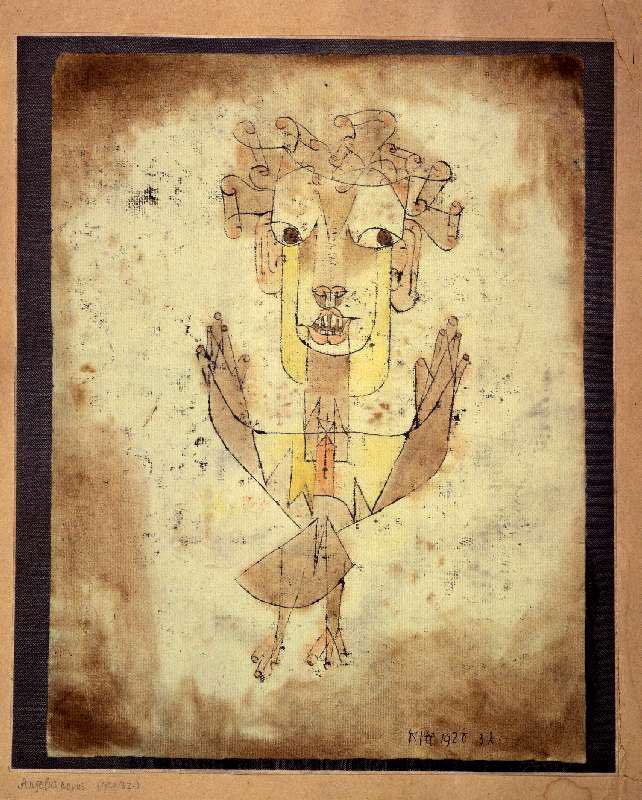
A song of praise for Angelus Novus by Paul Klee | Cư Sĩ Minh Đạt

Coll IMJ, photo (c) IMJ

thơ Cư Sĩ Minh Đạt
Nguyễn Thị Phương Trâm dịch

I am an angel
I will not fly
I will not bow
I held hostage by the wind of history
my eyes wide open
started by something I not suppose to see

I do not have a mouth
because crying is not something I can do
I do not have hands
because covering my eyes is not something I can do
not witness the destruction

a storm
from heaven
binds my wings
pushing back to the future
as I
witness the accumulating devastation of the past
a mountain growing
bigger and bigger

I am Angelus Novus
a new angel
I am not the bearer of good news
I am the bearer of the eyes of witness
an undefined sadness

Paul did not drew me in a way you might understand
he drew me
so you can stay silent by my side
before we are washed away
by the words
the signs
the armies the hues
of revolutions

do not ask me where I’m from
my home is beyond
disintegration
do not ask me what I want
I can not help anyone
I am just a witness

if you can
sit and face me
don’t be afraid
don’t ask for answers
then I will nod in agreement
in silence with you
at the height of awareness

Khúc tụng ca cho Angelus Novus của Paul Klee

tôi là thiên thần
không bay lên
không cúi xuống
chỉ bị giữ lại giữa cơn gió của lịch sử
mắt mở to
như vừa thấy một điều không thể không thấy

tôi không có miệng
vì tôi không được phép khóc
tôi không có tay
vì tôi không thể che mắt mình khỏi những đổ nát

có một cơn bão
thổi từ Thiên đường
nó kẹp đôi cánh tôi
và đẩy tôi ngược về phía tương lai
trong khi tôi
quay nhìn đống đổ nát tích tụ từ quá khứ
như một ngọn núi đang lớn dần

tôi là Angelus Novus
thiên thần mới
nhưng không mang tin lành
tôi chỉ mang ánh nhìn của chứng kiến
và một nỗi buồn không biết là gì

Paul không vẽ tôi để bạn hiểu
ông vẽ tôi
để bạn im lặng cùng tôi
trước khi bị cuốn đi
bởi những con chữ
những khẩu hiệu
những đoàn quân mang màu cách mạng

xin đừng hỏi tôi đến từ đâu.
tôi không có quê hương ngoài sự tan rã
đừng hỏi tôi muốn gì
tôi không thể giúp ai
tôi chỉ chứng kiến

nếu bạn có thể
ngồi trước tôi
không sợ
không tìm câu trả lời
thì tôi sẽ gật đầu
và im lặng với bạn
trong sự tỉnh thức cao nhất

“Is that a promise? You by my side, and our silence will be our song. Louder than the temple gongs church bells and the angels and their trumpets. ” Trâm

🙂

 Cư Sĩ Minh Đạt is one of Hoàng Anh Dũng’s pseudonym. The poet and artist currently lives in Hồ Chí Minh City, Vietnam.

Nguyễn Thị Phương Trâm, the blogger, poet, and translator, was born in 1971 in Phu Nhuan, Saigon, Vietnam. The pharmacist currently lives and works in Western Sydney, Australia.

the echo of time | Cư Sĩ Minh Đạt

The echo of time by Cư Sĩ Minh Đạt

thơ và tranh Cư Sĩ Minh Đạt
Nguyễn Thị Phương Trâm dịch

drifts not does time
in a straight line
pliable round waves
rising

a calling
a departure from the origin
reaching the height of high
heaven

to then return
less than perfect compared to
the beginning
yet more graceful
embodying the colours of shapeless
adventures

the echo of time
asks no question
but infinitely sings
in a finite
hollow heart

tiếng vọng của thời gian

không trôi thẳng
thời gian
ngân lên từng vòng sóng mềm

một tiếng gọi
rời nguồn cội
chạm vào những tầng trời
xa xôi

rồi quay về
không vẹn nguyên như thuở đầu
mà dịu dàng
mang theo sắc màu những chuyến đi không hình bóng

tiếng vọng của thời gian
không hỏi ai
chỉ hát mãi
trong trái tim trống rỗng mà vô tận

“Đồng tử giãn ra mù dần như sự vô cảm của thời gian à anh? 

🙂

 ác nhỉ.” Trâm


 Cư Sĩ Minh Đạt is one of Hoàng Anh Dũng’s pseudonym. The poet and artist currently lives in Hồ Chí Minh City, Vietnam.

Nguyễn Thị Phương Trâm, the blogger, poet, and translator, was born in 1971 in Phu Nhuan, Saigon, Vietnam. The pharmacist currently lives and works in Western Sydney, Australia.

pure shadow and light | Cư Sĩ Minh Đạt

Agnes Martin, This Rain, 1958

thơ Cư Sĩ Minh Đạt
Nguyễn Thị Phương Trâm dịch

@the Tate Modern
a painting
in white
a wordless white
without instructions
or obstruction
to those who view
it’s quiet
there
like a friend

as the light
leans in
a thin layer of gesso
quivering like new skin
as I began to discern
the air of the painting

in a world full of voices
Agnes Martin’s work
speaks via a net
a conductor’s hand
soft charcoal lines
the air though the lungs of a Zen master
she speaks not of flowers
not of pain
she opens the door to a world
where the light introduces itself

in another room
Robert Ryman did not sketch
he spreads paint as though someone had spread
a layer of ice in the lake
ice with structure
with selvage
glue streaks
and the untouched things he had left behind
touched lightly by the light
as its shadows leaves
not a mark
left is a substantial feeling
fast asleep in the silence

Ellsworth Kelly is too here
in colour
a patch of red
a patch of blue
not diluted
not mixed
the colours he presents
in absolute
a solid sound bouncing around inside an empty room.
no symbolism
no comparing
it in itself is shape and light

people like them, those who paint in white
in grey
in nets or block
follow the same path
a path toward nihilism

where
light is no longer light
the direct perception of what can not be expressed with colour
space no longer a foundation
but something that waits patiently
the material no longer a vessel
but a quiet master
and awareness no longer is me watching
but that I am here

hence
each piece of minimalism
is a meditative gate
a visual breath
a pure reflection
so I may
when there is enough quiet
find myself again
in the soft charcoal lines
silent white domain
and a ray of light

I too have a chance
to draw

tối giản và ánh sáng

tại Tate Modern
có một bức tranh
chỉ trắng thôi
một màu trắng không kể gì
không dạy gì
không làm phiền người xem
nó đứng đó
lặng lẽ
như một người bạn

và rồi ánh sáng
nghiêng xuống
một lớp gesso mỏng
rung lên như da thịt non
tôi thấy
bức tranh bắt đầu thở

trong một thế giới đầy giọng nói
tranh Agnes Martin
nói bằng lưới
bằng nhịp tay run rẩy
bằng những đường chì nhẹ
như tiếng thở đều của một người đã thiền đủ lâu
cô không nói về hoa
cô không nói về khổ đau
cô chỉ mở ra
một không gian
để ánh sáng được tự kể mình là ai

ở một phòng khác
Robert Ryman không vẽ
ông trải sơn như người đặt một lớp băng lên mặt hồ
lớp băng ấy có kết cấu
có mép vải
có vết keo
và có cả những gì ông để lại như chưa từng động vào
ánh sáng chạm vào
trượt nhẹ
bóng không hằn
chỉ hiện ra một cảm giác vật chất đang ngủ trong im lặng

Ellsworth Kelly cũng đến đây
với màu
một miếng đỏ
một miếng xanh
chẳng pha loãng
chẳng trộn nhoè
màu của ông hiện diện
một cách hoàn toàn
như một khối âm thanh vang trong một căn phòng rỗng.
không biểu tượng
không so sánh
chỉ có ánh sáng và hình thể
là chính nó

và tất cả những người như họ
dù vẽ trắng
vẽ xám
vẽ lưới hay vẽ khối
đều đi chung một con đường
con đường về cái Không

nơi đó
ánh sáng không là ánh sáng
mà là trực nhận của một cái gì không thể nói bằng màu
không gian không là nền
mà là sự chờ đợi không cưỡng cầu
vật chất không là phương tiện
mà là người thầy im lặng
và nhận thức không còn là tôi đang xem
mà là tôi đang có mặt

vì thế
mỗi bức tranh tối giản
là một cổng thiền
một hơi thở thị giác
một tấm gương vô nhiễm
để tôi
khi đủ yên lặng
có thể gặp lại mình
trong một nét chì mềm
một vùng trắng lặng
và một vệt ánh sáng

tôi cũng
được vẽ

A sketch of Cư Sĩ Minh Đạt by Nguyễn Thị Phương Trâm

 Cư Sĩ Minh Đạt is one of Hoàng Anh Dũng’s pseudonym. The poet and artist currently lives in Hồ Chí Minh City, Vietnam.

Nguyễn Thị Phương Trâm, the blogger, poet, and translator, was born in 1971 in Phu Nhuan, Saigon, Vietnam. The pharmacist currently lives and works in Western Sydney, Australia.

the rituals in spirituality, art and science | Cư Sĩ Minh Đạt

Tác phẩm của Artist Noah - Hoàn Bùi

essay by Cư Sĩ Minh Đạt
Nguyễn Thị Phương Trâm dịch

1
for Lao Tzu, ritual can only exist if creed is something far gone. it’s the shell of a spirit that is no longer connected to the origin.

when people live in harmony with their creed, and ritual is no longer necessary; when there is no harmony, the ritual shows up to mend, bind, save face.

for a pilgrim, it is a spiritual path towards freedom – freedom for us, for other people, for all. within such freedom, ritual is a ruse used to force better people to follow our standard and that is the paradox.

when practice turns into a series of formal rituals at the lost of mindfulness and wisdom, then ritual have been replaced by creed.

one can bow a thousand times and still be far from upholding any kind of creed if the soul is not free.

2
when it comes to science, ritual is often something deep rooted in superstitions.

science is realised when a hypothesis have been proven when the experiment is done right, and that is the beauty of intelligence.

but if the proven variables turns into a negating barrier to what have not been proven, then science will close its doors and becomes another ritual – firm faith. especially when humanity first understands 5% of how to be present. the scientist will come first in terms of being the most superstitious.

3
in the arts ritual is the shackles of creativity

the arts is the door to freedom. and yet there in the arts, ritual shows up in the form of an imposed standard of beauty.

so many critics believe it is their duty to stand on higher ground, they believe they have the authority of uphold the standards deemed fit by universal standards of the world. they judge and and measure every paintstroke, every line.

they forget that each piece of art has a world of itsown, and each artist can not be moved by the attribute of a universal method.

ritual in the arts often comes in the following forms:

dogma aesthetic: believes that there is a number of colour principles, layout, or techniques that are deemed as correct.

market conservatism: the body of work is not valued by the depth of its work, but is measured by what have always been displayed in the museum or what actually sells.

the legitimacy of the reputation: the artist value in terms of their awards, level of studies, or acceptance by those who deemed themselves as competent, in place of sincere reaction.

in such an enviroment, ritualised is the act where art becomes an act for the decision makers, instead of an innate stream where anyone can quench their thirst.

it weakens both the artist and those who admires their work, since both are retraint by someone else’s point of view.

an authentic body of work can exist without the rituals. all it needs is the absolute sincerity from its creator and the unconditional empathy from those who appreciates it. in such a moment, freedom is a place where they see each other.

4
and discipline when the aim of discipline turns into a job of shaping students that can fit perfectly into a frame, absolute right and wrong, ritualisation is the destruction of curiosity and creativity, the destruction of human dignity.

because what is most prized my humanity is freedom and creativity.

those who value rituals are often narcissists – they are at the centre of these rituals.

those who value rituals are not poor but in truth are quite weak, they need a cover to hide their lack of internal fortitude.

5
denying the rituals is not the same as denying the formalities.

freedom means going beyond ritual without the loss of harmony.

freedom genuinely should not break harmony, but quite the opposite: it creates a new foundation for harmony, based on sincerity and recognition.

when there are no longer any forced standards from the outside, humanity will be more lively, more creative, and they for themselves will have the aptitude to respect each other, not because of some predetermined set of rules.

art, science, education, spirituality, or any other given field of discipline, the only way it can truly achieve its core opjective is when it is able to escape the shell of ritualisation so it may return to creed, the spirit of freedom.


lễ trong tâm linh trong khoa học trong nghệ thuật…

1
với Lao Tzu, thì lễ chỉ còn tồn tại khi đạo đã mất rất xa. nó là lớp vỏ hình thức của một tinh thần đã rời bỏ cội nguồn.

khi con người sống hài hòa với đạo, không cần đến lễ; khi sự hòa hợp biến mất, lễ xuất hiện để vá víu, ràng buộc và giữ trật tự bề ngoài.

với hành giả, con đường tâm linh là đi tới tự do – tự do cho mình, cho người khác, và cho tất cả. trong tự do ấy, việc dùng lễ để ép người khác tốt hơn theo chuẩn mực của mình là nghịch lý.

khi việc tu tập bị biến thành chuỗi nghi lễ hình thức mà mất đi sự tỉnh thức và trí huệ, thì lễ đã thay thế đạo.

một người có thể cúi lạy ngàn lần mà vẫn xa đạo nếu tâm không có tự do.

2
trong khoa học, lễ nhiều khi hiện hình đậm màu mê tín.

khoa học công nhận khi một giả thuyết được chứng minh và thực nghiệm đúng, đó là vẻ đẹp của trí tuệ.

nhưng nếu biến đã chứng minh thành hàng rào phủ định mọi điều chưa chứng minh, khoa học sẽ khép mình lại và trở thành một loại lễ – một niềm tin cứng nhắc. nhất là khi con người mới hiểu được 5% hiện hữu. nhà khoa học trở thành kẻ xếp hạng mê tín cao nhất.

3
trong nghệ thuật lễ là cái xiềng của sáng tạo

nghệ thuật vốn là cánh cửa mở ra tự do. nhưng chính trong nghệ thuật, lễ lại xuất hiện dưới dạng chuẩn mực thẩm mỹ được áp đặt.

không ít nhà phê bình đứng trên bục quyền uy, cầm bộ tiêu chuẩn mà họ cho là thế giới đã công nhận để đo từng nét vẽ, từng khối màu.

họ quên rằng mỗi tác phẩm là một thế giới riêng, và mỗi họa sĩ có một nguồn rung động không thể quy vào một công thức chung.

lễ trong nghệ thuật thường có các dạng sau:

mỹ học giáo điều: tin rằng chỉ một số nguyên tắc màu sắc, bố cục, hoặc kỹ thuật mới được xem là đúng.

sự bảo thủ của thị trường: tác phẩm được đánh giá không phải bằng chiều sâu, mà bằng mức độ giống với những gì đã từng được bán chạy hoặc trưng bày trong bảo tàng.

tính hợp thức của danh tiếng: họa sĩ được gắn giá trị dựa vào giải thưởng, học vị, hay sự công nhận của giới thẩm quyền, thay vì rung động chân thật.

trong không gian ấy, lễ biến nghệ thuật thành nghi thức trình diễn cho một số ít người có quyền định đoạt, thay vì một dòng sông tự do mà ai cũng có thể uống nước.

nó làm yếu đi cả người sáng tạo lẫn người thưởng thức, vì cả hai bị nhốt trong khung nhìn của người khác.

một tác phẩm đích thực không cần lễ để tồn tại. nó chỉ cần sự thành thật tuyệt đối của người sáng tạo và sự đồng cảm vô điều kiện của người xem. trong khoảnh khắc ấy, cả hai gặp nhau ở điểm tự do.

4
và giáo dục khi mục tiêu giáo dục biến thành việc đào tạo học sinh theo một khuôn mẫu rập khuôn, đúng và sai tuyệt đối, lễ trở thành kẻ giết chết sự tò mò sáng tạo, thủ tiêu nhân cách con người.

vì đặc trưng người nhất của giống người là tự do và sáng tạo.

kẻ trọng chữ lễ thường là kẻ ái kỷ – mọi lễ đều phải xoay quanh cái tôi của họ.

kẻ trọng chữ lễ không chỉ nghèo mà thực chất quá yếu đuối, cần một vỏ bọc quy tắc để che giấu sự thiếu nội lực.

5
từ bỏ lễ không đồng nghĩa với vô lễ.

tự do là vượt qua lễ nhưng không mất hòa hợp.

tự do đích thực không phá vỡ hòa hợp, mà ngược lại: nó tạo ra một nền hòa hợp mới, dựa trên sự chân thành và nhận biết.

khi không còn bị ép bởi chuẩn mực bên ngoài, con người trở nên sống động, sáng tạo, và có khả năng tôn trọng nhau vì chính họ, chứ không vì một khuôn mẫu được định sẵn.

nghệ thuật, khoa học, giáo dục hay tâm linh, bất cứ lĩnh vực nào đều chỉ thực sự chạm tới cốt lõi khi thoát khỏi lớp vỏ lễ để trở lại với tinh thần tự do của đạo.


 Cư Sĩ Minh Đạt is one of Hoàng Anh Dũng’s pseudonym. The poet and artist currently lives in Hồ Chí Minh City, Vietnam.

Nguyễn Thị Phương Trâm, the blogger, poet, and translator, was born in 1971 in Phu Nhuan, Saigon, Vietnam. The pharmacist currently lives and works in Western Sydney, Australia.