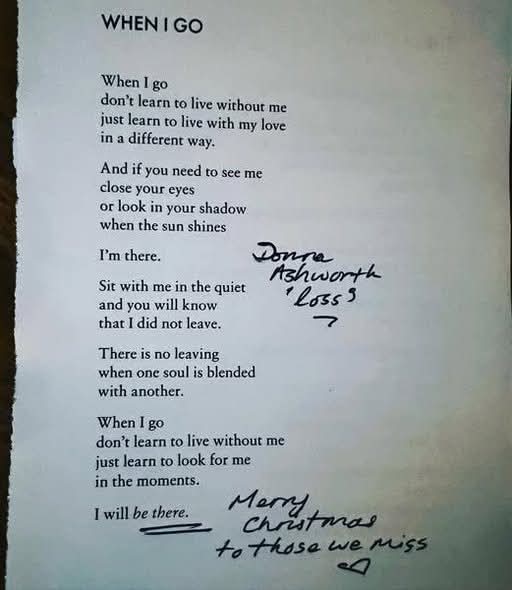
By Donna Ashworth Translation into Vietnamese by Lê Vĩnh Tài
khi em ra đi chàng đừng sống như thể không còn bóng dáng em mà hãy sống trong tình yêu của em vì bây giờ em yêu theo cách khác
và nếu chàng muốn ngắm em hãy nhắm mắt chàng lại nhìn vào cái bóng em về khi trời nắng
em ở đó
chàng có ngồi với em trong im lặng và biết rằng em không bỏ chàng ra đi
không bao giờ có sự chia ly vì em hòa vào chàng một tâm hồn hóa vàng tan vào tâm hồn khác
khi em ra đi chàng đừng sống như không có em hãy tìm em những lúc bên chàng
em ở đó [chàng có ngồi với em?]
Donna Ashworth là một nhà thơ người Scotland có tác phẩm bán chạy nhất trên tờ Sunday Times. Bà trở nên nổi tiếng vào năm 2020 khi những bài thơ của bà về lệnh phong tỏa do COVID-19 ở Anh được đọc trong một video lan truyền rộng rãi để gây quỹ cho NHS (Hệ thống Y tế Quốc gia Anh). Sau đó, bà được ghi nhận là người đã giúp doanh số bán thơ đạt mức kỷ lục ở Anh.
Lê Vĩnh Tài, the poet and translator born in 1966 in Buon Ma Thuot, Daklak, Vietnam. The retired doctor is still a resident of the Western Highlands and a businessman in Buon Ma Thuot.
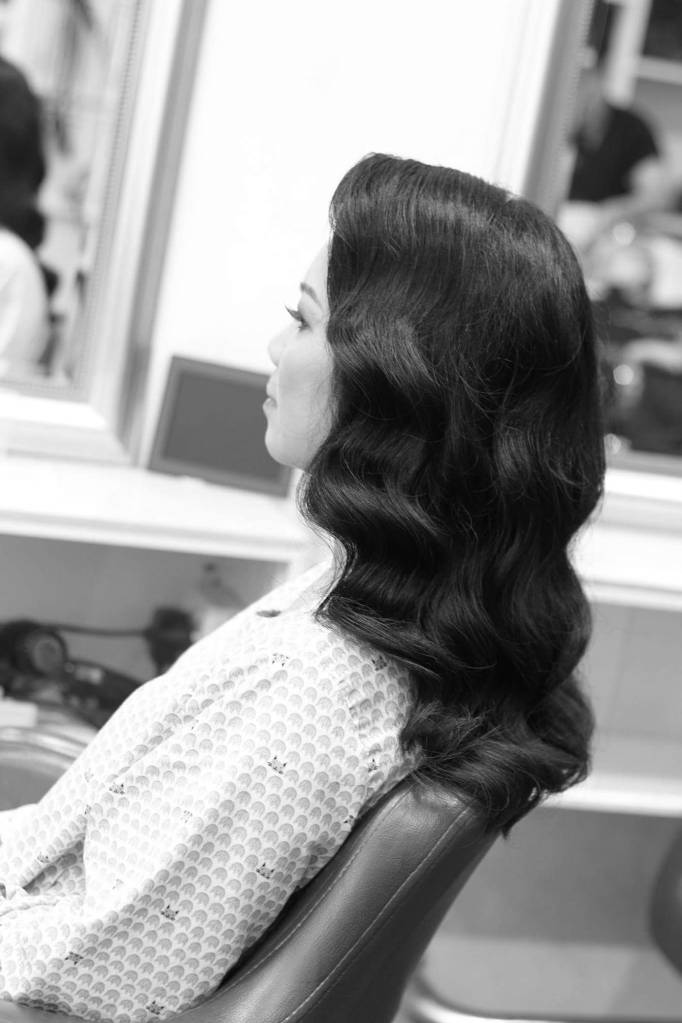
Quê Hương in Hải Phòng, photography by Nguyễn Thị Phương Trâm
By Georg Trakl Translation into Vietnamese by Lê Vĩnh Tài
bao giờ bạn trở lại, u sầu lẻ bóng, hỡi linh hồn lẻ loi một ngày vàng rực rỡ và đã kết thúc người bệnh yếu ớt đầu hàng cơn đau âm vang giai điệu du dương và êm ái điên cuồng hãy nhìn kia, hoàng hôn đêm trở lại lần nữa và một người than khóc một người khác đau khổ chịu đựng trong sự cảm thông cứ rùng mình dưới những ngôi sao mùa thu năm tháng cúi đầu sâu hơn nữa…
Always you return, melancholy, Oh meekness of the lonely soul. To the end a golden day glows With humility the patient one bows before pain Resounding with melodies and tender madness. See! It is already dusk. Again night comes in and a mortal lament And with it another suffers. Trembling beneath autumn stars Yearly the head bows deeper.
Georg Trakl [1887 – 1914] was an Austrian poet and the brother of the pianist Grete Trakl. He is considered one of the most important Austrian Expressionists. He is perhaps best known for his poem “Grodek”, which he wrote shortly before he died of a cocaine overdose.
Lê Vĩnh Tài, the poet and translator born in 1966 in Buon Ma Thuot, Daklak, Vietnam. The retired doctor is still a resident of the Western Highlands and a businessman in Buon Ma Thuot.
A poem in Vietnamese by Lê Vĩnh Tài Translator: Nguyễn Thị Phương Trâm Photography: Nguyễn Thị Phương Trâm
Nguyễn Thị Phương Trâm
sadness awakened at 2 am then 4 pm 5 thirty in the afternoon and 6 forty-five in the morning
after the alarm went off ringing sadness you dab the corners of your eyes with concealer cover up the crow’s feet my sadness hiding behind a joke
a smile, a cry my sadness afraid of my happiness worried that I’m no longer sad
sadness ceasing in front of me pulling me back into darkness or did it push me into the light as though nothing is going on
when people ask “R U OK?” I would say “I’m fine” or “I’m really good at writing poetry”
so that my sadness is not exposed to anyone
my sadness unexposed as though sadness it had collapsed on the veranda or is still fast asleep at 12 noon waiting for someone to join it for a drink
my sadness is the poem I’m writing along with the tears as the door closes sadness pooled in the showerhead not that I’m a grub and I’m lazy it’s because of it’s short fuse teary temperament
my sadness unlike sadness don’t know how to walk away from sadness don’t know how to talk about sadness but don’t think it’s not sadness it’s the sadness from the beginning of time
no you won’t be able to see my sadness it’s not someone with a broken leg on crutches how could you possibly understand my sadness is like a cancer how could you possibly comprehend
not until you strip me bare squeeze and poke at the tumour beneath my skin you’ll see that the air in my lungs is full of smoke and left behind in my heart is a drop of blood
coursing through my veins like the arrow pinned on my chest
until I’m as light as a feather drifting in a breeze then you’ll see that might be me
or it might be you(em) your discard joy out of an open window I’m not here or there, darkness = joy until the moment the doors are shut and locked joy have not the fingers to turn the key in holy matrimony
follows sadness is the joy spilling through the doorway points out an escape route from sadness
I will hold onto its arms tighter than the time you held onto me — Christmas Eve, 2023 —
NHỮNG THỨ CÒN SÓT LẠI ẨM ƯỚT VÀ VỠ VỤN TRONG BÓNG TỐI
nỗi buồn thức dậy lúc 2 giờ sáng sau đó 4 giờ chiều 5 giờ 30 phút đêm và 6 giờ 45 phút sáng
sau khi chuông báo thức reo lên nỗi buồn bạn thoa kem che nếp nhăn đuôi mắt nỗi buồn của tôi ẩn nấp đằng sau câu nói đùa
một nụ cười, một tiếng khóc nỗi buồn của tôi sợ tôi hạnh phúc sẽ không còn buồn
nỗi buồn ngừng lại trước mặt tôi kéo tôi trở lại bóng tối hay xô tôi ra ánh sáng ra vẻ như không có chuyện gì
khi mọi người hỏi “bạn có khỏe không?” tôi trả lời “tôi khỏe” hay “tôi làm thơ rất hay”
làm mọi người không nhìn thấy nỗi buồn của tôi
nỗi buồn của tôi không lộ ra như nỗi buồn nó không gục đầu trên hành lang hay ngủ vùi đến 12 giờ và chờ người rủ nhậu
nỗi buồn của tôi bài thơ tôi viết qua dòng nước mắt khi cánh cửa đóng lại nỗi buồn của tôi đọng lại dưới vòi sen không phải do tôi ở dơ hay lười tắm mà vì nó dễ nổi nóng và khóc quá nhiều
nỗi buồn của tôi không giống nỗi buồn không biết bước đi nỗi buồn không biết nói chuyện nỗi buồn nhưng đừng tưởng nó không phải nỗi buồn nó là nỗi buồn muôn thuở
không bạn không thể nhìn thấy nỗi buồn của tôi nó không phải như một người bị gãy chân và chống nạng bạn cũng không biết rằng nỗi buồn của tôi giống như căn bệnh ung thư bạn không biết
cho đến khi bạn lột trần tôi nắn bóp khối u phía dưới thịt da bạn thấy rằng tôi đã thở một bầu không khí như khói đã nghẹt hai phổi, và trái tim còn giọt máu
chảy trong huyết quản như một mũi tên ghim trên ngực
cho đến khi tôi nhẹ như một chiếc lông bay trong gió có thể đó là tôi
có thể đó là em, đã gạt hạnh phúc ra khỏi cửa không có tôi ở đây hay ở đó, bóng tối = hạnh phúc đến khi cánh cửa đóng chặt, hạnh phúc không có tay để mở để còn làm mấy cái chuyện tân hôn
tiếp theo nỗi buồn hạnh phúc tràn qua cửa chỉ ra lối thoát cho nỗi buồn
tôi sẽ nắm lấy cánh tay của nó và giữ chặt hơn lần em đã ôm tôi
Lê Vĩnh Tài, the poet and translator born in 1966 in Buon Ma Thuot, Daklak, Vietnam. The retired doctor is still a resident of the Western Highlands and a businessman in Buon Ma Thuot.
Nguyễn Thị Phương Trâm, the blogger, poet, and translator, was born in 1971 in Phu Nhuan, Saigon, Vietnam. The pharmacist currently lives and works in Western Sydney, Australia.
A poem in Vietnamese by Bùi Kim-Anh Translation by Nguyễn Thị Phương Trâm
Bùi Kim-Anh (source: The poet’s social media page)
Around the lake is a stroll of boundless silence
Leaves on the verge of tears waiting buds ready to burst open a brimming reflection of the sun
Rosy through the hues of dusk seemingly bottomless lake hastily farewell the day
CHIỀU
Ta đi dạo quanh hồ mặt hồ lặng im bờ hồ như vô bờ
Những chiếc lá long lanh ngấn lệ những bông hoa náu mình chờ mặt trời soi làn nước hồ chiều
Hừng lên màu hoàng hôn đáy hồ như vô đáy vội vã mặt trời từ giã ngày
Bùi Kim Anh, the poet born in 1948 in Thái Bình, graduated from Hanoi Teacher College, a teacher at a few high schools in Hanoi(Cổ Loa, Bạch Mai, Trần Phú). She is a member of the Vietnam Writers Association. Bùi Kim Anh together with her journalist husband Trần Mai Hạnh currently lives in Nguyễn Đình Chiểu, Hanoi with their eldest daughter and grandchildren, including Thiện Nhân, from Mount Thành, Quảng Nam, abandoned by his mother and adopted by Trần Mai Anh, the poet’s daughter.
Nguyễn Thị Phương Trâm, the blogger, poet, and translator, was born in 1971 in Phu Nhuan, Saigon, Vietnam. The pharmacist currently lives and works in Western Sydney, Australia.


 Nguyễn Thị Phương Trâm