My love, you’ve told me, on faraway Mount Chu Mang there’s a spring haunted by demons. The streams were green, a slimy suspicious green. What are demons? You said you didn’t know. Since forever no one knows where these demons lived exactly. There was a lot of talk about them but no one knows for sure their history. You said my love, only the white pebbles at the heart of Kroa spring knows the true evil of these demons. Some say this and that, for instance on bright moonlit nights, from the bottom of the streams echoes a crunching grinding sound, if you would take a closer look you’ll see demons chewing on pebbles. Why do the demons chew pebbles and not souls, or at least try to tempt the souls? The locals say it’s possible that in a past life, these pebbles were human, in a place they had existed together with the demon’s, and perhaps, between them, there’s some kind of debt. You shake your head, exasperated, who knows how they were “perhaps” wronged in their last life, plus, in this dark deep enormous mountain, with so many strange events, how could one possibly know everything.
You chided that my expertise on the demons was limited, and I did not see the full picture. Or did I take the demon’s side, pretending not to know not to understand? I swear I hated the demons as much as you. I’m not in agreement nor am I pretending to be oblivious. You mumbled, they’re there, they’re moving around, their faces as flat as anything, no nose, no mouths, but they’re very good at finding things, they know where the pebbles lay, they’re greedy, they fought each other for each bite, cursing at the bottom of the springs.
Black streaks curdled in the spring-like blood, as the masks of the demons floated to the surface of the water. The masks continued to curse and fought with the utmost gravity. How many times have you eaten? Often, they couldn’t remember how often. No, it’s mine. No, no, it’s for all of us! They continued to incoherently argue with each other. Their mouths giving off a stench, possibly soil, possibly tree sap, possibly the smell of blood… holding a bunch of flags they ran through the night, flags, blood red, flags half red half black, rectangular flags. They used the flags to cover their faces, and used them to disguise themselves. During the day, they played a game of hiding and seeking in the forest, at night, to fill their stomachs, they descended into the streams searching for pebbles to consume.
The pebbles left behind at the bottom of the stream huddled together looking for ways to escape. But where could they go, since where on the mead were void of the footprints of demons? The journeys are well documented in the history of Mount Chu Mang, many years later elders relay these painful stories to their children and grandchildren, the aching sad injustice told over and over again.
At the end of the dry period that year, rumours spread across the region turned Kroa village upside down. On everyone’s mind, not sure who started the rumour, said, soon, Kroa village has to vacate their land for the government’s new farming and development project. Everyone was on edge. Moving to where? The whole village or just a few families? The discussion hasn’t ended before there were more rumours of moving to other places, still living on the land but no longer working in the fields, everyone shall have a job allocated by the government. More disruption. If not working in the fields, then what shall we do for food? What kind of work is other work? Will the Ede people year-round on the fields tending to their rice paddies be able to survive?… Gosh, there were so many stories.
The days at the end of the dry periods, sweeping, constant windy days. The evenings, sitting by the fire chilled to the bone, behind the village the wind gave the boundary of the forest a whipping. To the Kroa people, the longest days are at the end of the dry period. Stores of food are almost gone, more work yet to be done. Stepping away from the ladder means constant unforgiving wind. Everyone would always end up huddled around the stove fire. The fire had come to live with the Kroa people for a long time now. The exchange of smiles and glances, the long and short stories all began by the stove fire.
Then the worries of the Kroa people arrived. Some dozens of homes had to be relocated to the other side of the spring leaving the flat side for the building of a dam. Again piling on top more work on a pile already as high as a mountain. The fields have already been cleared, will planting be possible after the move? Relocate the houses first or plant the corn and rice first? As though they stepped on an ant nest, every household was in a mess. H’Nhi rushing about almost in a run, the gùi on her back bouncing to the rhythm of her brisk steps. Bumping into ami huffing and puffing running from home just after wading through the shallow part of the spring. From the look on mí’s face, H’Nhi knew something was wrong.
“What’s wrong, why all the rush mí?”.
“So much to do child, we have to go home now, your poor elder sister!”.
“Which sister? Mí Kuk or Mí Bích?”.
“H’Lum, something is wrong with her, she’s in a lot of pain!”
H’Nhi quickly threw the gùi at the foot of the ladder, raced after mí. Mí Kuk, that is H’Lum is H’Nhi’s oldest sister. After taking a husband, H’Lum was supposed to bring her husband home to live, but the house was crowded with younger siblings, and Y Doan lives alone with his elderly mother so the family agreed to allow the pair to live at the groom’s home. Their brother in law is an alcoholic, and a habit of cigarettes, his mother elderly and weak, a million things fell on H’Lum’s shoulders. Always stinking of alcohol, their brother in law is almost ten years older than their sister. His eyes unfocused protruding like a gecko in some corner of their home. Sometimes so drunk he’s draped across the ladder drooling singing some lewd song in Kinh dialect. The three kids beginning to shoot up, could shoulder the gùi and helped their mother carry water up the ladder because H’Lum’s back had begun to stoop. Their brother in law out of mind, like a rotting wooden statue, staying put wherever you throw it.
By the time H’Nhi arrived they’d already taken her sister H’Lum to the medicine man, foundering ami followed, sighing as she stumbled along. H’Nhi stood quietly in front of her oldest sister’s home, tears rolling the length of her face. Three days later her sister passed away, the medicine man said her death was due to end-stage hepatitis. The three small docile children sat huddled together crying, long green snotty noses. Something like smouldering ash inside H’Nhi began to burn. A part of her sorry for her sister, but her heart tightened looking at her sister’s three children shrivelled in a huddle whimpering. Her alcoholic brother-in-law alone with three small children, what shall be ahead for the coming days and months? H’Nhi shuddered suddenly with a chilling thought. Sister, why return to the shores of our forefathers so early!
Then, of course, the rain came. The corn, beans, and seedlings began to sprout. Dozens of Kroa village families have abandoned their familiar thousand years old home, a lifetime in Kroa spring, for the other side of Mount Chu Mang. Gut-wrenching leaves the water, the spring for the (electrical) dam. The night before the village departed. Old Ang stood for a long time in the spring, tears running. The youths tried to console the old man:
“Let’s go, old man, a dam is a good thing, plus, they’ve compensated us with lots of money, we can survive on the other side of the mountain don’t worry”.
Hearing them talk like that, old Ang heaving harder wept. They don’t understand the heart of the old. Regretful is the regret of ever hearing the familiar trickling sound of Kroa spring like the voice of a loved one, missing is to miss the foot of the ancient Pơlang blooming ruby red blooms like someone igniting a fire every seasonal festival, endear is the endearing generous forest providing the village with abundant bamboo shoots and mushrooms. Not because the old man didn’t realise leaving means money, leaving means compensation.
The young men stopped waiting and left, watching old Ang continue to stand and cry. The crowded footsteps trampling noisy, children crying unsettled mixed in with the adults singing. The Ede are like that, happy they sing, sad they sing. “I’m like a wild animal, wandering in the dark forest…” not sure if they sang in joy or sadness. The old man witnessed their silent shudder before turning around and walked away. Suddenly he felt something wrapped around the foot of one of his legs. The old man looked down, it was just Kra the ape. The ape held onto old Ang’s leg. The old man picked him up, said, ah, so you also know regret and longing? You don’t want to leave either? The ape screech kéc kéc. The old man held him for a while whispering something soothing in his ear before lifting each heavy foot, left. A parrot perched precariously on the old man’s shoulder continuously mumbling incoherently. The old senile parrot is also a friend of old Âng. The bird continued parroting: “Forever, forever, run, run…”.
In that sad afternoon, there is someone also very sad. That is me. With Kroa village, I’m a temporary resident, but never unfamiliar. Mother gave birth to me here, against the law of nature, and left me here with old Ang. Old Ang told me many times that:
“I felt sorry for your mother, told her I will raise you till you’re old enough then return you to the wilderness. But now I can’t let you go, I’ll keep you with me, okay child. If you leave I’ll be lonely, who could I possibly live with!”
I’m actually Kra, the ape who’s been living with old Ang for more than ten rainy seasons in Kroa village. So I won’t starve to death from nourishment and thirst, old Ang had carried me from house to house begging new mothers to nurse me with their breast milk. The milk was amazing! Till now, each time I pass a young woman with plump round breasts I’d literally smell the light fragrance of milk and immediately be dazed with cravings. Wishing I could just covet that breast, latching on firmly to slowly let the milk drizzle out into my mouth, overwhelming my taste buds warm, refreshing, sweet!
I followed old Ang up the fields everyday. When everyone was busy sowing corn or rice I would busy myself in the forest. There are many tranquil parts of the forest behind Kroa village. I’ve never seen a forest more beautiful. But then again I’ve never been anywhere else. Sick of picking fruits and swinging, I would then chase the crickets around in the middle of the fields. Old Ang had to call me a few times before I’d return home. The old man’s eyes wide with threats, I’m going to return you to your mother! I’m used to the same threat, but each time I hear it I would still pretend to be afraid, cringing, energetically scratching my forehead. I must have looked at a picture of ridiculousness, because old Ang would look up, his eyes squinting trying not to laugh before looking down and continue to wave his stick. I chased after a squirmy little snake, ran all the way to the spring.
In the last few days before the move. I was in a state of undefined sadness. I climbed all the way to the very top of the ancient Pơlang in front of the village, lay there in a fit of stubbornness ignoring old Ang’s calls till he almost lost his voice. Looking at each of the four directions. Kroa village falls right in the middle of the valley. Kroa spring runs from Mount Chư all the way to the head of the village then swells up like a giant banana frond. From mount Chu Mang looking west is the Basin by the Srepok river. Before running to the other side of the mountain emptying into the bigger river, Kroa spring curls and dances in soft waves. Next to each side of the spring were flat land where people cultivated rice, further up, higher every year corn was sown. I love eating corn the most, nutty, plump and juicy! From old Ang’s house in the middle of the village, a couple dozen hops and I’m by bay at the river. I bathe in it umpteenth times, impossible not to remember. The water is clear, refreshing and cool. And right there, I was able to admire countless pairs of thighs from all the women in Kroa village. The Kroa women are known for their beauty far and wide. In the afternoons, on the path from the fields, the women relax at ease dropping their gùi on the bay to bathe. H’Yang, H’Nhi, H’Mai, H’Linh… the women are all beautiful, with their fair smooth thighs untouched by sunlight, and the lingering fragrance of milk.
Because of this repeated baiting of the women at the bay, old Ang punishment was to make me fast for two days straight. One time, as usual, I descended to the water in the late afternoon, the time the women were on their way home from working in the fields. I hid in the bushes near the water, when H’Yang and H’Mai took off their skirts I immediately jumped out from the bushes, pulling a face laughing noisily kéc kéc. The two women, scared to death, furious chased after me with chunks of wood. I retreated backwards as I taunted them, pulling faces before running all the way home climbing straight up the tree. After that time, old Ang put a silver collar with a bell around my neck, each time I jumped up and down the bell would ring, when I’m happy, or sad. The old man said, now you can’t go scaring any kid, you haven’t set foot near them and they know you’re coming, forget about sneaking up on anybody!
Yet tomorrow was already the day we’re leaving. I was sad, verging on tears. Will there be a bay, will the corn crop be any good, will there be an ancient shady Polang like this here each noon in the dry period to dangle in the branches and sleep. I was thoughtful for ages till I fell into a long sleep, by the time I was awake the village was deserted, not a sound of any human movement, not a flare of fire light. The children’s chatter sounded further and further away. Each grain of familiar sound falling apart drowned in the late afternoon light. I ran towards the water and caught old Ang standing alone crying. The parrot on his shoulder oblivious: “Forever, we run run run…”. In the old man’s gùi is a sickle, a pickaxe blade and hands full of rice. The old gong strapped across his back. The old man hugging me said:
“Everyone’s gone, we must go now child. From tomorrow you can no longer come down to the bay to wash, I’m the same, long ago, I met a girl and loved her right here, we boys have laughed and hung out here, slaughtering cows, pigs, right here…”.
The old man lifted his skinny arm pointing at the bay by the river. In the shade of the late afternoon, a mist pulled across the water in Kroa village, like an illusion. I looked back for the last time, everything in haste withdrew into the sombre darkness. Old Ang and I in laden steps advanced toward the new land. On old Ang’s skinny sharp shoulders, the ancient parrot with its tattered tail perched, hanging on for its dear life, now and then screeched something incoherent, run, run…
The next night, the chief called for a village meeting in the new place. Chief Ma Noi is middle age but a quick thinker and decision maker, dark shadows were drawn across his tired face, stood up to said:
“I know in your heart none of you wanted to leave, I’m no different. But here is an objective of the government: we must accept it, have it our way we can’t, not having our way we can’t either. So, no matter how tough, we must pull our resources together and rebuild in this new place. Each person tries a little harder. Each family has been compensated with money from the government, the job of re-erecting our homes will be easier. Our youth can lend a hand to the smaller family who needs it, one person working, ten people working together, it all shall be done, don’t worry…”.
Someone’s voice cuts through, possibly Mí Vắt:
“How soon can we go back to Kroa to harvest the rice?”.
Everyone roared with laughter. Old Ang censured:
“Look now woman, you’ve already accepted the compensation money that land now belongs to the dam, the rice now also belongs to the dam, how can you return to harvest it!”.
“But rice is now in bloom, not harvesting it, is a waste!”.
Everyone quietened down. No one uttered a word. It’s true each field in Kroa was swelling with milk and honey, just another week of the moon then they’ll be ripe. The excited air of the gathering died down completely. The torch fire sizzled away. The light of the fire flickering dims then flared up, lighting clearly each sombre, despondent face. Far far away, came the echo of an owl. The late hour of the night. Ma Noi had to cut through the heavy silence like a gùi full of rocks laden atop all of our shoulders.
“Tomorrow they’ll bring the bulldozers… forget about such talks, another important thing is what to name our village. Before, Kroa village was bound to Kroa spring, now there’s no more spring, should we change our name?”.
There were lots of oohs and ahhs, and yeah, Ede people named their village after rivers and springs, after mountains and meadows, Kroa village belongs to Kroa spring. The water spring is also a member of the village. Many ideas were thrown around, everyone rushing to speak. Old Ma Lưi said:
“We’ve left to build a new village but our hearts are still back at Kroa spring, I know this. With ideas of changing our names, for example Mí Hoa like the name of Mount Chu Mang, or Ama Kim wants to name us after the Srepok river. But in the hearts of the elders here it’s not sound. It’s true that Mount Chu Mang is very big, but it belongs to everyone in the region. The Srepok river is the same. So, the best thing to do is to keep our old name: Kroa village, so our children and their children can recall the peaceful time in our village, of their forefathers, the time by the spring, a bay of sweet clean clear water, the rich and abundant fresh fields… The old man’s voice slowly quiet, quieter, mixed in with the scattering sounds of sniffling. Mosquitos from the dark dived straight into the fire, sizzled ssspt ssspt, char burnt odour permeated the air. The gathering pulled along the length of a dying fire before ceasing completely. Everyone settled for the moment. No longer by Kroa spring but the village shall remain Kroa village. Ahead is erecting new homes, worrying about a proper place to live and settle first, like everything else all shall follow just like that we should keep at it”.
H’Nhi sat still the entire time of the meeting in her heart something was burning, eager for the meeting to be done so she could run home. In a temporary shack, Ami and the three grandchildren, sister H’Lum’s kids, were building a fire to roast yam. Her brother in law, nowhere insight, probably missing his drink out looking for it. H’Nhi looked around for wood to feed the fire, and cooked instant noodles for the whole family. Watching the children hungrily gobbled up the soup, something in H’Nhi broke. Birds in the dense shrubs earnestly call each other. H’Nhi thought of Y Wen. The last few days have been busy, we may have crossed paths, glance at each other but that’s all. Y Wen has a small family, Ama Ami are old, everything falls on the young man’s shoulders. H’Nhi thought of her older sister H’Lum. Before, when her sister took a husband, his family was also a small family. If eventually she takes Y Wen for a husband, what then? The whole idea was suddenly ridiculous, it embarrassed her. She doesn’t know if he even loves her let alone going that far. At the moment the mess is huge, piling up into a mountain. Casting the thought aside for now, and worrying about it later, H’Nhi consoled herself as she tidied up throwing everything temporarily into the shack to sleep.
That night, H’Nhi dreamed of her sister H’Lum, her eyes puffy from crying, and spoke to her from the other side, the Atâu bay is so sad, she misses the children but doesn’t know what to do. Then she asked how the children were? Does Y Kuk know how to take care of his sister? Y Siên, is he eating? H’Mary the baby, does she still ask for milk? The whole time crying. The sisters hugged each other together weeping. H’Nhi asked if last night her sister spirit appeared as the bird Tlang hêă in such tormenting calls by the water? Sister H’Lum nodded her head. “I had thought for sure it was you, on the bird’s leg was a red thread I had tied on your leg. So when will you change into a dew drop to be reborn on earth?”. She shook her head, I don’t know, that’s up to Yang Aê Diê. H’Nhi plead, try to be reborn in our village okay sis! Sure, no matter how many lifetimes I shall always be an Ede Adham of our Kroa village. Her sister also said, on this side of the land of Atâu is very cold, very very cold, the meat and bone on me just want to fall apart…
A scream from H’Mary woke H’Nhi. The child was probably dreaming of her mother. H’Nhi got up, picked up the child and carried it with her back into the shack. The two boys full after the instant noodles hugged each other in deep sleep. Their drunken father plopped by the fire in laboured sleep. H’Nhi hummed a lullaby, the child tucked her tiny head with a couple of yellow strands of hair into H’Nhi’s chest peacefully slept.
Like that we ended up on the other side of Mount Chu Mang, half a day on the road from the old village. The village on the spine of a hill of red earth, back further into the mountain. Without a spring, the villagers chose a small hill, digging trenches for tubes of Bambusa bamboo to channel fresh water from inside the hill. The cool stream of water poured day and night, not as much as the spring but the sweet water was very refreshing. I thought this stream is probably somewhat related to the Kroa spring, and Srepok river of the Basin. Old Ang cleared a flat area beneath the Kơnia to erect our home. Old Ang shuffled around doing everything himself. The young men offered their help but he said no, no need, go help other families, I’m fine doing it myself. I couldn’t help him much, but now and then I hand him a rope to tie or other things like that. I sat in the fork of Kơnia branches peaking through the canopy, there were scatterings of hills, and possibly a very thick forest, but very far away, I’ve never dared to venture there. Looking beyond that the mead fans out endless, a misty green.
“Kra, run down to the water with the gourd and get me some water, I’m parched!” – Old Ang told me.
I took the small gourd hopped along to collect water. Arriving, there were a few people already waiting. One teased me:
“Kra, make a funny face for me kid!”
I remained quiet, and didn’t answer. That was Y Ní, Ma Hin’s son. He reached out to pull my ear. But I bared my full set of teeth screeching kéc kéc to scare him. The whole bunch of them burst out laughing. Then I also collected a full gourd of water. The kids were harmless, they liked to muck around. They’re afraid of old Ang. Old Ang warned: “You kids can play with Kra, but no hurting him, do you hear!”.
Old Ang was sitting against the tree as I brought him his water. “Ah kid, I’m tired Kra, where did you go for so long, you’re busy teasing those girls again!”. Sad by the unjustified remark I screeched kéc kéc, after handing the gourd to the old man I climbed straight up the tree to rest. Truthfully what I love most is a chance to admire those beautiful white thighs, but usually I dare only a glimpse from the shrubs and not for too long either. Old Ang is very stern. Old Ang called: “Kra, come down I want to give you something”. I jumped down, the old man pulled out a roasted yam from the gùi and broke a piece for me. Try it kid, it’s very good. Spoke as he devoured the yam. In the old man’s eyes there’s a sadness hard to describe. I asked myself, I wonder if there was a time when old Ang enjoyed looking at women’s thighs? When the old man looked at those thighs was he happy or sad? The old man worked alone, never ever needing any young men’s help. After two days we had a new home, though it was small, it was erected. There’s a place for a mat to rest, a place for a cooking stove. Where I sleep is a flat wooden chair made from the base of a tree near the stove. The parrot perched on a beam, mumbling something, dead asleep!
Old Ang has been living alone for a long time. The old man was alone when I first arrived in Kroa village. Some lonely nights after a few drinks, the old man hugged me as he retold stories. The old man said, those were happy days, when I was younger, building dirt paths, free I would go hunting, lots of fun! The old man continued, now it’s different, everything is different now… Up to here, the old man stopped talking, pouring more wine. I would sit waiting for the old man to hand me a banana or a corn. Each time he talked of the past, he would feed me more and more food. Hence every time the old man mentions the past I’m really happy! In a spurt of the moment, I would climb all the way onto the roof beam, hooked my legs swinging upside down. Swinging and munching on corn is the most wonderful thing in the world for me! Old Ang’s eyes widened: “Yep enjoy it for now, there’ll be a day when you have to bear it all! Joy, sadness, lots of joy, lots of sadness!”.
In the new village I worked out, the old man is even sadder than before. The pair of bright eyes now full of shadows, the darkness hidden beneath the thick grey lashes of time. The old man’s new home is at the beginning of the path leading to the water bay. Late at noon, the young men descend to the water to bathe and carry gùi of water back, usually they would stop by the old man’s place, sit to chat for a while before they leave. The young men are always in good spirits, old Ang said to me: “These kids do not know sadness!”. They, in passing, asked the old man: “Old man, do you need more water, we can gùi it up for you?”. Old Ang waving his hand would say, yes yes, I have enough, enough. And they would continue on their way, their laughter spread all the way down to the water bay. The kid Y Pre singing: “wandering across the meadows mountains…” The young men went, the old man sat watching them leave, mumbling, yes yes, this meadow, this mountain, this water…
Everything was eventually in its proper place. Homes erected. The roads cleared. The children clean running around playing. H’Nhi took the three children all the way down to the water bay, scrubbing and bathing each child at a time. Only a few days were busy tidying up the place but every single one of them were so grubby, feet full of dirt, nose running snotty green. The oldest brother is barely taller than the adult gùi. All clean, they’re again beautiful little angels. Admittedly they’ve inherited all their beautiful features from the blood of Ayun. Y Kuk, his little brother Y Sieng both have lovely big brown eyes, H’Mary ruby red lips, long lashes and adorable round bright eyes. Looking at her, H’Nhi missed her oldest sister even more. She’s the spitting image of sister H’Lum. Each time she lowers her head, her lashes frame her entire rosy cheeks. From the day Ami passed away, she’s her aunt’s little tail, coming dusk she would sit at the top of the ladder waiting, eyes staring at the path leading up the fields.
On the scale of one, she’s sad for her sister H’Lum, but ten times that for the children. The day of the burial ceremony, everyone searched the entire place, the cooking corner, nothing of value. Everyone was uncomfortable, looked at each other. Old Ang announced: “We must divide everything evenly, she must have her entire share to reside in Atau. A thousand lifetimes of law and tradition today should be the same, understand!”. In the end, they buried her with a sickle, a pickaxe blade and an old pot, with a fist full of rice. That was how she returned to Atau’s bay the life of a poor woman in the mead, simply, alive or dead. Ami wiping the tears pouring on her cheeks as she spoke: ”Your sister has gone to the next life, leaving all that struggle of living behind for us!”. “What’s that mi?” – H’Nhi asked. It’s this “cue nue” business what else. Suddenly H’Nhi heart was racing. Since that day sis H’Lum passed, H’Nhi has quietly worried. Gosh Yang, “cue nue” gosh? Passing down? No…
Ami spoke as though she’s talking to herself: In our family meeting after my daughter H’Lum pass, both the husband and wife families were supposed to unite on the decision of “cue nue” so the dead can be comforted in order to rest in peace and move on to the land of Atau but Y Doan he’s a drunken mess, asked anything and he nods, and his mother is too old, senile remembering some and then not, so still till now nothing has been discussed… Stuck with also having to move the village, everyone is busy. Up to now much is still needed to be done. So, wait till Y Doan is a little sober then we can have this meeting again. H’Nhi annoyed: “How could he possibly sober up, he’s a drunken spectre!”. As she spoke, H’Nhi reached up to unhook the gùi from the bottom step of the ladder. Ami’s gaze followed her daughter, through the tears.
After all the homes were erected, the solution of where to live in the new place was resolved, Kroa village organised a mass of thanksgiving for the water bay. Usually, thanksgiving for the water bay is celebrated after the harvest. But this year, the fields have been left behind for the electrical dam, no harvest, the mass was performed earlier. The young people were left in charge of the cleaning and clearing, decorating turning the water trough into a spectacle. The water trough from now on shall be Kroa village’s new water bay. Without water, people can’t live, the ox, the chickens won’t survive, and the trees and grass would wilter. Most important is water, most important is the water bay! Old Ang nodded quietly to himself, admiring the only gong left in the village.
The young men carried huge flat blue rock boulders to line the water bay. Y Wen most adept was allocated the job of erecting poles to decorate according to tradition. Seven old Bambusa were chopped and wedged together with carved joints to form the water trough. Happiest were the children, they played all day by the bay, checking out the erected poles and splashing water to wash their face. By the time H’nhi arrived everything was nearly done. The Sun tipping towards the other side drawing a shadow across the mountain range passed Mount Chu Mang poured across the water bay. The sunlight piercing a layer of misty dust strewn water vapour in the dusk light, forming a thin curtain blanketing the entire mead. Seeing H’Nhi, Y Ní elbowed Y Wen, chuckling:
“Someone’s looking for you!”.
Guessing they were talking about her, H’Nhi bright red blushing, smiled. Y Ní continued to talk in a lowered voice:
“Definitely a blossoming beautiful Edap flower!”.
H’Nhi fumbling fiddled with her skirt, unloading a couple of gùi on the ground before collecting water with the gourd. Y Wen tried his best to act normal, in the calmest voice, asked:
“Collecting water so early H’Nhi?”.
“Yes, so tonight we can steam sticky rice for the water bay’s thanksgiving tomorrow Y Wen”.
As a thought just came to him, Y Wen blurted:
“Ah, tonight is the youth meeting, don’t forget to come H’Nhi!”.
The very last words Y Wen spoke very quietly, mixed in with the sound of water hitting the lips of the gourd, gentle, warm.
Exactly every single step of the tradition of the Ede people was followed, the thanksgiving mass was done to completion. A large pig was slaughtered at the head of the water trough to demonstrate the loyalty of the villagers to the Water Yang. Naturally old Ang stepped in the role of the master of the new water bay, the designated master of the ceremony. The old ancient shaman came from the other side of Mount Chu Mang, all the way from Mtha village and couldn’t arrive in time. Old Ang stepped in for the entire role. After old Ang displayed the offerings around the water trough, in readiness for the ceremony three young men sat in attention, while five young women in solemnity stood behind them. Old Ang wrapped himself in a long tassel skirt, and traditional shirt. A suit the old man rarely puts on, tucked neatly away at the bottom of the gùi. This morning, when the old man went rummaging for it in the gùi found in the middle of the back, the shirt was a hole munched through by mice. With no other shirt, no time to mend it, the old man left the hole, and wore it just like that. The old man extended his lanky arms smoothing out the length of his shirt, slowly kneel down: “Oh Yang, today, Kroa village would like to give thanks for our water bay, we would like to also invite the Mountain Yang, the River Yang, the East Yang, the West Yang to come and celebrate with the people of Kroa village to watch over us and bless us with good wind and rain, the water sweet pure and fresh, prosperous harvest, and bles the young and old of our village with good health… Oh Yang…”. Old Ang’s voice, shaky, resounded through the falling water, curled up in the wind, permeating Mount Chu Mang. Behind the old man, solemn faces. Behind him, I saw the hole on the shirt on the old man’s back shifting, like the mark of a bullet just fired straight through his back. As soon as the old man stopped speaking the crowd was giddy with happiness full of cheerful chatter. The crowd snaking in a line followed old Ang to collect water from the trough for their own family, prayed for the Water Yang to bless them, and to watch over them. H’Nhi had the job of carrying the water with the other young people and didn’t have the time to watch over her niece and nephews. Hence the three of them and Ama H’Lum’s kids circled old Ang, following him from one house to the next. Little H’Mary couldn’t keep up, kept tripping, whinging, shouting protests. By the time every home has been visited the sun was casting prominent shadows. No has not been enough time to erect the traditional long house for official meetings and celebrations. The spirited celebration was taken to old Ang’s house. Beneath the shade of the Kơnia, on the wooden platform covered with fresh banana leaves was a spread of meat and wine, roasted bamboo rice. No chance yet to brew the sticky rice wine, they in the meantime drank spirit. After a few short words from old Ang, everyone happily drank the spirit, forgetting for a moment their worries and the hardship ahead.
Old Ang didn’t drink much, but sat there watching everyone eat and drink, eyes squinting and smiling. The old man said to the young men: “Drink kids. Drink your fill. The mead is waiting!” What he said sounds familiar. The village chief Ma Noi in a loud voice, over the top of even the children: “Drink, drink to the new water bay, new place. All shall be good again!”.
In the middle of merriment everyone saw Ama Kuk bent over. After some scuffling: Y Doan out of sight since this morning now? Already drunk! Ama Kuk said nothing, as he grabbed a bottle of spirit and poured himself a full cup before collapsing on the ground, downing the whole thing in one gulp.
He drank another cup before letting out an awkward laugh, said, his speech slurring:
“I gotta be drunk! Yeah, so what if I’m drunk! I’m going to continue the line with H’Nhi. Ha ha, I’m gonna soon get a young pretty wife…”
Everyone looked at each other, shook their heads. Oh dear Yang! That Y Doan, it’s his family’s business and he’s telling everyone! H’Nhi rushed over and grabbed her brother inlaw’s arms dragging him into the house, shoved another cup in his hand as he plopped himself in the kpan. Mumbling still incoherently. “H’Nhi girl, I’m gonna continue the line with you kid, yeah sweetie, ha ha!”.
H’Nhi’s bright red face turned as white as a ghost. I suddenly saw something familiar in her features. How could that be, did we know each other in the last life? I didn’t want to mention it but the more I looked the more I felt an odd familiarity of having met her a long time ago. Yes, the more I looked at her the more I felt I knew her, I liked looking at her, I’m never bored of looking at her. Old Ang said: “Hey Kra, you nosy ape, you like listening to other people’s business huh, go play”. Caught by surprise, I scratched the top of my head bashfully then from my squat hopped straight out from the ladder, climbed to the top of the tree.
The thought of a last life felt confusing and odd, but the feeling of familiarity had a hold on me each time I saw H’Nhi. Hence when old Ang isn’t in view I would swing through the trees in each step followed H’Nhi all over Kroa village, all over Chu Mang. After that day, H’Nhi was like a person without a soul. Weeding in the field, she peered down the valley. Into her sadness I was pulled along. Those eyes though sad were still beautiful. The scene beneath those eyes became even more beautiful. I saw a swarm of butterflies unsure from where ascended from the valley, shimmered in the cool fresh wind. The wind was so fragrant, it’s true, opening my mouth directly into my stomach swallowed it. Two rolls of tears ran down her rosy cheeks. I knew H’Nhi was upset about something. Y Doan wants to make H’Nhi his wife to continue the line. This has been a tradition for thousands of years for the Ede Dham people in Chu Mang. If the older sister passes away then the younger sister must take her place, if not sister then the niece continues the line with the brother in law. H’Nhi is like a flower just bloomed by a fresh spring, while Y Doan is scruffy like an old rooster losing its feathers and the use of its wings. H’Nhi has also been quietly in love with Y Wen. I plucked a bunch of leaves and stuffed it in my mouth, don’t know what it was but it was bitterly acrid. I spat it out in a fit of spasms. Why on earth does H’Nhi need to continue the line, so what if it’s traditional law, if H’Nhi does not want it then no one could force her, the traditional law couldn’t either. H’Nhi hearing movement looked up into the canopy. Knowing I was caught, I quickly pulled a toothy smile. She said, Kra, I’m in a lot of trouble, do you know that, how can I not continue the line with Y Doan? I love Y Wen, but I love the kids even more! If I don’t agree to continue the line who will raise them? I squeaked kẹc, kẹc… There was more I wanted to say to H’Nhi but she’ll never understand, hence everything I wanted to say, I kept it in my heart. A Phí from nowhere perched on a branch began to chirp as though it wanted to say something, I poked a broken branch at it, it flew away into someone else’s field, screeching and dare not to go near H’Nhi again.
H’Nhi after tidying up the field the Sun had already descended from Mount Chu Mang, but she continued to push on. I ended up with indigestion, screeched kéc kéc… H’Nhi, let’s go home, it’s getting dark. By the time H’Nhi was home all the stove in the village was already burning with glowing embers. The three motherless children were sprawled on the floor. Y Siên sucking away at his thumb, green snot dangling, long like jade green earthworms. Y Kuk trying to lull his crying little sister to sleep. H’Nhi dropped the gùi in one corner of the house, rushed to light the fire, chucking some rice from the gùi in the kitchen in a pot. I hesitated in front of the ladder for a bit before I thought of old Ang waiting at home for me alone, I headed straight for home. Not sure which house was roasting corn, the amazing smell of roasted corn made me run even faster. Arriving home to find old Ang fast asleep next to the burning stove, by his side, a wine gourd emptied rolling around completely dry. The wrinkles on his old face rolled on top of each other. I thought, if I was the same age as old Ang, my face would probably be more squishy than that. A wrinkly face full of hairy fur! Both hands dipping into the gùi, I picked out a steamed corn and lifted it to my mouth. Today, I didn’t feel hungry. The corn was young and nutty yet my mouth was completely bitter.
I knew then why I had such a bitter taste in my mouth.
I stepped outside, staring at the direction of H’Nhi’s house. Perhaps, now, she’s feeding the kids and bathing them. Her long hair wrapped around little H’Mary, her singing quietly a lullaby, her voice more soothing than the flute, ascended and flew forever. I heard it in a whiff of the wind. The last few days, lots of wind. The wind spilling from the otherside of Mount Chư , brought with it a gravitating cool air within a constantly shifting mist. I shuddered all of a sudden. Someone’s voice like Y Wen’s, definitely Y Wen’s voice, also H’Nhi as well. I had walked almost to H’Nhi’s house and had not noticed it, “Do you really want to continue the line H’Nhi?”. “No, not because I want to, but Y Wen what about the children! My sister H’Lum returned to my dreams, asking me to take care of them, I can’t let them suffer…”. There were sobs, gasping short breaths. My whole body boiled over. I wanted to walk away but there was an invisible hand that had a hold on me, not allowing me even a single step. Y Wen whispered, H’Nhi dear, we can be together when… There were sudden cries from small children. H’Nhi’s whispered, forget it for now, we can meet each other at the fields tomorrow! After that it was silent. The cries of the children in their dreams also dispersed completely into the night leaving not a mark.
The long expansive months and years in Kroa, I was always lonely, not including the time by old Ang, most of the time I roamed around all alone. The phí full of chatter, I don’t like them, the old ancient senile parrot should be left to the pity of other people, I don’t want to disturb it. Watching it nod to sleep on the top rung of the ladder, I pity it, I gave it my half eaten corn, it looked at me nodding in appreciation then continued to incoherently mumbles. I left it alone, ran after Ama Kuk’s kids on their way to school.
A new village, a new school were also erected. A row of freshly whitewashed buildings was on the way into Mount Chu Mang. The teacher, Miss, was a very clean and fresh Juăn native all the way from town. Miss was in a green top and pants, looking like a grasshopper hopping from one side of the classroom to the next. She blinks rapidly each time she is about to speak. I looked into her pair of eyes, and saw all sorts of strange images. She has this smell about her, also a very strange smell, I was sure of it. The smell permeated the entire classroom. The only thing I don’t like about her is that she’s very strict and very serious. In her eyes now and then blaring thoughts of frustration and anger that shouldn’t be there. Perhaps the kids possibly muck around too much. She often startles the children with the sharp sound of her ruler slapping the top of her desk like a gunshot. Some days, the sound of the ruler was so vicious it frightened H’Mary, so much so that she peed in her skirt. The line of liquid rolled down quietly from the chair, disappearing quickly through the boarded floor dusted with red earth. Miss oblivious, went on with her teaching, before she would stop suddenly, her nostrils flared up. Detected the familiar stench in her classroom! In a stern voice miss demanded:
“Which one of you peed in class?”.
Round pairs of eyes stare back at Miss. Her pair of round eyes stared back at them. Quiet. Poor tiny H’Mary hunch over looking down at the ground. Beneath her feet the row of liquid has dried up but left behind a dark brown mud like spatter. All the eyes gravitated towards her. I watched her shudder violently before bursting into tears. Miss stepped towards her, said nothing, grabbed a hold of her hand and left the classroom. Out in the middle of the playground, Miss said: “Today I’m going to give you a day off, go home and change, do you hear!”. As Miss was talking to H’Mary, the kids in the classroom were already mucking around laughing and chatting. Forgetting their fear for a moment. Y Siên shouted: “It stinks, it stinks, smells of pee!”. Miss immediately returned with the ruler. H’Mary the poor thing continued to walk towards home for a short while before dropping at the foot of a shady tree, like a lonesome little mushroom, in a heap cried alone. I knew, by the time she got home, there was no other skirt to change into.
All the children in the village must attend school, big kids in big class, little kids follow the other little kids. Miss teaches them to sing : The school for babies/ Lay quietly amidst the trees/ Miss is young/ Taught us how to sing… Y Kuk with the bigger kids learn to write on a small chalkboard. In the beginning I climbed to the top of the doorway to watch them learn, nose inhaling the wave of fragrance that came from the blackboard. The fragrance definitely came from Miss. Today, she wears a very pretty green suit. I sometimes quietly compare Miss with the women in Kroa village, her skin is fairer but her breasts are not as full, with such a foreign smell, sometimes it’s light and delightful, but if you keep smelling it, it causes your nose to itch. The ridiculous comparison made me laugh out loud. The children in class sometimes would quietly sneak a quick glance outside, some recognised me, made faces to tease me, before you know it the whole class was giggling, a couple of kids tried to cover their mouth to stop themselves from laughing. Miss looked up and saw me hanging onto the door’s rafter and let out an immediate scream, covering her face. Abruptly stood up, jumped through the window. The hem of her shirt caught on the lock of the window, pulled her backward, she couldn’t run further, hence stood in the one spot, faced the wall crying like a child. Perhaps the look of me was very frightening! I didn’t wait for people to chase me away, so I hopped up the top of the crepe myrtle in the yard and looked down watching. After the excitement, the children all returned to their school work, forgetting about me completely, except for one pair of eyes now and then looking out, signalling for me, and that was Y Siên. He took his pen and drew a circle around his mouth and pulled a toothy grin missing a couple of teeth. I wrinkle my nose at him. Miss looked outside as she worked fully alert. One hand holding the ruler, the other hand holding firm onto the hem of her shirt.
In the Ama Kuk family, Y Siên is probably the laziest. Their mother is gone, father an alcoholic, Y Kuk is alone taking care of his little sister, he’s free to roam, he only comes home when auntie H’Nhi calls for dinner. He’s also lazy at school. Hence it wasn’t hard to figure out that he’s naughty. Miss bangs the ruler on the blackboard screaming: “Y Siên, concentrate!”. Shrivelling up, abash looks down and starts to practise his writing. I sat watching alone till I was bored and left. Words didn’t excite me. Then I remembered the quiet conversation between Y Wen and H’Nhi last night, I headed off for the fields.
Seasons in the fields usually come with rain. The Ede people living in Chu Mang would usually build a simple grass shelter in the middle of the field, some beneath an evergreen kơnia. When I was near enough to H’Nhi’s shelter the Sun was at its highest point, glaring sunlight like hot flames on the soil. Humidity thick with a never ending supply of misty water vapours. Not a soul on the field, everyone was having a midday nap. Rising from the roofs layered with cogon grass, were streams of aqua green smoke escaped from a log stove. I stopped to take in everything, there was a hint of roasted dried fish mixed in with fresh hot chillies.
There was no rising smoke from H’Nhi’s shelter, she must have packed rice, no need to cook anything. Cautiously I advanced towards it, very close. The sound of light breathing came from within the tent. I sneaked a quick peek. The odd scene slapped me across the face, it continued to affect me for the rest of my life on Mount Chu Mang. On the deck in the middle of the shelter, Y Wen lay, his head resting on H’Nhi’s subtle thighs, sleeping soundly, his lips slightly apart sucking on the tips of H’nhi’s rosy pink nipples. H’Nhi sat with her back leaning onto the reeded wall, breast full round and perky proud nipples curving up like a new moon. She was an angel in a sound sleep, on her face an unwavering smile of fulfilled happiness. My heart was pounding, slowly I backed away from the shelter, quietly jealous of Y Wen. I was suddenly thirsty, and hungry, my bloated stomach, crippled over with pain. What’s going on! I wiped the tears from my eyes, not a reason for why they’ve spilled. In a scramble I headed home to my dear old Ang.
Old Ang was munching on green chillies and washing it down with wine, seeing my dejected demeanour, his eyes narrowed: “Hey, you motherless fatherless kid, what’s the matter? Why are you home?” I screeched kéc kéc, kéc kéc, I’m sad, very very sad… Old Ang looked into my eyes, asked, hey ape, you actually know sadness? I didn’t know how to answer that, just picked up a green chilly grinding it between my teeth before spitting it out over the ladder. At that very moment, village chief Ma Noi was climbing up the ladder. The chillies seeds all over his face, Ma Noi startled: ”What’s all the spitting?”. Old Ang tried to cover for me: ”Ma Noi is that you, come join me for chilly and wine”. Ma Noi is still annoyed: “The way things are, we may as well drink wine with chillies to fill our stomachs!”. Old Ang: “What do you mean? What happened?”. Ma noi picked up a chilli and took half a bite of it: “Bugger them, we’ve moved all the way into the mountain, leaving our land for the government to build the dam, it’s still weren’t enough”. He took the cup of wine from old Ang’s hand, took a gulp and continued. “The government again wants more, they take from the outside in, us going in clashing with rubber plantation guys trying to invade us from the inside out. All the pieces of fertile earth have fallen into their hands”. Old Ang nodded his head: “Ah, so it’s like that…”.
This problem, later I heard from a lot of people debating over it with each other. At the meeting in town with the rubber plantation representative present to mark the border of each field, Ma Noi had stood up in protest. The chairman of the community soothe:
“Comrade Ma Noi has a valid point, very good, but the dam belongs to the government, a facility for the whole community, hence, Kroa village leaving the land for the dam is the right thing to do. As for rubber farming, needs for expansion should be towards the West. The entire Kroa village now, more than a hundred households, would still have about a couple dozens of hectares…”.
The representative of the district committee interrupted the chairman of the community:
“But growing rubber is also a directive of the government, the people must cooperate, in front already we have to divide the land on the other side of Mount Chu Mang and a section of the Basin, after that we can re-evaluate, any other difficulties the district can work it out later.”
Ma Noi was still determined:
“On this side of Kroa spring and the hills on this side of Mount Chu Mang is where it’s most fertile, why would we want to leave it, give it up. In the meantime the government has farming equipment to excavate the West, back on the other side of the mountain? Why can’t they do that?”.
The representative of the Farmer association continued to explain, the more he talked the lengthier it got like forest vines, all twisted. Ma Noi refused to accept it, got up and left, outside right at the committee gate, he lifted up the hem of his pants, peed. A patch of red earth bubbling away from it, a cloud of rosy vapour bloomed in front of Ma Noi. Mumbling staring at the bloom: “Thieves!”. The bloom listened, said nothing, then quietly disappeared.
Old Ang thoughtfully: “The mead now no longer belongs to us!”
I looked into Ma Noi’s eyes, and saw flames dancing threateningly burning. I was suddenly a little afraid.
Eventually H’Nhi came to live with Y Doan and the three motherless children. The day H’Nhi perform continue the line ceremony ended up being the saddest day for me. Clouds from nowhere rolled in surrounding crowding Mount Chu Mang. Then the sky split opened in an outpouring of deluge. Patches of grass knew ahead of time bent right over accepted the onslaught. The old parrot perched on a dead branch stared aimlessly at an exceedingly white curtain of water and chatter continuously about something, not very sure what. I was swinging on the roof beam, chasing a gecko. Old Ang asked:
“Are you going to Y Doan’s house to congratulate them kid?”
I heard everything but pretended not to hear, continued to run after the gecko trying to go for its tail. The gecko ran around all over the place before turning around to threateningly glared at me. It’s eyes lined with red veins, pretty scary. I thought to myself, what am I going to do at Y Doan’s house? Why would I turn up to witness a forest flower like H’Nhi wither in agony? These things, without being there, I can still picture it. A small frugal display of gifts. An old village elder would then accept the gifts… and talk… In the meantime, Y Doan, reeks with the smell of alcohol, spitting out incomplete sentences, shall say… then H’Nhi’s voice at the end, drowning beneath the rows of tears… Thinking about it to this point, my entire body became mush, my fingers lost its grip of the ceiling beam, free falling I fell to the ground, numb with pain, but still my pain would be no way near H’Nhi’s pain, definitely not. I let out a loud shout. The gecko believed I was frightened of it and ran away, after throwing me a gloating glare.
It was pouring rain outside, no one heard my wretched cries. What am I anyway for Kroa village? Who is H’Nhi to me that I have to be burdened by it all? No one gave me an answer. I grabbed Old Ang’s gourd of wine and poured it down my throat. A stream of hot liquid was like fire burning as it ran down towards the gut. My entire body was on fire. My entire body was a flaming torch. I headed for the rain like a deranged being, screaming as I ran. The wind assaulting my ears, the rain dancing in front of me. I didn’t know where I ran to nor for how long. The next day I woke up inside the shelter on H’Nhi’s field.
The morning sunlight broke through the grass wall and peeled my eyes wide open. A beautiful day. The sky’s the freshest blue, without an ounce of evidence nor clouds from the day before. In Chu Mang the rain is always spontaneous and would depart as quickly as when it came. Early but it was already noisy with activity from the people in the field. Misty water vapours ascended from the valley. Carried in the mist the sound of a happy trickling spring far away. A flock of phí, neck emblazoned red, jumped from one branch to the next in the canopy of the kơnia, its leaves shimmered in an array of green.
A new day, but I was lost on what to do! My beloved H’Nhi, the one I have loved from the last life, is now Y Doan’s wife. There’s no reason left for me to stay in Chu Mang. The thought of her was making me thirsty. So thirsty my throat burns. I dove into the spring, dipped my whole face in the water, ingesting big ulps of it, till my stomach was blown up like a round ball. This small spring, I wonder if it has a name? Though it’s not big like the Kroa spring, the water here is also fresh and sweet. I turned towards the hills, contemplating the idea of looking for corn to eat. The Sun was already high above the mountain far away, blanketing the sunlight evenly across the mead. Now, all are busy in their fields. Some trimming their crop, some weeding, digging up their roots. The smoke began to lazily rise from the piles of burning grass and weed. A peaceful day!
Late at noon, I climbed the kơnia on old Ang’s field and slept. The old man’s fields were in the middle of the spine of a hill, small, but very good. The old man sowed the fields straight after the first rain of the season yet already the corn was beyond a man’s head. His shelter is tiny, insulated with golden cogon grass. One on the side is chief Ma Noi’s field, further across are fields belonging to Ama H’Jêh’s family, Ama Hoa, patches of wheat, rows of corn followed one after the other, fresh, green and fragrant. A few more moons the rice and corn would ripen, the stalks laden. At the foot of the wheat crop were runs of pumpkin, and melon full of fruit. Yang definitely still cares for the Kroa people. In my sleep was the nutty smell of corn, rustling sound of the wind through the cogon reeds, an endearing magical blue sky of Chu Mang. I dreamed of those long dreams long ago in my past life, when I was not yet an ape, agonisingly free as a human. Loud noises from far away woke me. Like an argument, my chest tightened, I heard a raised voice becoming more coherent. There’s a problem! Lately there’s been lots of strange occurrences in Mount Chu Mang. The dam came from nowhere, cutting off the spring, keeping all the water and the fish, now the Agricultural Association wants to take more land for rubber trees. I had once thought this Basin area, this vast mead, the footprints of people couldn’t possibly cover, it turns out it wasn’t like that, it has never been like that.
It sounded like someone was agitated. It sounded like Ma Noi: “No no, you can’t do that, stop, stop there!”. I rubbed my eyes, dropped to the ground, headed for the disturbance. A giant angry red creature I’ve never seen before was thumping, blowing smoke and was advancing towards Ama Hoa’s field, standing in front of it was Ma Noi, Ami Hoa, young man Y Săc and a few other men. Ma Noi shouting:
“Stop, no bulldozing, this land belongs to Kroa village, we can’t allow…”.
A person’s head pops out, from behind the mouth of the strange creature, shouting just as loud:
“I’m just following orders from the authorities, if you have a problem take it up with the authorities”.
The head withdrew inside the creature and disappeared. The strange creature continued to slowly move forward, trees and crops fell away in front of its nose.
Suddenly, old Ang appeared, not sure from where, stood firmly in front of the odd creature. The old man raised his hands high, he was about to say something but abruptly a tree was uprooted, pulling with it red dust like blood blanketed the people facing it. The old man toppled over. The dozen people about at once shouted:
“Stop!”.
The strange creature shook a bit before coming to a complete halt. I saw a line of fire racing across my head down to my chest. My heart tightened, ablazed in flames. I head for the odd creature, jumping onto its body shouting and screaming. The fire in my stomach continued to burn. At that moment the person in the creature poked his head out, I immediately jumped on it using all my strength to tear it apart. I scratched, rolling all over the ground, his head was also rolling about, dirt flying all over the place, blinding red, I wept and wept in the red dust and burning fire. The others were also on the ground crying, I was no longer cognizant of what was around me anymore.
Only when I realised I was sitting inside old Ang’s shelter in the field that I was able to think a little clearer. Mí Hoa went to fetch water from the spring so Ma Noi could clean the old man. The old man lay on a flat deck half the length of a tree, hair still plastered with dusty soil. I edged closer, the old man lifted his hand to stroke my cheeks, he said my name:
“Kra, kid you have a very bad temper!”.
I screeched kéc kéc sighing, how dare it try to harm you old man! Ma Noi pointed at the direction where all the conflict took place, said:
“That thing, the Agricultural Association’s bulldozer”.
I followed his gaze, the odd creature was tipped over by the crowd, lay abandoned at the bottom of a pit, butt in the air. It must be dead!
Certainly, the days after that were a mess. One night to the next the district police, the local police, including a representative from the Agricultural Association came to negotiate. I wasn’t allowed to attend, from outside the door I eavesdropped.
The police stating firmly:
“We have told you, planting rubber is an important initiative of the government, the community must support it, instead you got together to destroy the government’s property, threatening workers, I think everyone needs to re-evaluate their actions. I’m allocating officials to investigate who was behind using a vicious animal to turn against the government, there must be proper justice in place”.
All were completely silent. All but the sound of wood spitting crackling fire in the stove. Outside at the water trough, were the spasmodic desperate calls of a tlang. Me a vicious animal? I don’t know, but for sure, with the Kroa people, no one thought of me as a vicious animal. The Farmer Association representative explained:
“We’ve already put in a request for advice from the top before going ahead with the bulldozing, it’s a shame your community has been too rash hence now everything is a huge mess”.
I waited for Ma Noi to reply, but no, old Ang was agitated:
“Who? Who was rash?”.
Another long silence, no one spoke. There was fortitude in old Ang’s words, it made them stop and think. The old man continued:
“Is there a future for Kroa village? The outside left for the electrical dam, Kroa spring is no more, the inside left for rubber, what land is there to live on, where are the fields going to be?”.
Everyone all at once spoke up, the words meshing together, yes, live where? Where are the fields going to be? In all that anxious chatter, an undercurrent of anger had nowhere to go. Ami Hoa couldn’t express a lot in Vietnamese, starting with “I have an idea” before changing to the indigenous Ede. She blurted out in a single breath, clear, crisp, full of anger. Like a violent gale permeating the thin cracks of a wall. In general if the government wants to do anything in the vicinity of the Basin area in Mount Chu Mang they should at least ask the opinion of the people first. Don’t just come and take people’s cows before discussing the prices. If you want to talk about the law, then that’s called stealing. All land has an owner, even though the government is the biggest owner and with that reason gets to do whatever it wants. The most fertile land should be left to the people. The district police unfamiliar with Ede’s dialect jaw agape had to consult with a person next to him:
“What did she say?”.
Though he spoke in a very hushed voice I could still ascertain what he said. There was a sudden sound of crying children, and Ami Hoa’s speech came to a silent conclusion. Chief Ma Noi announced, that’s enough, it’s late, everyone needs their sleep. Tomorrow is a working day, we’ll meet up again tomorrow night. The cock crew as people were leaving. The police crawled into their waiting car left in a huff in town. Sounds of their car engines startled the neighbouring dogs into a frenzy of barking, an onslaught of clatter. Within the stream of car lights in passing, I saw H’Nhi holding H’Mary to her chest, heart heavy.
Like everything in passing. The Agricultural Association dare not take more land, stopping at the edge of a hill a dozen yards from old Ang’s field. What I worry about most was old Ang. After that fall, the old man was a lot weaker. The young men in the village did everything for him. He ate barely anything. Night after night, he lay by the burning stove, coughing spasmodically. The silly old bird parroted his cough in as much pain. Bored, I roamed from here to there. I grabbed a bunch of bitter figs and stuffed the entire bunch in my mouth, chewed, the tears came more bitter than the figs.
Perhaps I should return to the forest, yes, definitely return to the forest! After appearing in my head, the strange thought continued to haunt me. What has caused such sadness and boredom for me to think of leaving the village? I wasn’t very sure, but it was obvious that I was sad, and disappointed. Everyday the strange red creature was there causing havoc, consuming one patch of the forest after the other, I couldn’t handle it anymore. Patches of trees screeching fell, oh the heartache. The children in the village thought it was very odd so they followed it everywhere watching it dig and flatten everything. The adults were powerless. The electrical dam compensation money is dwindling.
“At this rate we’re going to starve!” – Ma Noi resigned.
The rain and dry seasons followed each other on Mount Chu Mang. Then came the hunger, real hunger. At the beginning no one could say it out loud. Each family tried to hide it, but couldn’t do it forever. Mí Doan’s daughter H’Mai fainted in class. The school teacher of the Yuăn people held the child in her arms as she wilted away and could do nothing. Using hot balm to rub all over the child, H’Mai slowly came to, mouth gaping, in a yawn. Y Sao next to her: “She’s hungry!”Miss with a fist full of steamed sticky rice, with each small morsel feeding her slowly. Y Sao sat watching, audibly swallowing his saliva, tears dripping from his nostrils. After the fist full of rice, H’Mai sat up to continue her studies. Miss glanced at the entire classroom, every kid was wilting away. The hunger had truly arrived. Many families had started to consume their seeding stores above the stove.
The hunger came at the same time as the cold. The old said to each other: Ever since we had the mead till now, it has never been this cold. At night, standing in front of the ladder, the wind cuts like bamboo threads. A foot on the ground in the grass at the front, the icy water seeps through as though someone is at it with a knife. Old Ang all shrivelled up by the burning stove. These days, the old man hardly ever leaves the house. I’m depressed, and bored would then return to lay by the stove. Listened to the sound of the wind outside in the mead. The old man confided: “Strange, it has never been this cold, pray Yang won’t bring upon us any more miss fortune!”.
Chief Ma Noi brought a whole gùi of dry corn still with its husk on, said: “old man, try and eat the corn and get your strength back!” Old Ang looked at the corn, said nothing, tears overwhelmed the hollows of his eyes, glistened. It was the corn seedlings!
I couldn’t bear watching old Ang cry. I pulled myself away, stood in front of the ladder pondering. The village is sinking to darkness. Somewhere were the cries of children, familiar. May be from the house of Ama Kuk, H’Nhi’s niece and nephews. It’s been a few days now since I’ve seen H’Nhi. I wonder what she’s been up to? The question is icy cold. I arrived at H’Nhi’s house. It was definitely H’Mary crying. I dare to peek through only from the outside. H’Nhi sitting by the stove, chewing on something as she fed the child. By her side, Y Kuk already asleep. On the deck below, Y Doan curled up in the foetal position like a sick dog, mumbling about something. I watched them for a while, I thought of old Ang, and went home. It was very late. In the quiet night night, there were shadows of people, or where they ghosts? Felt like something serious was about to happen in the village, my sixth sense was firing. I asked old Ang, but he said nothing, quietly watched the fire dance burned away in the stove.
Ma Noi was like the head hunter, standing up always to take care of everything in the village. Trying hard to hide his exhaustion, as he spoke up in the village meeting:
“Look everyone, today, I called upon you to deal with what’s immediately in front of us – he audibly swallowed his saliva before continuing – most urgent is hunger. Someone said if everyone is as hungry as the other then what could possibly be done? But I said, there are still ways.”
Everyone spoke at once:
“There are? What ways?”.
“First, the young men should push harder to go to the forest and forage for food. Me and old Ang shall make a trip to town to demand more support”.
Speaking of hunting, the young men were more encouraged and excited, forgetting their hunger. In the last few years the government has banned hunting. All the hunting rifles have been confiscated by the township. Y Wen enthruse:
“Rifles aren’t necessary for hunting, if we have permission from the elders and the chief then we’ll find a way”.
In the end, everyone agreed, since we’re hunting illegally we shouldn’t go for larger beasts, hunt for let say wild pigs or echidnas. As for me, the idea of hunting is nothing fun. I’m scared enough to lose control of my bladder when I see a gun, I’m petrified!
Early in the morning, the young men together went to the forest. The village chief Ma Noi came to take old Ang to town with him. Old Ang chewing corn said: We have to beg? I honestly don’t know what he’s thinking. Ma Noi didn’t answer either. Till after climbing down the ladder, both of them said not a word to each other.
I don’t know who old Ang and Ma Noi saw in town nor what they spoke about but they returned with a bag of prawn flavoured instant noodles. Old ang told me as soon as he set foot on the deck: “Kra, for the time being we have rice!”. I looked at him questioningly, the old man laughed as though he’s hiding something, grinning. Ma Noi said his goodbye, turned around after stepping off the ladder to throw me a broken piece of instant noodles he just unwrapped. In a reflex reaction, I caught it and popped it straight into my mouth. It has a pungent flavour, odd. I thought as I chewed, why is old Ang so secretive? I didn’t go to the school to watch people receive their rice from the township but instead head for the water trough, a way into Mount Chu Mang, where the young men were hunting. It has been a long time since I’ve ventured deep into the mountains. The path into the mountain all thinned out, not thick like it used to be. Standing in the middle of old Ang’s yard, Mount Chu Mang is of the deepest green, many mountain tops arranged right next to each other running forever into the Basin area. Deeper into the forest further apart were the peaks, endless. I thought I could swing from one branch to the other, but it wasn’t possible. The forest now thinned out, the branches aren’t piled atop each other like before. Now and then I had to slide down to the ground. I decided to walk slowly. apes never walk slowly in the forest. I thought, maybe I’m not an ape? Or because I’ve lived too long in Kroa village, I’ve become a Kroa? Then again apes and people aren’t that different. The only thing I’m most certain of is that I can’t be with the person I love like Y Wen, even though people meet each other in secret like Y Wen and H’Nhi.
Deeper, the vegetation thicker. I changed my tactics to swinging through the trees, since it’s faster. I listened as I swung from one branch to the other. Far away the sound of rustling in the bushes, the sad cries of a beast somewhere caught in a trap. I stopped to listen. Definitely the sound of a female baboon. In unbearable cries of last goodbyes to its child. I was frozen on top of a tall tree, a witness. The mother baboon watching helplessly on a tree. It’s a baby just hit by an arrow, laying flat on the ground. Next to it the young men sat smoking. Heart breaking! I turned and headed straight home.
It was dusk when I arrived home. Everyone rushed home from school. Everyone carries a full gùi of rice and instant noodles. Flickering faces in the misty dusk floating eerily like those statues on the tombstones. Why are they so sad? Where is the old man? The thought of old Ang made me run all the way to where they were distributing the rice. Old Ang and the village chief Ma Noi were the two people still there, not yet home. The strangers were tidying up the bags scattered on the dirt ground. A very fat person stood with hands on his hip in the middle of the yard, continuously giving orders. Old Ang bending over picked up every grain of rice fallen on the ground. The fat dude turned to look at him jeering:
“old man, are you still here? Not enough rice still?”
Old Ang slowly lift his head, answered:
“Enough for today, enough for tomorrow, but one day there won’t be enough.”
The fat guy laughed:
“Why worry old man, when you run out, the government will provide!”.
Old Ang smiling as though he’s frowning:
“Ah, the government of the people…”
The chief standing nearby asked:
“Hey, can I ask you comrade in charge honestly, Kroa village has never had to beg for rice from the government and now we’re starving like this, do you know why?”.
The fat guy still jokingly said:
“Now, I know what you’re thinking chief, because of the dam, because of the rubber farming stealing all the land, correct?”.
I Thought, absolutely correct, there’s nothing left to figure out! Yet Ma Noi heard it as: You people are good at eating but too lazy to work, no wonder you’re starving! He was fuming:
“I’m asking you sincerely, and you’re laughing at me?”.
“What I said was not correct?” – The fat guy continued calmly
“Dear comrade in charge, I’m speaking truth here – Ma Noi lowered his voice – Kroa village is now battling with starvation with the loss of our water bay, the loss of Kroa spring. The water Yang has left us, the earth Yang has left us. The forest Yang also went. How could we not be poor, not starving?”.
Old Ang in the middle of picking up grains of rice, hearing as though Ma Noi were about to cry, looked up, urged, enough, we should go home now Ma Noi. The two bent over figures soberly walked away dissolving into the shadow of the afternoon barely visible like a net blanketing the entire area of mount Chu Mang. I dejectedly followed from behind. In the sky, birds were late returning to their nest, wings flapping rushing each other to go home.
I was late coming home that day when all the stoves in the village were already burning red embers. The young men from the hunt came back from the mountains. Y Kheo lugging a bag full of squirrel wild turkey and echidna. Chatterings in the light of orange flaming torches. The village in sudden merriment as though there has never been a sad hungry day. Everyone turned up at old Ang’s place to prepare the meat and hang it while drinking wine. Each person had a different task, the women tended to the fire, boiled water, pounded chilli salt, the men butchered the meat. Watching all the blood and gore, I was mortified. I left to roam instead. I couldn’t understand why they had to eat that much meat, what for. Meat is blood, disgusting. Everyone was at old Ang’s house. Every house was abandoned. The red clay road leading towards the school without a single human shadow. The tree groves silent in the thick dark night. An odd croaky moaning came from the tree grove. Was it the old parrot lost, unable to find its way home? I stood still to listen, no, it sounded like a person! But whom? Isn’t everyone over at old Ang’s house feasting on wild meat? I edged slowly towards the moaning. A person lay in the middle of a patch of daisies by the side of the road, breathing heavily. Too dark, I couldn’t work out who it was. I leaned down really close. Gosh, it reeks of alcohol! Immediately I worked it out, Y Doan, continuing the line husband of H’Nhi. I grabbed a bunch of his hair, pulled his head up. He continued to moan, mumbling, oh H’Nhi, I’m dying, dying… Hearing the mention of H’Nhi’s name, I was infuriated again. I left him, yeah just die. Thinking through, I also knew that those who are always moaning about dying never do. I headed straight for the forest. I must return to the forest. The path into Mount Chu Mang was loud with the sound of the wind. The falling water screaming from the electrical dam now and then would follow the wind returned in crisp and clear echoes. Because of that dam I’ve lost the Kroa spring. What is there more to lose? But then do I have much to lose? One old man, old Ang is so sad and so old, one gentle beloved H’Nhi in someone else’s arms.
I stopped on top of a mound, looked back at Kroa village slowly out of sight behind the deep green canopies. Upon the huge horizon of the mead, an icy grey eagle spread its wings forever. The mead is endless. The statues in the graveyards stood sombre behind patches of drooping branches. Rustling reeds leaned towards each other in the breeze. All these picturesque melancholy made me feel so small, so lost in front of this life. In my mind, I returned to the years and months-long past life. Ancient wings of a forest and a river steeped in blood. Someone’s earnest cries, as though a sword has pierced their heart, mind-numbing. Uncertain events of long ago.
Images, sounds, clear echoes returned from a previous life.
Mình kể cho ta nghe rằng, trong vùng núi Chư Mang xa xôi có một dòng suối bị quỷ ám. Nước suối xanh một màu xanh đầy nghi ngại. Quỷ là gì? Mình bảo rằng mình không biết. Xưa nay có ai dám chắc rằng mình biết rõ quỷ đâu. Người ta luôn đồn thổi quá mức về nó nhưng không ai biết rõ tung tích. Mình nói, chỉ có những viên sỏi màu trắng nằm giữa lòng suối Kroa mới biết rõ tâm địa độc ác của quỷ. Có người thấy hai năm rõ mười rằng, vào những đêm trăng sáng, từ dưới lòng suối vang lên tiếng sào sạo, nhìn kĩ xuống thì thấy quỷ đang nhai sỏi. Vì sao quỷ nhai sỏi mà không nhai các linh hồn, hoặc ít ra là phải dụ dỗ những linh hồn lầm lạc xuống địa ngục với chúng? Người bản địa nói rằng, hình như ở kiếp trước, những viên sỏi ấy cũng là người, cũng là chỗ quen biết với quỷ, và hình như, giữa chúng còn mắc nợ nhau về chuyện gì đó. Mình lắc đầu, than vãn, ai mà biết được đúng sai những chuyện “hình như” ở trên đời, với lại, trong vùng núi thẳm non thiêng đó, còn bao nhiêu chuyện kì quái nữa, ta làm sao hiểu hết.
Mình trách móc ta rằng, kiến thức về quỷ của ta ít quá nên không thể nhìn thấu mọi việc được. Hay là ta đồng lõa với quỷ, ta giả vờ không biết không hiểu? Ta thề rằng ta cũng ghét quỷ như mình. Ta không đồng lõa, ta không giả vờ ngây thơ. Mình thì thầm, đó đó, chúng nó đang đi đó, gương mặt chúng phẳng lì, không có mũi, không có mồm, nhưng chúng đánh hơi rất giỏi, chúng biết sỏi nằm ở đâu, chúng rất tham ăn, chúng giành nhau ăn rồi đánh nhau, chửi nhau dưới lòng suối.
Suối nổi váng đen như máu, trên mặt nước nổi lềnh bềnh những chiếc mặt nạ của quỷ. Những chiếc mặt nạ ấy lại tiếp tục đánh chửi tranh giành nhau với vẻ mặt hết sức nghiêm trang. Ông ăn mấy lần rồi? Nhiều, không nhớ lần. Ông nên tránh ra, các hòn sỏi ấy là của tôi. Của tôi. Của tôi. Không phải, của tôi. Đúng ra là của chúng ta! Chúng lại thầm thì với nhau những điều không ai hiểu. Miệng chúng lại phảng phất tanh, hình như là mùi đất, hình như là mùi nhựa cây, hình như là mùi máu… Chúng cầm cờ chạy trong đêm, những lá cờ màu máu, những lá cờ nửa đỏ nửa đen, những lá cờ hình chữ thập. Chúng lấy cờ che mặt, lấy cờ ngụy trang. Ban ngày, chúng chơi trò ú tim trong rừng, đêm đến, chúng xuống suối tìm sỏi ăn.
Những viên sỏi còn sót lại dưới lòng suối Kroa dắt díu nhau đi trốn. Nhưng biết trốn vào đâu khi trên thảo nguyên không còn chỗ nào không có dấu chân của quỷ? Cuộc hành trình chạy trốn ấy đã được kể lại trong các sử thi của vùng đất Chư Mang, sau này được các già làng truyền lại cho con cháu bằng giọng kể buồn đau, ai oán.
Cuối mùa khô năm đó, buôn Kroa bỗng xôn xao vì những tin đồn. Thoạt đầu, không biết từ miệng ai, nói rằng, sắp tới, buôn Kroa sẽ phải dời đi nơi khác nhường chỗ đất này cho nhà nước làm nông trường hay khai thác gì đó. Mọi người nhốn nháo. Sẽ dời tới đâu? Đi cả buôn hay chỉ một số nhà thôi? Chưa hết bàn tán thì lại có tin đồn rằng không phải là đi chỗ khác, vẫn ở nguyên đấy nhưng mà không làm rẫy nữa, mọi người sẽ làm việc khác do nhà nước xếp đặt. Lại xôn xao. Không làm rẫy thì lấy gì làm cái ăn? Làm việc khác là việc gì? Liệu người Êđê quanh năm quen phát rẫy trỉa lúa mình có làm được không?… Chao ôi là chuyện.
Những ngày cuối mùa khô, gió quét ràn rạt. Buổi tối, ngồi bên bếp lửa nghe gió lồng lộn trên vạt rừng le sau buôn mà ớn lạnh. Với người Kroa, dài nhất là những ngày cuối mùa khô. Cái ăn để dành đã cạn, công việc vụ mới thì chưa tới. Bước ra khỏi cầu thang là hun hút gió. Thế là mọi người lại ngồi quây bên bếp lửa. Tự lâu lắm rồi, lửa đã đến ở chung nhà với người Kroa. Những ánh mắt nụ cười trao nhau, những chuyện ngắn chuyện dài cũng bắt đầu từ bên bếp lửa.
Rồi nỗi lo của người Kroa cũng đến. Mấy chục nóc nhà phải dời vào bên kia suối để lấy mặt bằng xây dựng thuỷ điện. Lại bắt đầu trồng trỉa vụ mới nên công việc dồn đống dồn cục cao như núi. Rẫy đã dọn sạch rồi, chuyển đi thì có trồng trỉa nữa không? Chuyển nhà trước hay trỉa bắp trỉa lúa trước? Nhà nào cũng rối như dẫm chân và ổ kiến. H’Nhi tất bật đi như chạy, cái gùi trên lưng nhảy nhót theo nhịp chân bước vội. Vừa lội qua khúc suối cạn đầu buôn thì vừa gặp amí hớt hải chạy từ nhà ra. Nhìn nét mặt của mí, H’Nhi đoán ngay là có chuyện.
“Có việc gì mà vội vã thế mí?”.
“Nhiều việc lắm con à, về mau thôi, khổ thân chị mày quá!”.
“Chị nào? Mí Kuk hay mí Bích?”.
“Con H’Lum chớ ai, nó đau cái gì trong người, đau lắm!”.
H’Nhi vứt vội cái gùi dưới chân cầu thang, chạy theo mí. Mí Kuk, tức H’Lum là chị gái đầu của H’Nhi. Lẽ ra sau khi bắt chồng, chị H’Lum phải đưa chồng về nhà mình ở, nhưng nhà chật em đông, Y Đoan lại chỉ có một mình với bà mẹ già nên gia đình đồng ý cho vợ chồng trẻ được về ở nhà chồng. Anh rể nghiện rượu, nghiện thuốc lá, lại thêm bà mẹ chồng ốm yếu bệnh tật, trăm việc rơi vào tay chị H’Lum cả trăm. Anh rể nhiều hơn chị đến gần mười tuổi, nồng nặc mùi rượu. Cặp mắt hum húp lúc nào cũng để nơi xó nhà như mắt tắc kè. Nhiều bữa say quá anh nằm vắt vẻo ngay cầu thang hát những câu hát tầm bậy bằng tiếng Kinh. Ba đứa con bắt đầu lớn, biết gùi giúp mẹ ống nước lên cầu thang thì lưng chị gái đã bắt đầu còng xuống. Anh rể thì thôi không nói đến làm gì, như cái tượng gỗ đã mục, vứt đâu nằm đó.
Khi H’Nhi chạy sang đến nhà thì người ta đã đưa chị H’Lum đến nhà thầy lang chữa bệnh, amí đang lọ mọ chạy theo, vừa chạy vừa than thở. H’Nhi đứng lặng trước nhà chị gái, giọt nước mắt tự dưng lăn dài. Ba ngày sau thì chị gái mất, thầy lang nói chị chết vì bệnh gan nặng. Ba đứa con nhỏ ngơ ngác ngồi khóc sụt sịt, mũi xanh lòng thòng. Có cái gì đang thiêu đốt trong lòng H’Nhi. Thương chị gái một phần, lại thấy thắt lòng khi nhìn ba đứa cháu ê a khóc. Một mình anh rể nghiện rượu với ba đứa con nhỏ, không biết những ngày tháng tới rồi sẽ ra sao? H’Nhi vừa chợt nghĩ đến một điều và rùng mình ớn lạnh. Chị ơi, sao chị về bến nước ông bà sớm thế!
Thế rồi mưa cũng đến. Hạt bắp hạt đậu đã bắt đầu cựa quậy chực nảy mầm. Mấy chục nóc nhà buôn Kroa đã bỏ con suối Kroa ngàn đời thân thuộc mà dời vào bên kia núi Chư Mang. Nhường cái nước, cái suối cho thuỷ điện, đau thắt ruột. Đêm trước dọn buôn làng ra đi. Già Âng đứng mãi đầu con suối, nước mắt ròng ròng. Lũ thanh niên nói với già:
“Đi thôi già ơi, làm thuỷ điện là tốt rồi, với lại, có nhiều tiền đền bù, qua bên kia núi lo gì không sống được”.
Nghe chúng nói thế, già Âng lại càng khóc nức nở. Chúng nó không hiểu được bụng của người già rồi. Tiếc là tiếc tiếng suối Kroa chảy róc rách đến quen tai như là giọng nói của người thân, nhớ là nhớ gốc cây Pơlang cổ thụ nở hoa đỏ rực như ai đốt lửa mỗi mùa lễ hội, thương là thương khoảng rừng hào phóng cho người bao nhiêu là măng là nấm trước buôn. Chứ đâu phải già không biết đi là có tiền đền bù, đi là được hỗ trợ.
Thấy già Âng đứng khóc mãi, mọi người chờ không được bỏ đi trước hết. Tiếng bước chân rậm rịch, tiếng trẻ con khóc quấy và tiếng hát nữa. Người Êđê là thế, vui hát, buồn cũng hát. Tôi như con thú hoang, lang thang trong rừng sâu… không biết người hát vui hay buồn. Già thấy mọi người đi hết cũng run run quay người bước đi. Chợt thấy cái gì quấn vào cổ chân. Già cúi xuống, thì ra là con khỉ Kra. Con khỉ một mực ôm lấy chân già Âng. Già ôm nó lên, nói, à, hoá ra mày cũng biết thương biết nhớ đấy à? Mày cũng không muốn đi phải không? Con khỉ kêu kéc kéc. Già ôm nó lên, nói rầm rì điều gì đó vào tai nó một hồi lâu nữa mới nặng nề cất bước. Con vẹt già đậu ngất ngưởng trên vai già liên hồi lảm nhảm điều gì đó không ai hiểu. Con vẹt già lẩm cẩm ấy cũng là bạn của già Âng. Nó cứ liến thoắng: “Muôn năm, muôn năm, chạy, chạy…”.
Trong buổi chiều buồn bã ấy, có một kẻ nữa cũng rất buồn. Đó là tôi. Với buôn Kroa, tôi là kẻ ngụ cư, nhưng không hề xa lạ. Mẹ sinh tôi ra ở đây, rồi tất tả ngược rừng, gửi tôi lại cho già Âng. Bao nhiêu lần già Âng kể với tôi rằng:
“Tau thương mẹ mày, nói với nó là sẽ nuôi mày đến khi nào khôn lớn thì trả mày về với đại ngàn. Nhưng bây giờ thì tau sẽ không cho mày đi nữa, ta giữ mày ở lại, nghe con. Mày đi rồi tau buồn biết ở với ai!”.
Tôi chính là Kra, con khỉ đã sống cùng già Âng hơn mười mùa mưa ở buôn Kroa. Để tôi khỏi chết đói chết khát, già Âng đã ẵm tôi đi từng nhà xin bú nhờ các bà mẹ nuôi con nhỏ. Sữa thật tuyệt! Đến bây giờ, mỗi khi đi ngang qua những cô gái ngực tròn tôi lại thấy thoang thoảng mùi sữa và ngẩn ngơ thèm. Ước gì tôi được ôm lấy bầu vú ấy, ngậm thật chặt rồi cho sữa chảy từ từ trong miệng, rồi tan ra mát lịm!
Tôi theo già Âng lên rẫy mỗi ngày. Khi mọi người bận phát rẫy trồng lúa trồng bắp thì tôi tranh thủ vào rừng đi chơi. Những vạt rừng phía sau buôn Kroa thật yên bình. Tôi chưa thấy rừng ở đâu đẹp như thế. Cũng phải thôi bởi tôi chưa đi đâu xa cả. Vào rừng hái quả đu cây chán, tôi chạy ra giữa đám rẫy lúa đuổi bắt cào cào châu chấu chơi. Già Âng phải gọi mấy lần tôi mới thôi. Già trừng mắt doạ, tau trả cho mẹ mày thôi! Tôi đã nghe câu đó quen rồi nên mỗi lần nghe tôi lại giả vờ sợ hãi, nhăn mặt, vò đầu. Có lẽ bộ dạng tôi lúc đó trông buồn cười lắm nên già Âng ngẩng đầu lên nheo mắt cười móm mém rồi lại cúi xuống phát cây tiếp. Tôi đuổi theo một thằng rắn mối, rồi chạy tuốt xuống dưới suối.
Những ngày mọi người tất bật dọn đồ đạc để chuyển đi. Tôi buồn thiu. Tôi trèo lên tận ngọn Pơlang trước buôn rồi nằm lì trên đó mặc cho già Âng gọi đến khản cả giọng. Tôi nhìn ra bốn phía. Buôn Kroa nằm lọt giữa thung lũng. Con suối Kroa chảy từ trong núi Chư Mang ra đến đầu buôn thì phình ra như một tàu lá chuối khổng lồ. Từ núi Chư Mang nhìn về phía tây là vùng Lòng chảo cạnh sông Sêrêpốk. Trước khi chảy qua bên kia núi để hoà vào sông lớn, suối Kroa hiền hoà uốn lượn. Cạnh suối là hai vạt đất bằng phẳng được người ta trồng lúa, bên trên, đất cao hơn thì năm nào cũng gieo bắp. Tôi thích ăn bắp nhất, bùi, béo ngậy! Từ nhà già Âng ở chính giữa buôn, dăm chục bước nhảy là tôi có thể xuống bến nước. Tôi đã tắm ở đây đến lần thứ bao nhiêu, không nhớ được. Nước trong, mát rượi. Cũng ở đó, tôi đã được ngắm bao nhiêu là cặp đùi của các cô gái buôn Kroa. Con gái buôn Kroa đẹp nổi tiếng khắp vùng. Buổi chiều, từ con đường từ rẫy về, các cô gái thong thả đặt gùi xuống tắm. H’Yang, H’Nhi, H’Mai, H’Linh… cô nào cũng xinh, đùi trắng muốt, thoang thoảng thơm mùi sữa.
Cũng vì tội hay chọc phá các cô gái ở bến nước mà tôi bị già Âng phạt bắt nhịn ăn hai ngày. Bữa ấy, như thường lệ, tôi xuống bến nước khi xế chiều, đó là lúc các cô gái đi rẫy về. Tôi nấp trong bụi cây sát mặt nước, khi H’Yang và H’Mai vừa cởi váy ra lập tức tôi xông ra, nhe răng cười khé khé ầm ĩ. Hai cô giật mình, sau đó thì tức giận đuổi theo tôi với một khúc củi cầm tay. Tôi vừa chạy lùi vừa làm điệu bộ chọc tức, đưa tay lêu lêu rồi chạy thẳng về nhà leo tót lên cây. Sau lần đó, già Âng treo vào cổ tôi một chiếc vòng bằng bạc có đính thêm quả chuông, mỗi lần tôi chạy nhảy là tiếng chuông lại vang lên, lúc vui, lúc buồn. Già nói, mày hết đường đi chọc người ta nghe con, chân mày chưa kịp đến thì tiếng chuông đã đi trước rồi, khỏi rình mò gì nữa!
Thế mà ngày mai đã chuyển đi nơi khác. Tôi buồn sắp khóc. Không biết đến đất mới có bến nước không, rồi cây bắp có nhiều hạt không, ở đó có cây Pơlang cổ thụ mát rượi như thế này để mỗi buổi trưa mùa khô tôi trèo lên ngủ hay không. Tôi nghĩ miên man rồi ngủ một giấc rất lâu, tỉnh dậy thì buôn làng đã vắng hoe, không còn tiếng người, không còn ánh lửa. Tiếng trẻ con í ới gọi nhau xa dần. Những hạt âm thanh quen thuộc vỡ vụn lao xao rồi chìm mất giữa buổi chiều muộn. Tôi vội chạy xuống bến nước thì vừa thấy già Âng đã đứng khóc ở đó. Con vẹt già đậu trên vai ngơ ngác: “Muôn năm, chạy thôi…”. Trong cái gùi cũ của già chỉ có mấy cái rựa, cái lưỡi cuốc và một ít gạo. Cái chiêng cũ được buộc dây quàng qua lưng. Già ôm tôi vào lòng, nói:
“Mọi người đi hết rồi, ta đi thôi con ơi. Từ ngày mai mày không được xuống bến nước này tắm nữa rồi, tau cũng thế, ngày xưa, tau đã gặp và yêu người thương của mình ở đấy, sau này đám cưới cũng ở đây, trai làng hò reo mổ bò mổ heo ở chỗ này này…”.
Già đưa cánh tay gầy guộc chỉ xuống bến nước. Trong bóng chiều muộn, bến nước buôn Kroa loang một vệt khói dài, mờ ảo. Tôi nhìn lại lần cuối, tất cả đã vội chìm vào bóng tối âm u. Già Âng và tôi nặng nhọc đi về đất mới. Trên vai gầy nhọn hoắt của già Âng, con vẹt già đuôi rụng trụi lông vẫn đậu ngất ngưởng, thỉnh thoảng lại nói mê lung tung, chạy, chạy…
Đêm hôm sau, buôn trưởng tổ chức họp buôn tại nơi ở mới. Buôn trưởng Ma Noi mới ở tuổi trung niên nhưng là người nhanh nhẹn quyết đoán, mặt thâm quầng vì mệt, đứng lên nói:
“Tui biết cái bụng bà con mình chưa ưng đi, tui cũng vậy. Nhưng đây là chủ trương của Nhà nước, mình phải chấp hành, muốn không được, không muốn không được. Cho nên, dù có khó khăn nữa, ta cũng phải bắt tay vào xây dựng nơi ở mới. Mỗi người đều cố sức lên một tí. Mỗi nhà đều có tiền hỗ trợ đền bù của Nhà nước rồi, việc dựng nhà sẽ dễ hơn. Nhà nào neo người thì tụi thanh niên sẽ đến giúp, một người làm, mười người cùng làm, rồi sẽ xong, đừng lo…” .
Tiếng một người nào, có lẽ là Mí Vắt cắt ngang:
“Thế hôm sau có được về Kroa cắt lúa nữa không?”.
Mọi người cười ồ. Già Âng nói:
“Ơ hay cái con mẹ này, nhận tiền đền bù rồi thì đất ấy là của thuỷ điện, lúa ấy cũng là của thuỷ điện, về cắt thế nào được!”.
“Nhưng mà lúa có bông rồi, không cắt được, tiếc lắm!”.
Mọi người lặng đi. Không ai lên tiếng. Đúng là những vạt lúa bên Kroa đã ngậm sữa, chỉ tuần trăng nữa là cho hạt được. Không khí buổi họp lắng xuống. Tiếng đuốc cháy xèo xèo. Ánh lửa khi mờ khi tỏ soi rõ những khuôn mặt trầm tư, thất vọng. Xa xa, vọng về tiếng cú rúc. Đêm đã khuya. Ma Noi phải cất lời cắt ngang sự im lặng nặng nề như gùi đá đang đè nặng lên mọi người.
“Ngày mai là người ta đưa máy ủi về rồi… thôi không bàn chuyện đó, việc quan trọng nữa là đặt tên cho buôn làng mình. Trước đây, buôn Kroa gắn với tên con suối Kroa, bây giờ không còn suối nữa, vậy tên buôn có nên đổi không?”.
Nhiều tiếng ồ à nổi lên, ừ nhỉ, người Êđê mình đặt tên buôn làng theo tên sông tên suối, tên núi tên đồi, buôn Kroa là của con suối Kroa. Suối cũng là một thành viên của buôn làng. Nhiều ý kiến nhao nhao, mọi người tranh nhau nói. Già Ma Lưi nói:
“Bà con mình ra đi dựng buôn mới nhưng cái bụng thì đang ở lại với con suối Kroa, tui biết lắm. Có ý kiến muốn đổi tên khác, ví dụ như Mí Hoa muốn lấy tên núi Chư Mang, ama Kim muốn lấy tên sông Sêrêpốk đặt cho buôn mình. Nhưng theo như bụng người già đây thì không được. Đành rằng núi Chư Mang to thật, nhưng nó là tài sản chung của cả vùng, sông Sêrêpốk cũng thế. Cho nên, tốt hơn cả là cứ giữ lấy cái tên cũ: Buôn Kroa, để mai mốt con cháu mình còn nhớ về một thời yên bình của buôn làng, của cha ông, cái thời có suối, có bến nước ngọt lành, có những mảnh rẫy tốt tươi… Giọng già nhỏ dần, nhỏ dần, hình như có tiếng sụt sịt đâu đó. Những con mối từ ngoài bóng đêm lao thẳng vào đống lửa, cháy xèo xèo, tỏa mùi khét lẹt. Cuộc họp kéo dài đến tàn một đống củi to mới xong. Mọi việc tạm ổn. Không còn ở bên suối Kroa thì buôn làng vẫn mang tên Kroa. Trước mắt là dựng nhà, lo chỗ ở đàng hoàng chắc chắn trước đã, rồi mọi việc sau đó cứ thế mà làm”.
H’Nhi ngồi họp mà ruột như có lửa cháy, chỉ mong buổi họp xong thật mau để chạy về. Trong cái lán tạm, amí và ba đứa cháu con chị H’Lum đang đốt lửa nướng củ mì ăn. Không thấy anh rể đâu, chắc là nhớ rượu nên đi tìm rồi. H’Nhi tất tả bỏ thêm củi vào bếp, lấy mì gói pha tạm cho cả nhà cùng ăn. Nhìn mấy đứa cháu xì xụp húp mì ngon lành, H’Nhi thấy thương đứt ruột. Có con chim gì đó kêu đều đều ngoài bụi cây. H’Nhi chợt nhớ đến Y Wen. Mấy ngày nay bận quá, gặp nhau giữa đường chỉ kịp nhìn nhau một thoáng rồi lại đi. Nhà Y Wen cũng neo người, ama amí già rồi, mọi việc dồn lên một vai chàng thanh niên mới lớn. H’Nhi lại nhớ chị gái H’Lum. Ngày trước, khi chị bắt chồng thì nhà anh rể cũng neo người như thế. Mai mốt nếu mình cưới Y Wen làm chồng thì thế nào nhỉ? Nghĩ đến đó H’Nhi thấy hơi buồn cười, xấu hổ nữa. Biết người ta có thương mình thật không mà nghĩ chuyện xa xôi. Chuyện trước mắt lại còn rối bời, chất đống như núi. Thôi, cứ để vậy đã, tính sau, H’Nhi tự nhủ vậy rồi dọn dẹp đồ đạc vứt lung tung trên cái phản tạm để ngủ.
Đêm, H’Nhi mơ thấy chị H’Lum về, chị khóc sưng cả mắt, nói rằng ở bên ấy, bến nước atâu buồn lắm, nhớ mấy đứa nhỏ mà không biết làm sao. Rồi chị hỏi thăm mấy đứa thế nào? Thằng Y Kuk có dỗ em được không? Thằng Y Siên có chịu ăn không? Con em út H’Mary có đòi sữa không? Hỏi mãi và khóc mãi. Hai chị em ôm nhau khóc. H’Nhi hỏi có phải ngày hôm qua linh hồn chị hoá thành con chim tlang hêă về kêu buồn thảm đầu ngòi nước đó không? Chị H’Lum gật gật đầu. “Em đoán chắc mà, ở cổ chân con chim vẫn còn nguyên sợi chỉ đỏ mà em buộc vào chân chị mà. Thế khi nào chị mới biến thành giọt sương để đầu thai trở lại với trần gian?”. Chị lắc đầu, không biết, cái đó tuỳ vào Yang Aê Diê thôi. H’Nhi dặn chị, nhớ đầu thai vào buôn mình chị nha! Ừ, có phải đầu thai mấy kiếp luân hồi thì chị sẽ vẫn là người Êđê Adham của buôn Kroa mình thôi. Chị còn nói, ở bến nước atâu lạnh lắm, lạnh lắm lắm, xương thịt cứ muốn rữa ra…
Tiếng khóc thét của con H’Mary đánh thức H’Nhi dậy. Chắc con bé cũng mơ thấy mẹ nó. H’Nhi trở mình dậy, ra ngoài ôm con bé vào phản ngủ với mình. Hai thằng anh ăn mì gói xong ôm nhau ngủ say. Bố chúng nó say rượu ngủ lăn lóc ngay bên bếp lửa. H’Nhi hát ru con bé, nó rúc cái đầu nhỏ lơ thơ mấy sợi tóc vàng hoe vào ngực H’Nhi ngủ ngon lành.
Thế là chúng tôi chuyển đến nơi ở mới bên kia núi Chư Mang, cách xa buôn cũ gần nửa ngày đường. Buôn mới đặt dọc sườn đồi đất đỏ, lùi sâu vào bên trong núi. Không có suối, bà con chọn một hõm đồi, đào thành rãnh và đặt cái máng lồ ô vào đấy để hứng nước giọt chảy từ lòng đồi ra. Dòng nước mát chảy suốt ngày đêm, ít hơn nước suối nhưng mát lạnh và ngọt lịm. Tôi nghĩ, dòng nước này cũng có họ hàng gần xa với suối Kroa, với sông Sêrêpốk vùng Lòng chảo chứ có đâu xa. Già Âng dọn một vạt đất dưới gốc cây Kơnia để dựng nhà. Già lụi cụi làm một mình. Thanh niên đến giúp già nói không cần, không cần, đi làm dùm nhà khác đi, già tự làm được. Tôi không giúp được gì nhiều, chỉ thỉnh thoảng lấy dùm sợi dây buộc hay cái gì đó lặt vặt. Tôi ngồi trên chạc cây Kơnia nhìn xuống, thấy những vạt đồi trọc lúp xúp toàn cây le, hình như cũng có rừng rậm, nhưng cách rất xa, tôi chưa bao giờ dám đặt chân tới đó. Nhìn xa nữa là thảo nguyên bát ngát, xanh mờ.
“Kra, mày cầm cái bầu này chạy xuống giọt nước kia hứng cho tao ít nước đi nào, khát quá!” – Già Âng bảo tôi.
Tôi cầm quả bầu nhỏ chạy đi hứng nước. Đến nơi thì thấy mấy người nữa cũng đang đứng chờ. Một người chọc tôi:
“Kra, mày nhăn mặt tao xem tí nào!”.
Tôi im lặng, không trả lời. Đó là thằng Y Ní con nhà Ma Hin. Nó thò tay ra định túm lấy tai tôi. Tôi nhe bộ răng của mình ra kêu kéc kéc doạ. Cả bọn cười ồ lên. Rồi tôi cũng hứng được một bầu nước. Mấy đứa chúng nó chỉ chọc cho vui chứ không dám làm gì tôi đâu. Chúng sợ già Âng. Già Âng dặn: “Chúng mày chọc chơi thì được, làm đau thằng Kra là không được đâu nghe!”.
Tôi mang được nước về thì đã thấy già Âng ngồi nghỉ dưới gốc cây. “Ai da, mệt quá rồi Kra ơi, mày đi đâu mà lâu thế, hay lại mải chọc ghẹo bọn con gái phải không!”. Oan cho tôi quá, tôi kêu kéc kéc buồn bã và đưa nước cho già rồi trèo tót lên ngọn cây nằm. Thực tình thì cái mà tôi thích nhìn nhất là những cặp đùi trắng nõn, nhưng thường thì tôi chỉ nhìn trộm và không dám nhìn lâu. Già Âng nghiêm lắm. Già Âng gọi: “Kra, xuống đây tao cho cái này”. Tôi nhảy xuống, già móc một củ mì nướng trong gùi ra bẻ cho tôi một miếng. Mày ăn thử xem, ngon lắm đấy. Già vừa nói vừa ăn ngon lành. Trong mắt già có một nỗi buồn khó nói thành lời. Tôi tự hỏi, không biết đã có khi nào già Âng thích nhìn những cặp đùi con gái chưa nhỉ? Khi già nhìn vào những cặp đùi ấy thì già sẽ buồn hay vui nhỉ? Già làm một mình, không cần nhờ đến lũ thanh niên. Sau hai ngày thì cái nhà mới, tuy nhỏ nhưng cũng đã xong. Có chỗ đặt phản nằm, có chỗ đặt bếp lửa. Chỗ ngủ của tôi là chiếc ghế gỗ làm bằng gốc cây bằng lăng đặt gần bên bếp. Con vẹt đậu trên vách, miệng lảm nhảm, nó đang ngủ mê!
Già Âng sống một mình đã lâu, từ khi tôi về buôn Kroa thì thấy già đã sống một mình rồi. Nhiều bữa buồn buồn sau vài li rượu, già thường ôm tôi vào lòng vuốt ve chuyện trò. Già nói, ngày trước vui lắm, ngày tau đang còn trai tráng mà, đi làm nương, rảnh rỗi thì vào rừng đi săn, vui! Già lại nói tiếp, bây giờ khác rồi, cái gì cũng khác trước rồi… Nói đến đấy, già lại rót rượu uống. Tôi ngồi chờ già bẻ cho một quả chuối hay quả bắp ngồi ăn. Mỗi lần kể chuyện ngày xưa như thế, già lại cho tôi ăn nhiều nhiều. Vì thế mỗi lần nghe già nhắc đến chuyện ngày xưa là tôi lại thấy vui vui! Trong cơn hứng chí, tôi lao tót lên xà nhà rồi đu người móc chân lên mái là, thả cho mình đu đưa. Vừa đu đưa vừa nhai bắp là sướng nhất với tôi! Già Âng trừng mắt: “Cứ sung sướng đi, có ngày mày chết! Có sướng, có khổ, sướng nhiều, khổ nhiều!”.
Bây giờ đến nơi ở mới, già lại càng buồn hơn, tôi biết thế. Đôi mắt tinh anh ngày xưa bây giờ đã tối sầm lại, giấu ánh nhìn u ám dưới đôi lông mày rậm bạc phếch tháng năm. Nhà mới của già nằm ngay đầu con đường dẫn xuống ngòi nước. Chiều chiều, lũ thanh niên xuống ngòi tắm rửa và gùi nước, thường tạt vào nhà già, ngồi chuyện trò một lúc rồi mới đi. Mấy amí chu đáo thỉnh thoảng lại cho già một ít rau rừng hoặc mấy quả trứng gà. Bọn thanh niên thì lúc nào cũng vui, già Âng nói với tôi là “Bọn này nó chưa biết buồn!”. Chúng đi qua, hỏi già: “Già ơi, có cần thêm nước không để tụi cháu gùi giúp?”. Già Âng xua xua tay nói, ờ ờ, có rồi, có rồi. Thế là chúng đi tiếp, tiếng cười lan mãi xuống tận ngòi nước. Thằng Y Pre hát: lang thang qua núi đồi… Lũ thanh niên đi rồi, già ngồi nhìn theo, lẩm bẩm, ờ ờ, cái núi đồi này, cái ngòi nước này…
Mọi việc rồi cũng đâu vào đấy. Nhà đã dựng xong. Con đường đã được dọn sạch. Lũ trẻ được tắm rửa sạch sẽ lại chạy nhảy nô đùa. H’Nhi dẫn ba đứa cháu xuống tận bến nước, tắm rửa kỳ cọ cho từng đứa một. Mới có mấy ngày bận dọn nhà mà chúng nó đứa nào cũng bẩn, chân bám toàn đất đỏ, mũi chảy lòng thòng. Thằng anh lớn nhất cũng mới chỉ cao hơn cái gùi người lớn một tẹo. Tắm rửa sạch sẽ xong, chúng lại đẹp như những thiên thần nhỏ. Phải công nhận chúng được thừa hưởng tất cả vẻ đẹp hoang dã của dòng họ Ayŭn. Thằng Y Kuk, thằng Y Siêng đều có đôi mắt nâu mở to rất đẹp, con H’Mary đôi môi đỏ chót, hàng lông mi dài trên đôi mắt sáng tròn xoe rất dễ thương. Nhìn nó, H’Nhi càng nhớ chị gái. Nó giống chị H’Lum như tạc. Mỗi khi nó cúi xuống, hai hàng lông mi rợp cả đôi má hồng hồng. Từ ngày amí mất, nó cứ quấn quýt lấy dì, buổi chiều nó thường ngồi đầu cầu thang ngóng theo con đường từ rẫy về.
Thương chị H’Lum một, thương cháu mười phần. Hôm làm lễ chôn cất cho chị, mọi người lục tìm khắp gian buồng, gian bếp, chẳng có gì đáng giá. Mọi người nhìn nhau, ái ngại. Già Âng nói: “Phải chia cho đều, phần của nó phải cho đủ để nó về sống với atâu. Luật tục ngàn đời nay như thế, nghe chưa!”. Cuối cùng, người ta chôn theo chị một cái rựa, một cái lưỡi cuốc và cái ché cũ, thêm một nắm cơm nữa. Thế là chị đi về bến nước atâu. Cuộc đời của người phụ nữ nghèo trên thảo nguyên, sống hay chết cũng chỉ đơn giản chừng đó thứ mà thôi. Amí vừa chùi nước mắt chảy trên hõm má nhăn nheo vừa nói: “Chị mày đi đầu thai, để lại cái khổ cho người sống mình rồi!”. “Chuyện gì hả mí?” – H’Nhi hỏi. Thì cái chuyện čuê nuê chứ còn gì nữa. Tự dưng tim H’Nhi đập loạn xạ. Từ bữa chị H’Lum chết, H’Nhi vẫn thầm lo lắng. Yàng ơi, čuê nuê ư? Nối dây? Không lẽ…
Amí vẫn nói như chỉ để mình nghe: Trong buổi họp gia đình ngay sau khi con H’Lum mất, đáng lẽ hai nhà bên trai bên gái đã phải bàn, phải thống nhất cho xong chuyện čuê nuê để người chết yên tâm về với buôn làng atâu nhưng cái thằng Y Đoan nó say rượu quá, hỏi cái gì nó cũng gật gù, mà bà mẹ chồng thì già quá mất rồi, cái nhớ cái quên, thế cho nên đến giờ vẫn chưa bàn được… Lại mắc cái chuyện dời buôn dời nhà nên ai cũng bận cả. Đến giờ mọi chuyện vẫn chưa xong. Thôi, để hôm nào thằng Y Đoan nó tỉnh tỉnh một tí rồi họp bàn lại. H’Nhi bực bội: “Làm sao mà nó tỉnh được, nó là con ma rượu rồi mà!”. Vừa nói, H’Nhi vừa với tay lấy cái gùi mắc trên cột bước xuống cầu thang. Amí nhìn theo con gái, nước mắt lã chã.
Khi tất cả mọi nhà đều dựng lên, chỗ ở mới đã xong xuôi, buôn Kroa tổ chức lễ cúng bến nước. Thường thường, lễ cúng bến nước được tổ chức sau khi thu hoạch mùa xong. Nhưng năm nay, nương rẫy để lại cho thuỷ điện rồi, không thu hoạch nữa, lại đến nơi ở mới nên lễ được làm sớm hơn. Bọn thanh niên được giao dọn sạch, trang trí chỗ ngòi nước thật đẹp. Ngòi nước này từ đây sẽ là bến nước mới của buôn Kroa. Không có nước thì người không sống được, con trâu con gà không sống được, và cây cỏ cũng héo khô. Nước quan trọng nhất, bến nước quan trọng nhất! Già Âng vừa ngồi tần ngần mân mê cái chiêng duy nhất còn sót lại của buôn vừa khẳng định một mình như vậy.
Lũ thanh niên khiêng những tảng đá xanh phẳng lì về lát dọc bến nước. Y Wen thạo việc nhất được giao làm cây nêu trang trí tua rua theo kiểu truyền thống. Bảy cây lồ ô già được chặt về, khoét mắt ghép lại thành máng. Vui nhất là lũ trẻ con, chúng nó chơi cả ngày ngoài bến, hết rờ tay vào cột cây nêu lại chạy lăng xăng vốc nước rửa mặt. Khi H’Nhi xuống đến nơi thì mọi việc đã sắp xong. Mặt trời đã nghiêng qua bên kia hắt bóng dãy núi Chư Mang đổ thành một vệt dài qua bến nước. Ánh nắng xuyên qua làn hơi bụi nước mờ mờ của buổi chiều tạo nên một bức màn mỏng trùm lên thảo nguyên. Thấy H’Nhi đến, Y Ní huých khuỷu tay Y Wen, cười tinh quái:
“Có người đi tìm mày đó!”.
Hình như đoán được họ đang nói về mình, H’Nhi mỉm cười, mặt đỏ ửng.
Y Ní lại thì thầm:
“Đúng là một bông hoa Êdăp đang nở!”.
H’Nhi lúng túng nâng gấu váy, đặt mấy cái gùi xuống sửa soạn quả bầu khô hứng nước. Y Wen cố lấy giọng tự nhiên, hỏi:
“H’Nhi gùi nước sớm thế?”.
“Dạ, để tối nay nấu xôi chuẩn bị mai cúng bến nước Y Wen à”.
Làm như vừa sực nhớ ra điều gì, Y Wen nói:
“A, tối nay họp thanh niên đấy, H’Nhi nhớ đi nhé!”.
Những tiếng cuối cùng YWen nói thật nhỏ, lẫn vào tiếng giọt nước chảy vào miệng bầu, nhẹ nhàng, ấm áp.
Lễ cúng bến nước vẫn diễn ra theo đúng nghi thức truyền thống của người Êđê. Một con heo lớn được mổ bày ra đầu bến nước để bày tỏ lòng thành của mọi người với Yàng nước. Già Âng mặc nhiên được coi là chủ bến nước mới, đứng ra làm chủ lễ. Lão thầy cúng già nua bên kia núi Chư Mang, tận buôn Mtha xa xôi không về kịp. Già Âng làm luôn mọi việc. Sau khi già Âng bày biện đồ cúng gần máng nước, ba chàng trai ngồi, năm cô gái đứng sau lưng nghiêm trang chuẩn bị làm lễ. Già Âng vận cái khố có tua dài, mình khoác chiếc áo thổ cẩm. Bộ đồ này già ít khi mặc đến, cất kỹ dưới đáy gùi. Lúc sáng, khi già lục lọi chiếc gùi mây thì phát hiện chiếc áo đã bị chuột cắn thủng một lỗ giữa lưng. Không còn cái khác, không kịp vá, già để nguyên lỗ rách, mặc luôn. Già đưa cánh tay khẳng khiu vuốt dải áo, chậm rãi quỳ xuống: “Bớ Yàng, hôm nay, buôn Kroa làm lễ cúng bến nước, mời Yàng núi, Yàng sông, Yàng bên đông, Yàng bên tây về đây cùng hưởng lễ vật với dân buôn Kroa và phù hộ cho Kroa hưởng mưa thuận gió hòa, dòng nước trong mát ngọt lành, mùa màng tươi tốt, tất cả già trẻ trong buôn đều khỏe mạnh…Bớ Yàng…”. Giọng già Âng rung rung, thống thiết vang lên vọng vào tiếng nước chảy, hoà vào tiếng gió thổi, bay mãi vào tận trong núi Chư Mang. Phía sau lưng già, những gương mặt nghiêm trang. Tôi đứng sau, nhìn thấy cái lỗ áo rách trên lưng già động đậy, giống như một vết bắn của một viên đạn vừa xuyên qua lưng. Già Âng vừa dứt lời thì tiếng hò reo vui mừng vang lên. Đoàn người rồng rắn theo chân già Âng hứng nước đi phân phát đến từng nhà để cầu mong Yàng nước chở che, phù hộ. H’Nhi phải làm công việc khiêng nước với đám thanh niên không còn thời gian trông cháu nữa. Thế là ba anh em con nhà ama H’Lum lẽo đẽo chạy theo chân già Âng, chạy hết nhà này đến nhà khác. Mấy đứa trẻ trong buôn chen nhau trèo lên cầu thang theo đoàn người đi rẩy nước. Con bé H’Mary chạy không kịp, ngã sõng soài, khóc ré lên. Đi hết một vòng các nhà thì mặt trời đã đứng bóng. Chưa kịp làm cái nhà dài truyền thống để tổ chức các buổi lễ hội. Tiệc rượu được bày ra ở nhà già Âng. Dưới bóng cây Kơnia, rượu thịt, cơm lam được bày ra trên tấm phản trải lá chuối tươi. Chưa kịp làm rượu cần, uống tạm rượu trắng. Sau mấy câu nói ngắn gọn của già Âng, mọi người vui vẻ uống rượu, tạm quên đi những vất vả lo toan đang chờ đợi.
Già Âng uống ít, ngồi nhìn mọi người ăn uống, nheo nheo mắt cười. Già nói với bọn thanh niên: “Cứ uống đi các con. Uống thật nhiều vào. Thảo nguyên đang đợi đấy!” Câu nói này nghe quen quen. Buôn trưởng Ma Noi nói to, át cả tiếng bọn trẻ con: “Uống nào, uống mừng bến nước mới, mừng nơi ở mới. Mọi việc chắc chắn sẽ tốt đẹp!”.
Mọi người đang vui vẻ thì chợt thấy Ama Kuk xiêu vẹo đi vào. Có tiếng lào xào: Y Đoan đi đâu từ sáng đến giờ mới mò về? Lại say xỉn rồi phải không! Ama Kuk không nói gì cả, vơ lấy can rượu rót đầy ca rồi ngửa cổ tu một hơi hết sạch.
Hắn ta tu sạch ca rượu thứ hai rồi mới cười cười, nói, giọng đã méo xẹo:
“Tao làm sao mà phải say! Ừ, mà đúng là tao say đấy! Tao sẽ nối dây với H’Nhi. Ha ha, tao lại sắp có vợ trẻ đẹp rồi…”.
Mọi người nhìn nhau, lắc đầu. Yàng ơi! Cái thằng Y Đoan này, chuyện trong nhà mà đem đi nói lung tung vậy là sao! H’Nhi tất tả chạy đến cầm tay anh rể lôi vào nhà, giúi thêm một cái nữa cho anh ta ngã khoèo ra trên cái ghế kpan. Miệng hắn vẫn lảm nhảm. “H’Nhi ơi, ta sẽ nối dây với dì đấy, em của ta ơi, ha ha!”.
Mặt H’Nhi đỏ ửng rồi chuyển sang trắng bệch như mặt tượng gỗ. Tôi thấy có nét gì đó quen quen. Không lẽ, kiếp trước chúng tôi có quen nhau? Tôi không dám chắc nhưng càng nhìn càng ngờ ngợ đã gặp nhau từ lâu lắm. Ừ, càng nhìn càng thấy quen, tôi cứ thích nhìn H’Nhi mãi thôi, nhìn không chán. Già Âng nói: “Kra à, cái thằng khỉ con láu lỉnh này, mày cũng thích hóng hớt chuyện nhà người khác đấy nhỉ, ra ngoài chơi đi”. Bị bắt quả tang, tôi vụng về gãi đầu rồi co chân nhảy vụt ra ngoài cầu thang, leo tót lên cây.
Chuyện kiếp trước tôi chỉ ngờ ngợ chứ không dám chắc, nhưng cảm giác quen quen cứ bám chặt lấy tôi mỗi khi nhìn thấy H’Nhi. Vì thế mỗi khi già Âng quên để mắt là tôi thoăt thoắt chuyền cành theo bước chân H’Nhi đi khắp buôn Kroa, khắp cả vùng núi Chư Mang. Sau hôm ấy, H’Nhi như người không hồn. Nàng nhổ cỏ lúa trên rẫy, mắt thẫn thờ nhìn xuống thung lũng. Tôi cũng buồn lây. Đôi mắt ấy dẫu buồn vẫn đẹp. Cảnh vật dưới đôi mắt đẹp lại càng đẹp. Tôi thấy dưới thung lũng, đàn bướm vàng không biết từ đâu túa ra, chập chờn trong gió xanh biếc. Gió lại rất thơm, thật đấy, tôi há miệng ngoạm một miếng gió và nuốt ngay vào bụng. Hai hàng nước mắt trong veo lăn trên gò má hồng. Tôi biết H’Nhi buồn chuyện gì rồi. Y Đoan muốn bắt H’Nhi nối dây. Đó là phong tục ngàn đời nay của người Êđê Dham ở Chư Mang. Chị chết thì em gái thay, không có em gái thì cháu gái tiếp tục nối dây với anh rể. H’Nhi như bông hoa vừa nở bên suối, còn Y Đoan thì nhàu nhĩ như con gà trống già trụi lông trụi cánh. H’Nhi lại đã thầm yêu Y Wen. Tôi ngắt một nắm lá bỏ vào miệng, không biết là lá cây gì mà đắng ngắt. Tôi nhổ phì phì. Việc quái gì mà H’Nhi phải nối dây, luật tục là thế, nhưng H’Nhi dứt khoát không chịu thì cũng không ai ép được, luật tục cũng không ép. H’Nhi nghe tiếng động ngước mắt lên tán cây nhìn. Tôi biết mình bị lộ vội nhe răng ra cười. Nàng nói, Kra ơi, tao khổ lắm, biết không, tao làm sao không nối dây với Y Đoan được, tao thương Y Wen, nhưng thương các cháu nhiều lắm! Tao không chịu nối dây thì ai nuôi chúng nó? Tôi kêu, kẹc, kẹc… Tôi muốn nói với H’Nhi nhiều nhưng nàng sẽ không hiểu được, nên mọi điều định nói, tôi đành giữ trong lòng. Con chim phí từ đâu bay đến đậu trên ngọn cây nhìn tôi rồi chép miệng chừng như muốn chia sẻ điều gì, tôi bẻ cành cây khô dứ dứ, nó bay sang rẫy nhà khác, kêu ré lên và không dám bén mảng đến gần H’Nhi nữa.
H’Nhi tỉa lúa mãi đến lúc mặt trời xuống khỏi núi Chư Mang, nàng vẫn cặm cụi làm. Tôi nóng ruột quá, kêu kéc kéc… H’Nhi ơi, về thôi, sắp tối rồi mà. Khi H’Nhi về đến nhà thì mọi bếp lửa trong buôn đều đã đượm than hồng. Ba đứa cháu côi cút đang lê la trên sàn. Thằng Y Siên mút tay chùn chụt, mũi xanh lòng thòng, dài như con giun đất màu xanh ngọc. Thằng Y Kuk đang dỗ con bé út đừng khóc. H’Nhi thả gùi vào góc nhà, tất bật nhóm lửa, lấy gạo đựng trong gùi trên bếp bỏ vào nồi. Tôi tần ngần trước cầu thang một lúc rồi chợt nhớ đến già Âng đang ở nhà một mình, tôi phóc thẳng một mạch về. Không biết nhà nào nướng bắp, mùi bắp nướng thơm phức, tôi càng bươn bả chạy nhanh hơn. Về đến nơi thì thấy già Âng đã ngủ say bên bếp từ lúc nào, bên cạnh, bầu rượu cạn khô vứt lăn lóc. Khuôn mặt già nua đầy những nét nhăn nheo chồng chéo. Tôi nghĩ, nếu tôi bằng tuổi già Âng, có lẽ mặt tôi phải nhăn hơn như thế nhiều. Một cái mặt nhăn nheo đầy lông lá! Với tay vào trong gùi, tôi nhặt một trái bắp luộc đưa lên miệng. Hôm nay, tôi không thấy đói. Bắp non và bùi thế nhưng miệng tôi đắng ngắt.
Tôi biết vì sao miệng tôi đắng rồi.
Tôi ra ngoài sàn đứng, nhìn về phía nhà H’Nhi. Có lẽ, bây giờ, nàng đang cho bầy cháu ăn tối và tắm rửa. Mái tóc dài của nàng sẽ phủ lên người con bé H’Mary, nàng khe khẽ hát ru, tiếng hát nàng êm hơn tiếng sáo, bay vút lên. Tôi nghe tiếng hát ấy vẳng bay trong gió. Mấy hôm nay, gió nhiều. Gió từ bên núi Chư Mang tràn qua, mang theo hơi lạnh quấn quýt trong sương bảng lảng. Tôi chợt rùng mình ớn lạnh. Tiếng ai như tiếng Y Wen, đúng tiếng Y Wen thật rồi, lại có tiếng H’Nhi nữa. Thì ra tôi đã bước đến gần nhà H’Nhi mà không biết. “H’Nhi muốn nối dây thật à?”. “Không, không phải H’Nhi muốn, nhưng thương các cháu lắm Y Wen ơi! Chị H’Lum về dặn em chăm sóc mấy đứa nhỏ, đừng để chúng đói khổ…”. Có tiếng nức nở, tiếng hơi thở gấp gáp. Người tôi tự dưng nóng ran. Tôi muốn bước đi nhưng hình như có bàn tay vô hình nào đó níu lại, không cho bước. Y Wen thì thầm, H’Nhi à, không lấy được nhau sao… Có tiếng khóc thét của trẻ nhỏ. Tiếng H’Nhi nói, thôi, ngày mai gặp nhau trên rẫy nhé! Sau đó là im lặng. Tiếng khóc trong mơ của lũ nhỏ cũng tan biến trong đêm không hề để lại dấu vết.
Những tháng năm dài rộng ở Kroa, tôi vẫn cô đơn, nghĩa là không kể những lúc ở cạnh già Âng, phần lớn thời gian tôi lang thang một mình. Những con chim phí lắm lời, tôi không thích, con vẹt già nua lẩm cẩm chỉ đáng để người ta thương hại, tôi không chơi. Nhìn nó ngủ gà ngủ gật trên đầu cầu thang, tội quá chừng, tôi dúi cho nó một trái bắp ăn dở, nó nhìn tôi gật gù cảm ơn rồi lảm nhảm điều gì không rõ. Tôi kệ xác nó, chạy theo anh em nhà ama Kuk đi học.
Buôn mới, trường học cũng vừa được dựng lên. Một dãy nhà xây quét vôi trắng tinh nằm ngay trên đường vào núi Chư Mang. Cô giáo người Juăn thơm tho sạch sẽ tận ngoài huyện vào dạy. Cô mặc quần áo màu xanh, nhìn từ xa giống như con châu chấu lượn qua lượn lại trong lớp học. Mỗi lần mở miệng ra giảng bài, mắt cô chớp chớp. Tôi nhìn vào trong đôi mắt ấy, thấy toàn những hình ảnh xa lạ. Nhưng cô có mùi thơm, cũng là mùi thơm xa lạ, tôi chắc chắn thế. Mùi thơm toả ra khắp lớp học. Chỉ có điều tôi không thích lắm là cô nghiêm khắc quá. Trong đôi mắt cô thỉnh thoảng lại ánh lên những ý nghĩ bực bội dữ dằn không nên có. Hình như lũ trẻ nghịch quá thì phải. Tiếng thước kẻ của cô gõ xuống mặt bàn đanh như súng nổ làm bọn trẻ lắm lúc giật thót mình. Có hôm, tiếng thước kẻ của cô gõ mạnh quá làm con bé H’Mary hoảng, nó tè ngay trong váy. Dòng nước ngoằn ngoèo bò lặng lẽ trên ghế, chảy xuống đất và nhanh chóng biến mất dưới nền nhà đầy bụi đỏ. Cô giáo không biết, vẫn dạy tiếp, nhưng được một lúc thì cô dừng lại, hai cánh mũi hồng hồng của cô phập phồng đánh hơi. Cô ngửi thấy mùi lạ trong lớp! Cô nghiêm giọng hỏi:
“Em nào đi vệ sinh trong lớp?”.
Những cặp mắt tròn xoe nhìn cô. Đôi mắt tròn xoe của cô nhìn lại. Im lặng. Con bé H’Mary tội nghiệp cúi gằm xuống đất. Dưới chân nó, dòng nước đã khô nhưng vẫn để lại một mảng nâu sẫm. Mọi cặp mắt đổ dồn về phía nó. Tôi thấy nó rùng mình một cái thật mạnh rồi oà lên khóc. Cô giáo bước xuống, không nói gì, cầm tay nó đưa ra khỏi lớp. Khi ra đến giữa sân, cô mới nói: “Hôm nay cô cho nghỉ, về thay đồ, nghe chưa!”. Khi cô đang nói với con bé thì ở trong lớp, bọn nhỏ đã cười nói huyên náo. Phút chốc, chúng nó quên sợ. Thằng Y Siên hét toáng: “Hôi quá, hôi quá, mùi nước đái!”. Cô giáo lập tức mang thước quay vào. Còn H’Mary tội nghiệp đi tiếp một đoạn đến dưới gốc cây thì ngồi lại, như một cây nấm cô đơn, nó khóc tấm tức một mình. Tôi biết, giờ quay về nó cũng không lấy đâu ra váy áo mà thay.
Lũ trẻ trong buôn đều phải đến trường, lớn vào lớp lớn, bé theo lớp bé. Cô giáo dạy chúng hát: Trường của em be bé/ Nằm lặng giữa rừng cây/ Cô giáo em tre trẻ/ Dạy em hát… Thằng Y Kuk với lũ bạn lớn thì tập viết chữ lên tấm bảng nhỏ mang theo. Lúc đầu tôi trèo lên bám vào bậu cửa xem chúng học, mũi hít hà làn gió thơm từ bục giảng toả ra. Mùi thơm ấy chắc chắn từ người cô giáo. Hôm nay, cô mặc bộ đồ màu xanh rất đẹp. Tôi thầm so sánh cô giáo với những cô gái ở buôn Kroa, da cô trắng hơn nhưng ngực không cao bằng, mùi thơm thì rất lạ, có lúc ngửi thì dễ chịu khoan khoái, nhưng ngửi mãi lại thấy ngứa ngáy trong mũi. Tôi bật cười vì sự so sánh ngộ nghĩnh không giống ai. Bọn trẻ trong lớp kín đáo liếc ra, có đứa nhận ra tôi, ngó ra ngoài nhăn mặt chọc, thế là cả lớp nhốn nháo, một vài đứa bụm miệng cười. Cô giáo nhìn ra thấy tôi đang bám vào cửa liền hét lên, ôm lấy mặt. Rồi cô vùng dậy, nhảy phóc qua cửa sổ. Tà áo của cô vướng vào móc khóa cửa, giật ngược lại, cô không chạy được nữa, bèn đứng im đó, úp mặt vào vách mà khóc như trẻ con. Có lẽ, nhìn bộ dạng tôi gớm ghiếc quá! Tôi không đợi người ta đuổi, tót ngay lên cây bằng lăng ngoài sân ngồi dòm xuống. Sau một lúc xôn xao, tất cả bọn trẻ đều quay vào bài học, quên hẳn tôi, duy chỉ có một cặp mắt vẫn thỉnh thoảng hé nhìn ra ngoài, nháy nháy với tôi, đó là thằng Y Siên. Nó lấy bút vẽ một vòng quanh miệng rồi ngoác miệng ra nhe mấy cái răng sún cười với tôi. Tôi nhăn mũi khịt khịt với nó. Cô giáo vừa dạy vừa nhìn ra ngoài với ánh mắt đầy cảnh giác. Một tay cô cầm thước gõ, một tay cầm tà áo dài giữ chặt lấy.
Hình như trong nhà ama Kuk, thằng Y Siên lười nhất. Mẹ mất, cha nghiện rượu, thằng Y Kuk một mình dỗ em, còn nó tha hồ đi rông, đợi khi nào dì H’Nhi gọi về ăn cơm thì nó mới về. Học nó cũng lười. Tất nhiên là cô giáo không khó khăn gì để phát hiện ra trò nghịch ngợm của nó. Cô gõ thước lên bảng kêu rầm và quát: “Y Siên, chú ý học bài!”. Nó co người lại, lấm lét cúi xuống tập viết. Tôi ngồi một mình nhìn chán chê rồi cũng đi chỗ khác. Những con chữ không hấp dẫn tôi. Chợt nhớ lại câu nói thầm thì của Y Wen với H’Nhi tối qua, tôi một mình lên rẫy.
Mùa rẫy thường là có mưa. Người Êđê ở Chư Mang thường làm những chiếc lều nhỏ ngay giữa rẫy, dưới bóng mát cây kơnia sum suê lá. Khi tôi đến gần lều của H’Nhi thì mặt trời đã ở đỉnh đầu, hắt ánh nắng chói loà như lửa xuống mặt đất. Hơi nước bốc lên ngùn ngụt. Rẫy nào cũng vắng hoe, mọi người đã nghỉ trưa hết. Trên những nóc lều bằng cỏ tranh, ngọn khói bếp xanh lam ngoằn ngoèo toả lên. Tôi dừng lại nghe ngóng, hình như có mùi cá khô nướng lẫn với mùi ớt trái cay cay.
Trên nóc rẫy H’Nhi không hề thấy ngọn khói, chắc nàng đem cơm đi, không cần nổi lửa đun nấu. Tôi rón rén lại gần, thật gần. Từ trong lều, phát ra âm thanh nhè nhẹ của hơi thở. Tôi ghé mắt nhìn vào. Một cảnh tượng kỳ lạ đập vào mắt tôi, cảnh tượng ấy ám ảnh tôi suốt cả quãng đời còn lại của tôi ở núi Chư Mang. Trên tấm phản giữa lều, Y Wen đang nằm, gác đầu lên cặp đùi nõn nà của H’Nhi, ngủ ngon lành, cặp môi hé mở ngậm hờ hững vào đầu núm vú hồng hồng của H’Nhi. H’Nhi ngồi dựa vào vách cỏ, bộ ngực nõn nà tròn đầy kiêu hãnh cong vút lên như con trăng đầu tháng. Nàng đang chìm vào giấc ngủ thiên thần, gương mặt phảng phất nụ cười mãn nguyện. Trống ngực rộn ràng, tôi rón rén bước giật lùi, lòng thầm ghen tỵ với Y Wen. Tự dưng tôi cảm thấy khát cháy họng, và đói nữa, bụng dưới lại chướng lên, đau nhức. Của nợ! Tôi gạt những giọt nước mắt vô cớ trào ra rồi dò dẫm tìm về với già Âng của tôi.
Già Âng đang uống rượu với ớt xanh. Thấy bộ dạng thất thểu của tôi, già nheo mắt hỏi: “Ơ này cái thằng không cha không mẹ kia, mày làm sao đó? Sao giờ mới mò về?” Tôi kêu kéc kéc, kéc kéc, tôi buồn quá, buồn nhiều quá… Già Âng nhìn vào mắt tôi, hỏi, cái con khỉ này, mày cũng biết buồn hả Kra? Tôi không biết trả lời sao, bèn bốc một quả ớt xanh bỏ vào mồm nhai ngấu nghiến rồi nhổ phì phì ra ngoài cầu thang. Vừa lúc ấy, buôn trưởng Ma Noi bước lên cầu thang. Bị hạt ớt bắn vào mặt, Ma Noi sừng sộ: “Có gì mà nhổ?”. Già Âng đỡ lời: “Ma Noi đó hử, vô uống rượu với ớt”. Ma Noi vẫn hậm hực: “Cơ chừng này thì may ra cũng chỉ có cách uống rượu với ớt cho qua bữa thôi!”. Già Âng hỏi: “Là làm sao? Có xảy ra chuyện gì?”. Ma Noi nhặt một trái ớt cắn ngang: “Mẹ cha chúng nó, mình đã lùi vào tận bên trong núi, nhường đất đai cho nhà nước làm thuỷ điện, thế mà rồi cũng chưa xong”. Ông ta cầm ly rượu từ tay già Âng, trút ực vào mồm rồi nói tiếp. Thằng Nhà nước lấn từ ngoài vô, mình đi vô lại gặp thằng Nông trường cao su lấn từ trong ra. Những vạt màu mỡ về tay chúng nó hết cả”. Già Âng gật gật đầu: “À, ra là thế…”.
Chuyện ấy, sau này tôi nghe nhiều người kể lại với nhau. Rằng trong buổi họp ở xã với đại diện Nông trường cao su để cắm mốc ranh giới, Ma Noi đã đứng lên phản đối quyết liệt. Chủ tịch xã nói:
“Đồng chí Ma Noi có ý kiến rất thẳng thắn, rất tốt, nhưng thuỷ điện là của nhà nước, để đồng bào cùng có điện dùng, như thế, buôn Kroa nhường đất cho thuỷ điện là đúng rồi. Còn Nông trường cao su muốn mở mang đất trồng thì nên mở rộng về phía Tây. Cả buôn Kroa bây giờ, hơn trăm hộ, mà đất đai còn vẻn vẹn mấy chục héc ta…”.
Đại diện Ủy ban huyện cắt lời Chủ tịch xã:
“Nhưng trồng cao su cũng là chủ trương của Nhà nước, bà con ta nên chấp hành, trước mắt là cắt dải đất phía bên này núi Chư Mang và một phần vùng Lòng chảo, sau đó tính tiếp, khó khăn đâu huyện sẽ giải quyết sau”.
Ma Noi vẫn kiên quyết:
“Bên suối Kroa và những vạt đồi phía bên này núi Chư Mang là nơi màu mỡ nhất, tại sao chúng tôi phải bỏ, phải nhường. Trong khi Nông trường nhà nước có máy móc sao không chịu khai phá phía Tây, ngược về bên kia núi? Tại sao?”.
Đại diện Nông trường giải thích mãi, càng nói càng dài ra như dây rừng, rối rắm. Ma Noi không chịu, bỏ ra về, ra đến cổng uỷ ban liền ghé ngay vào bên cổng, vén quần đái một bãi. Vạt đất bazan bắt nước sôi lên, từ đó, bốc lên một đám bụi nhỏ màu hồng như một bông hoa đất nở bung trước mặt Ma Noi. Ông ta lẩm bẩm nói với bông hoa: “Đồ ăn cướp!”. Bông hoa nghe xong, không trả lời, lặng lẽ tan biến.
Già Âng trầm ngâm: “Thảo nguyên này có còn là của mình nữa đâu!”.
Tôi nhìn vào mắt Ma Noi, thấy trong đó những ngọn lửa cháy bùng lên, nhảy múa đe doạ. Bỗng dưng, tôi thấy sờ sợ.
Rồi H’Nhi cũng về ở hẳn với Y Đoan và ba đứa cháu côi cút. Ngày H’Nhi làm lễ nối dây là ngày buồn thảm nhất với tôi. Mây không biết từ đâu cuồn cuộn kéo về đứng chật núi Chư Mang. Rồi trời đột ngột nứt toác ra vãi mưa xuống. Những vạt cỏ biết trước sức mình cúi rạp xuống chịu trận. Con vẹt già đứng trên gốc cây khô ngó đăm đăm ra nhìn làn nước mưa trắng xoá và nói huyên thuyên điều gì đấy không còn nghe rõ. Tôi đu mình trên xà nhà, đuổi theo con tắc kè. Già Âng hỏi:
“Kra, mày đến nhà Y Đoan uống rượu mừng không?”.
Tôi nghe hết nhưng vờ không nghe, mải miết chạy theo tìm bắt cái đuôi con tắc kè. Con tắc kè bị đuổi chạy vòng quanh nổi khùng quay lại trợn mắt dọa tôi. Mắt nó có viền màu đỏ, trông dễ sợ. Tôi thầm nhủ, đến nhà Y Đoan để làm gì? Để nhìn thấy vẻ mặt mãn nguyện của Y Đoan ư? Hay đến để nhìn bông hoa rừng H’Nhi rũ xuống vì đau khổ? Những chuyện ấy, không cần đến đó để nhìn thì tôi cũng có thể hình dung được. Một ít lễ vật đạm bạc sẽ được bày ra. Già làng đặt vòng tay của vào… và nói… Trong khi đó, Y Đoan, người nồng nặc mùi men, nói không tròn tiếng, sẽ nói… cuối cùng là H’Nhi, nàng sẽ nói trong nước mắt… Nghĩ đến đấy, tôi bủn rủn cả người, bàn tay đang bám vào xà nhà buông xuôi, toàn thân tôi tự do rơi xuống đất, đau ê ẩm, những vẫn không đau bằng H’Nhi, chắc chắn thế. Tôi kêu ré lên từng hồi. Con tắc kè tưởng tôi sợ nó nên bỏ chạy, nhìn theo bằng ánh mắt hả hê.
Ngoài trời vẫn mưa nên không ai nghe tiếng kêu đau khổ của tôi hết. Tôi là cái gì ở buôn Kroa này? H’Nhi là gì của tôi mà tôi bận bịu vì nàng đến thế? Không ai trả lời được. Tôi vớ lấy bầu rượu của già Âng ngửa cổ tu ừng ực. Dòng nước nóng như lửa chảy tràn vào họng, vào ruột tôi. Toàn thân tôi cháy bừng bừng. Cả người tôi là một ngọn đuốc. Tôi lao như điên như dại ra ngoài mưa và chạy, vừa chạy vừa gào thét. Gió hỗn độn bên tai. Mưa nhảy múa trước mặt. Tôi không biết mình chạy đi đâu và chạy bao lâu. Ngày hôm sau tôi thấy mình tỉnh dậy trong chòi rẫy của H’Nhi.
Ánh nắng buổi sáng rọi qua vách cỏ xuyên vào mắt tôi. Tôi choàng mở mắt. Một buổi sáng đẹp trời. Bầu trời xanh biếc, không hề còn chút dấu vết nào của những đám mây hôm qua. Ở Chư Mang, mưa đến rất bất ngờ và tạnh cũng rất nhanh. Lao xao tiếng người đi làm rẫy sớm. Từ dưới thung lũng, hơi nước mờ ảo bốc lên. Từ trong đám hơi trắng mờ ấy, tiếng nước suối róc rách reo vui từ đâu vọng về chừng xa lắm. Bầy chim phí cổ đeo yếm đỏ chuyền cành ríu ran trong vòm cây kơnia lá xanh óng ánh.
Một ngày mới lại đến mà tôi thì không biết làm gì! H’Nhi gần gũi và thân thuộc của tôi, người tôi thương từ kiếp trước, đã làm vợ Y Đoan rồi. Tôi còn ở Chư Mang làm gì nữa. Nghĩ đến nàng, tôi lại thấy khát. Khát cháy họng. Tôi lao xuống suối, vục mặt xuống mà uống, cho đến khi căng tròn bụng. Con suối nhỏ này, không biết tên nó là gì nhỉ? Tuy không lớn bắng suối Kroa, nhưng nước ở đây cũng ngọt và mát. Tôi quay lên đồi, định bụng đi tìm một quả bắp ăn đỡ. Mặt trời đã lên khỏi rặng núi xa xa, trải ánh nắng chan hoà xuống thảo nguyên. Giờ này, mọi người đang bận bịu với công việc rẫy nương. Người tỉa lúa, người nhổ cỏ đậu, phạt gốc le. Các đống lửa đốt cỏ đã bắt đầu nhả khói thong thả. Một ngày bình yên!
Quá trưa, tôi leo lên cây kơnia trên rẫy già Âng nằm ngủ. Đám rẫy của già nằm chính giữa sườn đồi, nhỏ thôi, nhưng đất tốt. Già vừa gieo hạt sau cơn mưa đầu mùa mà nay thân bắp đã quá đầu người. Cái chòi rẫy của già nhỏ xíu, bện bằng cỏ tranh vàng ươm. Bên cạnh là mảnh rẫy của buôn trưởng Ma Noi, tiếp đó là rẫy của nhà ama H’Jêh, ama Hoa, những vạt lúa, bắp nối tiếp nhau xanh mơn mởn. Vài con trăng nữa thôi là hạt lúa hạt bắp sẽ chắc mẩy, trĩu cành. Dưới chân lúa là những thân bí, dưa đầy quả. Yàng vẫn thương người Kroa, nhất định thế. Trong giấc ngủ của tôi có mùi thơm của bắp, có tiếng gió lùa xào xạc trong cỏ tranh, màu xanh kỳ ảo của bầu trời Chư Mang thân thuộc. Tôi đang mơ những giấc mơ dài xa lắc của kiếp trước, khi tôi chưa lạc vào kiếp khỉ, hoang hoải đau thương làm người. Tiếng ồn ào đâu đó xa xa làm tôi tỉnh giấc. Hình như có tiếng cãi nhau, hình như có tiếng âm âm tức ngực, rồi tiếng người quát tháo rõ dần. Hình như có chuyện! Núi Chư Mang dạo này đến nhiều chuyện lạ! Cái thuỷ điện không biết từ đâu đến nằm ngang con suối, giành hết nước hết cá, bây giờ lại cái nông trường đến giành đất trồng cây. Tôi từng nghĩ rằng vùng Lòng chảo này, thảo nguyên này mênh mông, chân người đi không hết, hoá ra không phải thế, không hề như thế.
Tiếng ai như tiếng Ma Noi quát tháo: “Không được, không được, đứng yên đấy!”. Tôi dụi mắt nhảy phóc xuống, lao bổ đến nơi có tiếng ồn. Một con vật to đùng màu đỏ chưa hề gặp bao giờ đang giận dữ nhả khói và lầm lũi tiến vào gần vạt rẫy nhà ama Hoa, đứng trước nó là Ma Noi, amí Hoa, thằng Y Săc và mấy người đàn ông nữa. Ma Noi hét lớn:
“Dừng lại, không được ủi, đây là đất của buôn Kroa, chúng tôi không đồng ý…”.
Từ trong miệng con quái vật, có một cái đầu người thò ra, hét to không kém:
“Tôi làm theo lệnh của lãnh đạo, bà con thắc mắc thì cứ đi gặp lãnh đạo”.
Cái đầu thụt vào, biến mất. Con quái vật vẫn lầm lũi tiến, cây cỏ đổ ràn rạt trước mũi nó.
Bỗng không biết từ đâu, già Âng xuất hiện, đứng chắn ngay trước con vật lạ. Già đưa hai tai lên cao, đang định nói gì đó thì chợt một đoạn rễ cây bị móc vọt lên, kéo theo một đám bụi đỏ như máu trùm lấy người đối diện. Già loạng choạng ngã xuống. Tất cả mười mấy cái miệng đều hét lên:
“Dừng lại!”.
Con quái vật khực khực vài cái rồi đứng lại thật. Tôi thấy có một luồng lửa chạy qua trong đầu rồi chạy nhanh xuống ngực. Tim tôi thắt lại, bốc lửa ngùn ngụn. Tôi lao bổ vào con vật lạ, nhảy lên mình nó và la hét chí choé. Lửa vẫn cháy rần rật trong bụng tôi. Vừa lúc ấy cái đầu người lúc nãy lại thò ra tôi tiền chụp lấy và dừng hết sức cấu xé nó. Tôi cào, tôi lăn lộn trên mặt đất, cái đầu người kia cũng lăn lộn, đất tung bụi đỏ mù, tôi khóc mê man trong bụi đỏ và lửa cháy. Hình như những người xung quanh cũng đang lăn lộn và khóc như thế, tôi không còn tỉnh táo để nhận biết xung quanh nữa.
Chỉ đến khi tôi thấy mình ngồi trong chòi rẫy già Ânh tôi mới bắt đầu tỉnh táo đôi chút. Mí Hoa xuống suối múc nước lên để Ma Noi rửa cho già. Già nằm trên tấm phản bằng nửa thân cây bằng lăng, tóc vẫn còn dính bụi đất. Thấy tôi lại gần, già đưa bàn tay gầy gò vuốt má tôi, già gọi tên tôi:
“Kra, mày nóng nảy hung!”.
Tôi kêu kéc kéc từng hồi dài, ai bảo con quái vật đó định làm hại già! Ma Noi đưa tay chỉ về phía nơi xảy ra xô xát lúc nãy, nói:
“Nó đó, cái máy ủi của Nông trường đó”.
Tôi nhìn theo, con quái vật máy ủi bị đám đông xô lật, nằm bẹp dí dưới hố đất sâu, chổng vó lên trời. Chắc nó chết rồi!
Tất nhiên, sau đó là những ngày ầm ĩ. Cán bộ huyện, cán bộ xã rồi cả đại diện của nông trường về họp tại buôn hết đêm này sang đêm khác. Tôi không được tham dự, chỉ ngồi chầu hẫu bên ngoài nghe chuyện.
Cán bộ huyện nói gay gắt:
“Chúng tôi đã nói rồi, trồng cao su là chủ trường lớn của Nhà nước, đồng bào phải ủng hộ, đằng này lại kéo nhau đi đập phá máy móc, hành hung công nhân, tôi thấy ý thức của bà con ta cần phải xem xét lại. Tôi đang cho công an điều tra xem ai chủ trương đem thú dữ đến để chống lại người nhà nước để xử lí nghiêm minh”.
Mọi người im phăng phắc. Nghe tiếng củi nổ lách tách trong bếp. Ngoài ngòi nước, tiếng con chim tlang kêu từng hồi thê thiết. Tôi mà là thú dữ ư? Tôi chẳng biết, nhưng dứt khoát, với người dân buôn Kroa, không ai coi tôi là thú dữ. Tiếng người đại diện Nông trường giãi bày:
“Chúng tôi đã xin ý kiến cấp trên trước khi tiến hành san ủi, chỉ tiếc rằng bà con mình nóng quá nên mới bể chuyện thế này”.
Tôi chờ tiếng của Ma Noi, nhưng không phải, tiếng già Âng vang lên sang sảng:
“Ai? Ai nóng?”.
Lại im phăng phắc, không ai lên tiếng. Tiếng nói già Âng có một sức mạnh nào đó khiến cho người ta phải suy nghĩ. Già nói tiếp:
“Buôn làng Kroa rồi sẽ đi đến đâu? Phía ngoài nhường cho thuỷ điện, con suối Kroa mất rồi, phía trong nhường cho cao su, đất ở đâu để sống, cái rẫy ở đâu?”.
Tiếng ào ào, nhốn nháo, đúng rồi, ở đâu? Đất rẫy ở đâu? Tôi nghe trong mớ âm thanh nhốn nháo ấy những lo lắng, những căm giận còn nén lại chưa kịp vọt ra ngoài. Amí Hoa không nói được nhiều tiếng phổ thông, phát biểu được câu đầu “tui có ý kiến” xong liền chuyển qua nói tiếng Êđê. Bà nói một tràng dài, giọng lảnh lót đầy phẫn nộ. Những âm gió phát qua kẽ răng rin rít. Đại ý là nếu Nhà nước muốn làm gì trên mảnh đất vùng Lòng chảo núi Chư Mang này thì phải hỏi ý kiến bà con trước đã. Đừng vào chuồng dắt bò của người ta đi rồi sau đó mới đến bàn chuyện mua bán. Theo luật tục mà nói, đó là hành động ăn cắp. Đất nào cũng có chủ, đành rằng Nhà nước là ông chủ lớn nhất nhưng không phải vì thế mà muốn làm gì thì làm. Những vạt đất màu mỡ nhất phải để lại cho bà con trồng trỉa. Cán bộ huyện hình như không rành tiếng Êđê nên ngồi há mồm nghe rồi quay sang hỏi nhỏ người ngồi cạnh:
“Nó nói cái gì thế?”.
Dù ông ta nói rất nhỏ nhưng tôi vẫn đoán được câu hỏi ấy. Có tiếng con nít nằm ngủ trong địu khóc thét lên, bài phát biểu của amí Hoa bị gián đoạn. Buôn trưởng Ma Noi nói, thôi, được rồi, khuya rồi, ai ấy về ngủ đi. Sáng mai đi làm, đến tối về họp tiếp. Khi mọi người ra về thì gà đã gáy lác đác. Cán bộ chui tọt lên chiếc xe đợi sẵn nổ máy lao vút đi về phía trụ sở Uỷ ban xã. Tiếng máy nổ làm mấy con chó trong buôn giật mình, sủa inh ỏi. Trong làn ánh sáng đèn xe chiếu vụt qua, tôi thấy H’Nhi ôm con bé Mary trước ngực, dáng đi nặng nề.
Rồi mọi việc cũng qua. Nông trường không dám lấy thêm đất, chỉ dừng lại ở mé đồi cách rẫy già Âng mấy chục bước chân. Điều tôi lo nhất là già Âng. Sau lần té ngã ấy, già yếu hẳn. Bọn thanh niên làm thay già hết mọi việc. Già ăn rất ít. Đêm đêm, già nằm ngay cạnh bếp lửa, ho sù sụ. Con vẹt già vô duyên bắt chước ho theo hù hụ nghe não nùng. Tôi buồn tôi đi lang thang. Sung chát đắng, tôi vơ một nắm nhét vào đầy miệng và nhai, nước mắt ứa ra mặn đắng hơn sung.
Có lẽ tôi phải về rừng, ừ, phải về rừng! Cái ý nghĩ lạ lùng ấy tự dưng xuất hiện trong đầu tôi và cứ ám ảnh mãi. Điều gì đã khiến tôi buồn chán đến nỗi muốn bỏ buôn làng mà đi? Tôi không rõ lắm, nhưng có một điều rất rõ là tôi đang buồn, và thất vọng. Ngày nào cũng thấy con quái vật màu đỏ rú ầm ầm, ăn hết mảng rừng này đến mảng rừng khác, tôi không chịu nổi. Những vạt cây đổ rầm rầm, tức ngực. Lũ trẻ con trong buôn thấy lạ suốt ngày chạy theo xem máy ủi máy đào. Người lớn bất lực. Những đồng tiền đền bù của thuỷ điện cạn dần.
“Cơ chừng này rồi lại đói cho mà xem!” – Ma Noi than thở.
Những mùa nắng mùa mưa nối tiếp nhau đi qua núi Chư Mang. Và rồi đói, đói thật. Lúc đầu không ai nói ra. Nhà nào cũng cố giấu, nhưng rồi giấu mãi không được. Con H’Mai nhà mí Doan đi học ngất xỉu trên lớp. Cô giáo người Yuăn sợ xanh mắt nhìn đứa học trò xỉu dần trên tay mà không biết làm sao. Lấy dầu gió xoa khắp người, H’Mai tỉnh dần, miệng há ra, ngáp ngáp. Thằng Y Sao ngồi bên cạnh nói: “Nó đói!”. Cô giáo cầm gói xôi để dành trong túi ra bón cho nó. Thằng Y Sao ngồi bên cạnh nuốt nước bọt ừng ực, nước mắt chảy xuống mũi. Ăn hết khói xôi, H’Mai ngồi dậy học tiếp. Cô nhìn một lượt khắp cả lớp, đứa nào cũng uể oải. Cái đói đến thật rồi. Nhiều nhà đã ăn đến gùi thóc giống trên bếp.
Cái đói đến cùng lúc với cái lạnh. Người già nói với nhau: Từ khi có thảo nguyên đến giờ, chưa bao giờ thấy lạnh đến như thế. Đêm, ra đứng trước cầu thang, gió vút qua sắc như cật nứa. Đặt bàn chân xuống thảm cỏ trước nhà, nghe làn nước lạnh thấm vào như ai cắt. Già Âng co ro bên bếp lửa. Dạo này, già ít đi ra ngoài. Tôi buồn, dạo chán rồi cũng về nằm bên bếp. Nghe gió hun hút đi ngoài thảo nguyên. Già nói với tôi: “Lạ thật, chưa bao giờ lạnh như thế này, xin Yàng đừng mang tai hoạ đến!”.
Buôn trưởng Ma Noi gùi một gùi bắp khô còn nguyên vỏ đến, nói: “Già ơi, cố mà ăn cái bắp này cho khoẻ!” Già Âng nhìn gùi bắp, không nói gì, nước mắt chảy vòng quanh bên hố mắt trũng sâu, lấp lánh. Đó là gùi bắp giống!
Nhìn già Âng khóc, tôi không thể nào chịu nổi. Tôi nhảy tót ra khỏi nhà đứng trước cầu thang ngó mông lung. Buôn làng chìm trong bóng tối. Đâu đó có tiếng trẻ con khóc, nghe quen quen. Hình như mấy đứa nhỏ con nhà ama Kuk, cháu H’Nhi. Đã mấy ngày liền tôi không gặp H’Nhi. Không biết giờ này nàng đang làm gì nhỉ? Câu hỏi đó thôi thúc tôi bước đi trong giá lạnh. Tôi đến nhà H’Nhi. Đúng là tiếng con bé H’Mary đang khóc. Tôi chỉ dám đứng ngoài vách ngó vào. H’Nhi ngồi bên bếp, vừa nhai cái gì đó trong miệng vừa đút cho con bé. Bên cạnh, thằng anh Y Kuk đã ngủ. Dưới sàn nhà, Y Đoan nằm còng queo như một con chó ốm, miệng đang lải nhải điều gì đó. Tôi đứng nhìn một lúc, sực nhớ đến già Âng, tôi quay về. Đêm đã khuya lắm. Trong bóng đêm im lặng, có những bóng người, hay là bóng ma? Hình như buôn làng đang sắp sửa xảy ra chuyện gì đó nghiêm trọng, tôi linh cảm thấy thế. Tôi hỏi già Âng, nhưng già không nói gì, im lặng nhìn lửa nhảy nhót trong bếp.
Ma Noi như một ông chủ phường săn, đứng ra cáng đáng mọi việc của buôn làng. Cố giấu vẻ mệt mỏi, ông nói trong cuộc họp buôn:
“Bớ bà con, bữa nay, tui gọi bà con về họp để bàn một số chuyện trước mắt – ông nuốt nước bọt đánh ực rồi nói tiếp – việc cần kíp nhất bây giờ là cứu đói. Có người nói với tui rằng, ai cũng đói như nhau thì làm sao cứu? Nhưng tui nói, vẫn có cách”.
Mọi người nhao nhao:
“Có cách à? Cách gì thế?”.
“Trước hết, tụi thanh niên siêng cái chân cái tay vô rừng tìm thêm cái ăn. Còn tui với già Âng sẽ ra xã rồi lên huyện đề nghị nhà nước hỗ trợ thêm”.
Nói đến chuyện đi săn, bọn thanh niên hào hứng hẳn, quên cả đói. Mấy năm nay Nhà nước tuyên truyền cấm săn bắn trái phép. Mấy khẩu súng săn đã nộp cho xã đội hết. Y Wen nói:
“Không nhất thiết phải có súng mới săn được thú, già làng và buôn trưởng cho phép là tụi tui sẽ có cách”.
Cuối cùng, mọi người cũng thống nhất với nhau, vì săn trộm nên gặp thú lớn không được bắn, chỉ săn con heo con nhím thôi. Với tôi, chuyện săn bắn không hay ho gì lắm. Thấy súng là tôi sợ bắn nước đái, khiếp lắm!
Sáng sớm, bọn thanh niên kéo nhau vào rừng rồi, buôn trưởng Ma Noi đến kéo già Âng ra xã cùng với mình. Già Âng vừa nhai bắp trệu trạo vừa hỏi: Phải đi xin hả? Tôi không biết già đang nghĩ gì. Ma Noi cũng không trả lời. Từ đó cho đến lúc bước xuống cầu thang, hai người không hề nói thêm với nhau một lời nào nữa.
Không biết già Âng và Ma Noi ra xã gặp ai và nói những gì mà khi về mang theo một túi mì tôm. Già Âng nói với tôi ngay khi vừa bước lên sàn: “Kra à, tạm thời có gạo ăn rồi đấy!”. Tôi nhìn già thăm dò, già cười cười ra vẻ bí mật, miệng móm mém. Ma Noi chào ra về, bước xuống cầu thang còn quay lại vứt cho tôi một mẩu mì vừa bóc. Theo phản xạ giống loài, tôi chộp lấy bỏ ngay vào miệng. Mùi vị hăng hắc, là lạ. Tôi vừa nhai vừa nghĩ, không biết già Âng có bí mật gì nhỉ? Tôi không ra trường học xem mọi người nhận gạo của xã mà đi qua ngòi nước, tìm vào núi Chư Mang, nơi lũ thanh niên đang đi săn. Lâu lắm rồi, tôi không vào sâu trong núi. Đường vào núi khá quang đãng, không còn rậm rạp như hồi trước. Đứng giữa sân nhà già Âng mà nhìn, núi Chư Mang xanh thẫm, nhiều ngọn xếp sát bên nhau chạy xa mãi vào phía trong vùng Lòng chảo. Càng đi vào càng thấy những ngọn cao cao ấy cách xa nhau, trùng điệp. Tôi chọn cách đu từ cây này qua cây khác, nhưng không ăn thua. Cây bây giờ thưa quá rồi, cành không chồng xếp đan nhau như trước kia. Lâu lâu lại phải tụt xuống những bụi dây thấp sát đất. Tôi bèn đi chầm chậm. Loài khỉ không bao giờ đi chầm chậm trong rừng. Tôi nghĩ, hay là mình không phải khỉ? Hay là sống lâu ở buôn Kroa, mình cũng trở thành người Kroa mất rồi? Mà khỉ hay người thì có khác gì nhau mấy. Tôi chỉ thấy khác một chỗ rõ ràng nhất là tôi không có quyền được gần gũi người mình yêu như Y Wen, dù là vụng trộm như Y Wen với H’Nhi.
Càng vào sâu, cây cối càng dày hơn. Tôi chuyển sang đu cành cho nhanh. Tôi vừa chuyền cành vừa nghe ngóng. Chợt nghe văng vẳng trong tiếng lao xao của lá rừng, tiếng hú thảm thiết của con thú nào đó bị sập bẫy. Tôi dừng lại nghe ngóng. Đúng là tiếng của một con vượn cái. Nó đang khóc than những lời trối trăng cuối cùng với con nó. Tôi dừng lại trên ngọn cây cao vút và chứng kiến tất cả. Con vượn cái đang lồng lộn bất lực trên ngọn cây. Dưới đất, đứa con của nó vừa trúng tên, đang nằm dài. Bên cạnh là mấy đứa thanh niên đang ngồi hút thuốc. Đứt ruột! Tôi quay gót dong thẳng một mạch trở về.
Về đến nơi thì đã ngả chiều. Mọi người đang lũ lượt từ ngoài trường học trở về. Ai cũng gùi một gùi đầy vừa gạo vừa mì gói. Những gương mặt chập chờn trong sương chiều bảng lảng như những gương mặt tượng quanh nhà mồ. Sao họ buồn thế nhỉ? Già Âng của tôi đâu? Nghĩ đến già Âng, tôi chạy thẳng một mạch ra nơi chia gạo. Già Âng và buôn trưởng Ma Noi là hai người cuối cùng còn nán lại, chưa về. Mấy người lạ mặt đang thu dọn bao bì vương vãi trên mặt đất. Một người khác mập ú đứng chống nạnh giữa sân, luôn miệng giục những người kia. Già Âng lom khom nhặt nhạnh những hạt gạo còn vương vãi trên sân. Lão mập ú quay người lại hỏi:
“Già vẫn chưa về sao? Chưa đủ gạo ăn à?”.
Già Âng chậm chạp ngẩng đầu lên, trả lời:
“Đủ hôm nay, đủ ngày mai, nhưng có ngày lại sẽ thiếu”.
Lão mập cười:
“Già lo gì, hết Nhà nước lại cấp!”.
Già Âng cười móm mém, trông như đang mếu:
“Cái Nhà nước của dân mà…”.
Buôn trưởng đang đứng tần ngần cạnh đấy nghe thế lên tiếng hỏi:
“Này, hỏi thật đồng chí chủ tịch, buôn Kroa từ xưa đến nay chưa bao giờ phải đi ăn gạo xin gạo cho của nhà nước mà bây giờ đói như thế này, đồng chí có biết vì sao không?”.
Lão mập vui vẻ:
“Thôi thôi, tôi biết trong đầu buôn trưởng nghĩ gì rồi, tại thuỷ điện, tại nông trường cao su chiếm hết đất, đúng chưa?”.
Tôi nghĩ, đúng quá rồi còn hỏi gì nữa! Nhưng không hiểu sao, Ma Noi lại nghe ra rằng: Chúng mày siêng ăn biếng làm, đói là đúng rồi còn gì nữa! Nên ông nổi khùng:
“Tui đang hỏi thật, đồng chí lại giễu cợt tui đấy à?”.
“Tôi nói thế không đúng à?” – Lão mập vẫn bình tĩnh
“Đồng chí chủ tịch ạ, tui nói thật đấy – Ma Noi hạ giọng – Buôn Kroa bây giờ ra đói khổ thế này là vì mất bến nước, mất con suối Kroa. Yàng nước bỏ đi, Yàng đất bỏ đi. Yàng rừng cũng đi nốt. Làm sao không nghèo, không đói?”.
Già Âng đang nhặt gạo, nghe giọng Ma Noi như sắp khóc, ngẩng lên giục, thôi, ta về thôi Ma Noi ơi. Hai cái bóng khom khom lầm lũi bước đi lẫn vào bóng chiều nhập nhoạng như tấm lưới trùm xuống vùng núi Chư Mang. Tôi lẽo đẽo bước theo sau. Trên trời, mấy con chim về tổ muộn vừa vỗ cánh vừa rối rít giục nhau.
Tối muộn hôm ấy, khi các bếp trong buôn đã đỏ lửa thì tụi thanh niên đi săn trong núi mới về đến nơi. Thằng Y Kheo vác một bao tải đầy cheo chồn gà nhím. Tiếng ý ới gọi nhau trong ánh đuốc bập bùng. Buôn làng chợt vui hẳn lên như thể chưa hề có những buổi chiều đói khát u ám. Mọi người kéo về nhà già Âng làm thịt cheo thịt gà uống rượu. Mỗi người mỗi việc, đàn bà nhóm lửa, đun nước, giã muối ớt, đàn ông mổ thịt. Nhìn thấy cảnh máu me bê bết ấy, tôi hoảng. Tôi lại đi lang thang. Tôi vẫn không hiểu được họ phải ăn nhiều thịt thế để làm gì. Thịt và máu, kinh tởm. Mọi người đều đã kéo nhau đến nhà già Âng hết. Nhà nào cũng vắng lặng. Con đường đất đỏ dẫn ra phía trường học không một bóng người. Những bụi cây im lìm trong bóng đêm dày đặc. Chợt từ trong những lùm cây ấy phát ra tiếng gì đó khàn khàn nghe là lạ. Hay con vẹt già đi lạc không biết đường về? Tôi đứng lại lắng nghe, không phải, hình như là tiếng người! Ai nhỉ? Mọi người chẳng phải đã kéo về nhà già Âng ăn thịt rừng hết rồi sao? Tôi dò dẫm đến nơi phát ra những âm thanh nặng nhọc ấy. Một thân người nằm nghiêng trong khóm cúc dại sát bên đường, thở phều phào. Tối quá, không nhận rõ mặt người nào. Tôi cúi thật sát xuống. Trời ơi, mùi rượu nồng nặc! Tôi nhận ra ngay, Y Đoan, chồng nối dây của H’Nhi. Tôi cầm tóc hắn, kéo đầu lên. Hắn vẫn rên hừ hừ, lảm nhảm, H’Nhi ơi, anh chết mất, chết mất…Nghe nhắc đến tên H’Nhi, tôi lại thấy tưng tức. Tôi bỏ đi, cho nó chết. Nghĩ thế, nhưng tôi cũng biết, những đứa luôn mồm kêu chết thì còn lâu nó mới chết. Tôi đi thẳng vào rừng. Tôi phải về rừng. Đường đi vào núi Chư Mang hun hút gió. Tiếng thác nước reo gào từ phía nhà máy thuỷ điện thỉnh thoảng lại theo gió vọng đến rõ mồn một. Vì cái thuỷ điện ấy mà tôi mất con suối Kroa. Không biết rồi còn mất những gì nữa. Mà tôi thì có gì nhiều để mất? Một già Âng già nua buồn bã, một H’Nhi nõn nà trong tay kẻ khác.
Tôi dừng lại trên một mô đất, ngoái đầu lại nhìn buôn Kroa đang khuất dần sau những tán cây xanh thẫm. Trên nền trời rộng rãi của thảo nguyên, một con chim đại bàng dang đôi cánh rộng màu xám lạnh vút qua. Thảo nguyên bát ngát. Những bức tượng nhà mồ đứng trầm lặng sau vạt cây ủ rũ. Tiếng xào xạc của đám cỏ ngả rạp mình trong gió. Tất cả những hình ảnh u buồn ấy khiến cho tôi càng cảm thấy mình quá bé nhỏ, quá lạc lõng trước cuộc đời này. Bất giác, trong trí não tôi vụt hiện về những năm tháng xa xăm của kiếp trước. Những cánh rừng già bất tận và dòng sông nhuộm máu. Tiếng hét thảng thốt của ai đó như một nhát kiếm đâm thẳng vào tim, buốt lên tận óc. Những chuyện không rõ ràng, xa lắc xa lơ.
Những hình ảnh, âm thanh ấy, rõ ràng là vọng về từ kiếp trước.
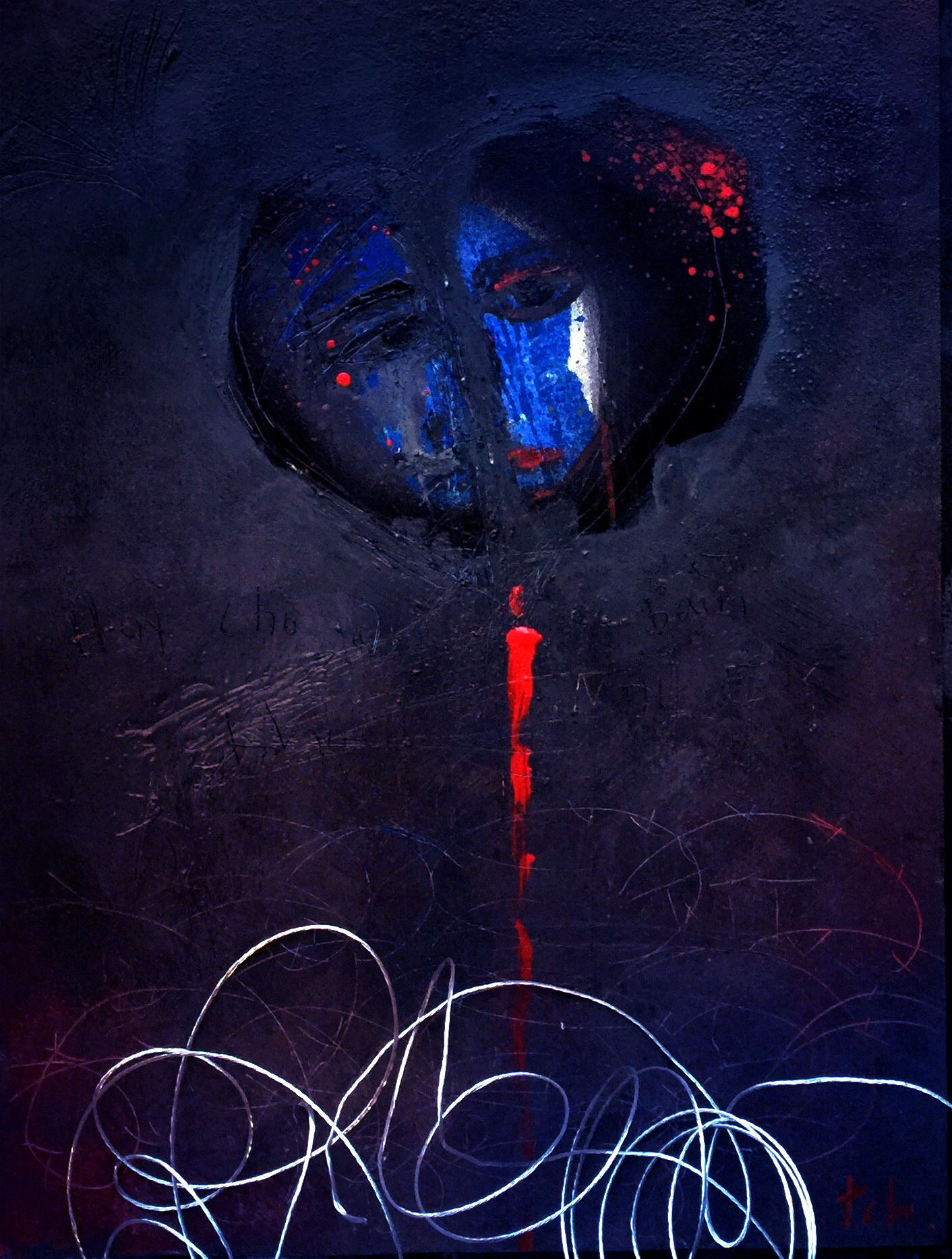


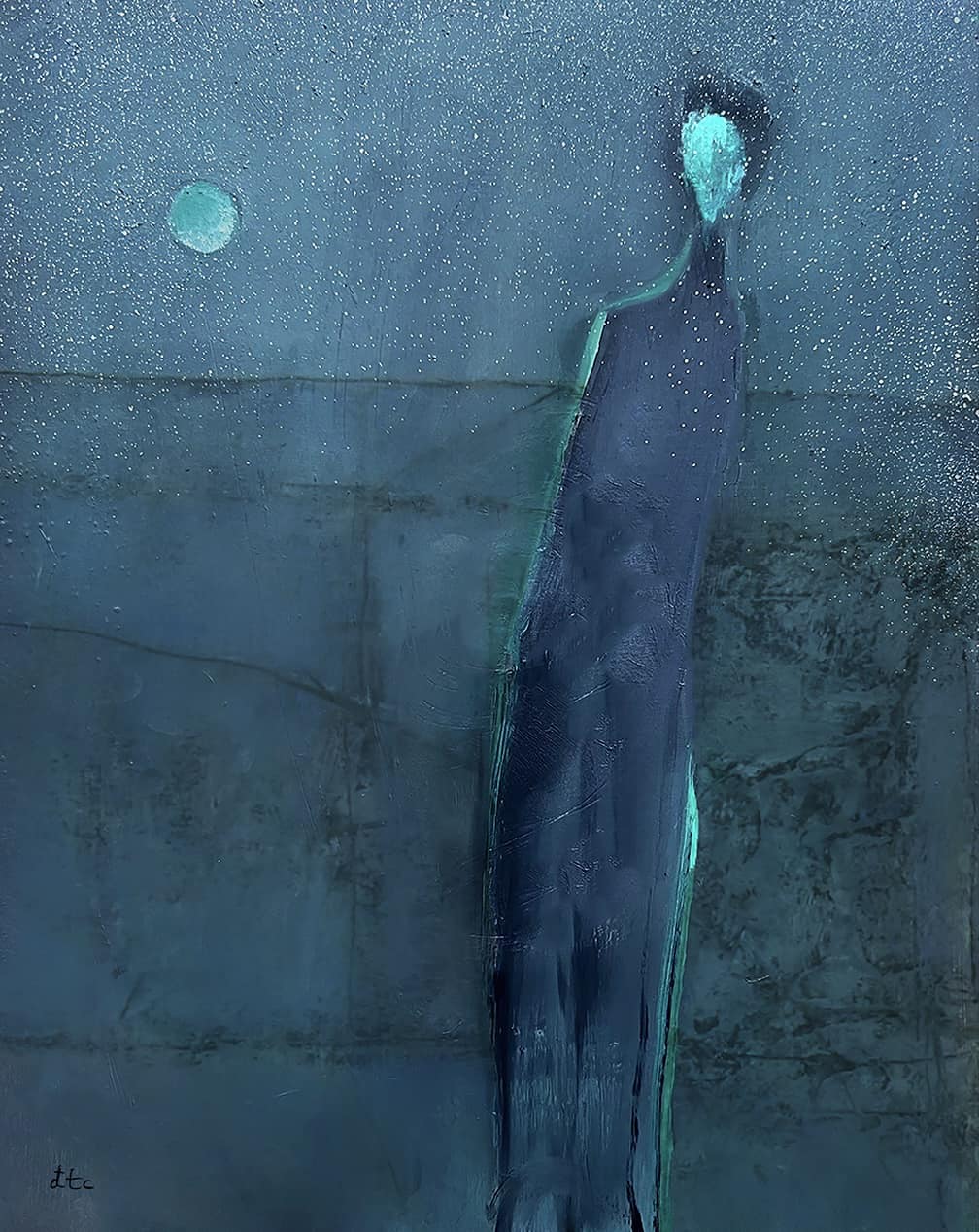



 Nguyễn Thị Phương Trâm