MY LIFE | Lê Vĩnh Tài [484]

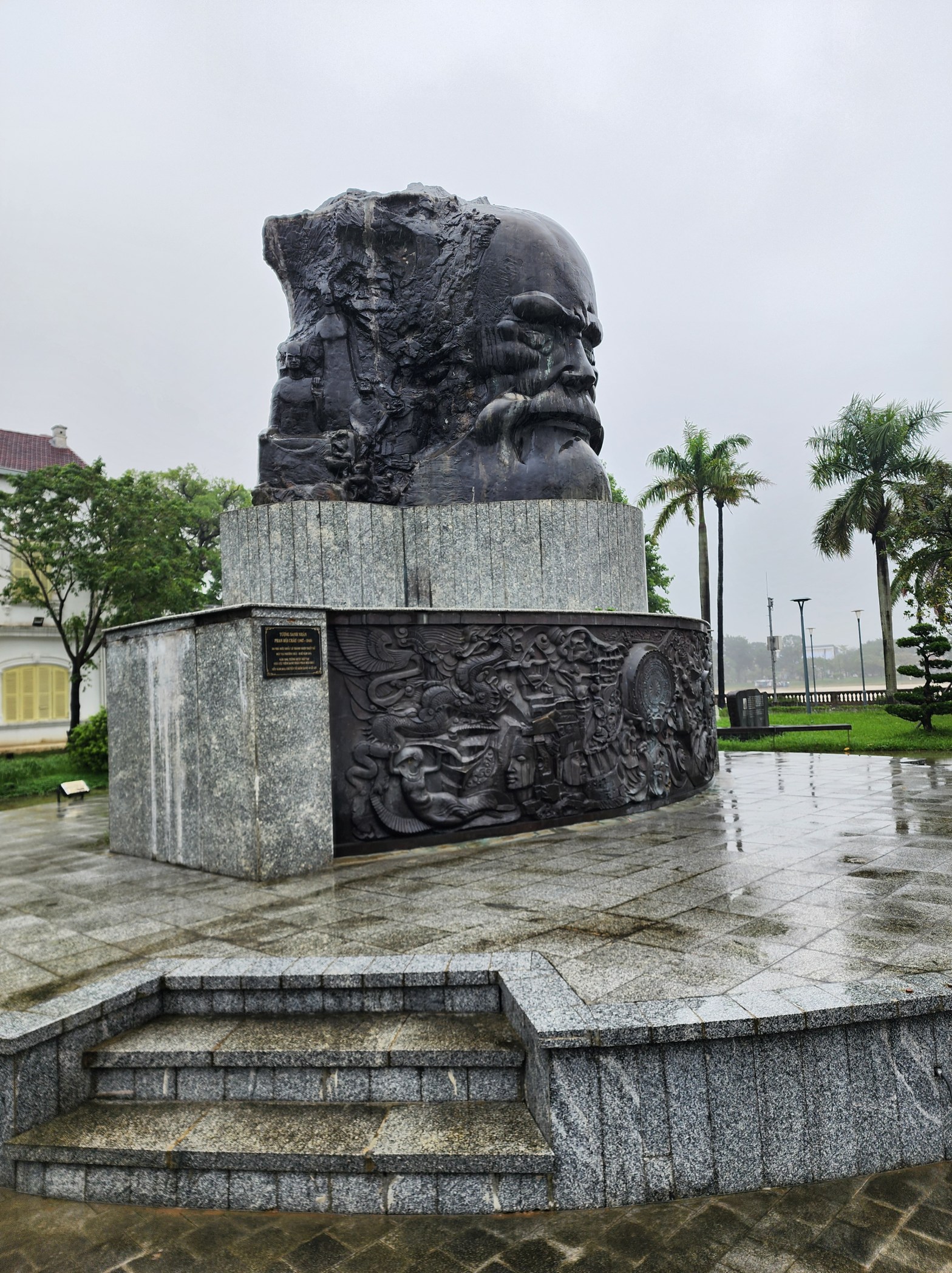
Sông Hương, Huế, Việt Nam Winter 2025. Photography Nguyễn Thị Phương Trâm

A poem in Vietnamese by Lê Vĩnh Tài
Translator: Nguyễn Thị Phương Trâm

Since the day she had left for the sea, I have lived on a mountain, all roads lead to one gate, it is always locked with a sign at the top: “My life.”

Each morning, I find myself in front a mirror that no longer has a reflection of me. In the mirror I see her flying away into the horizon. I would lift my finger to touch the thick film of dust on the mirror. People say: it’s not her at all, it was my memory trapped inside the shards of glass.

I did try to find “My life” else where, not in the mirror. Say the identification papers, citizenship, electric or water bill… but “My life” no matter where it might be have been separated into a series of numbers, a mindless data. I met the man who separates these series of numbers as a profession, he has a scanty black beard, he said:

– You told her your life was more important right? I nodded.

– Then you should live up to your word, forget the small stuff. From this day on, you should live up to the shadow of that life.

I asked:

– And her?

The man with the scanty beard smiled:

– She is your life. You were the one who had given it away.

I understood then that I didn’t have a choice. Convicted, I had no choice but to live my life without her. In the dark room, I heard her small voice:

– You are right, but the truth can not save you. I opened my eyes. There was no one there. When she left, I understood that my life had left with her, left behind was a body that breathes.

She left.
I stayed.
Both had taken with them “my life.”

CUỘC ĐỜI TÔI

Từ ngày nàng về biển, tôi sống trên một ngọn núi, mọi con đường đều dẫn về một cánh cổng khép kín, phía trên treo tấm bảng: “Cuộc đời tôi.”

Mỗi buổi sáng, tôi ngồi trước gương nhưng tấm gương không còn phản chiếu hình ảnh của tôi. Trong gương tôi thấy em đang bay về phía chân trời. Tôi đưa tay ra chỉ chạm được vào lớp bụi dày trên gương. Người ta bảo: đấy không phải hình ảnh của em, mà là ký ức của tôi bị chính tôi giam giữ trong những mảnh thủy tinh.

Tôi cũng thử đi tìm “Cuộc đời tôi” ở nơi khác, không phải ở trong gương. Ví như trong giấy chứng minh nhân dân, trong hóa đơn điện nước… nhưng “Cuộc đời tôi” dù ở bất kỳ đâu cũng đã bị người ta tách riêng ra thành một dãy các con số, một dữ liệu vô tri. Tôi gặp người đàn ông chuyên tách các dãy số, ông ta có hàm râu thưa màu đen, ông ta nói:

– Anh bảo với người con gái ấy rằng cuộc đời anh quan trọng hơn, đúng không? Tôi gật đầu.

– Vậy thì anh hãy sống đúng như lời mình nói đi, cứ quanh quẩn tìm kiếm cái không quan trọng làm gì. Từ nay trở đi, mỗi ngày anh sống là cái bóng của chính cuộc đời ấy.

Tôi hỏi:

– Thế còn cô ấy?

Người đàn ông râu thưa màu đen mỉm cười:

– Cô ấy chính là cuộc đời anh. Và anh đã tự tay giao nó đi mất rồi.

Tôi hiểu mình không còn quyền lựa chọn. Tôi bị kết án, bị buộc phải đi qua vô tận những ngày không còn em. Trong căn phòng tối, tôi nghe giọng em thì thầm:

– Anh nói đúng, nhưng đúng là sự thật không cứu được anh đâu. Tôi mở mắt. Không còn ai ở đó. Khi em rời đi, tôi nhận ra cuộc đời tôi đã đi cùng em, còn lại chỉ là xác thân biết thở.

Em bước đi.
Tôi ở lại.
Cả hai đều mang theo “cuộc đời tôi.”


Lê Vĩnh Tài, the poet and translator born in 1966 in Buon Ma Thuot, Daklak, Vietnam. The retired doctor is still a resident of the Western Highlands and a businessman in Buon Ma Thuot.

Nguyễn Thị Phương Trâm, the blogger, poet, and translator, was born in 1971 in Phu Nhuan, Saigon, Vietnam. The pharmacist currently lives and works in Western Sydney, Australia.

Present | Bùi Chát

chưa có tên, sơn dầu trên canvas, 150x195cm . Bùi Chát.

poem inspired art by Bùi Chát
translation by Nguyễn Thị Phương Trâm

we alone have so many faces
mine have all taken a hold of me

my natural compulsion is to run
run again and again
run away as far as I can

to forever escape from all those faces
I have found a place to hide within you

forever within you
to embracing a new day

Hiện hữu


Có quá nhiều mặt trong một khuôn mặt
Cố bám riết lấy tôi

Theo phản xạ thông thường
Tôi bỏ chạy
Rồi lại bỏ chạy

Và để vĩnh viễn thoát khỏi những khuôn mặt
Tôi đã trốn vào em

Mãi mãi ở trong em
Ôm trọn ngày đang tới


Bùi Chát is the poet, writer, publisher and artist’s pen name. Bùi Quang Viễn was born on October 22, 1979, at Hố Nai, Biên Hòa, Đồng Nai Province, Việt Nam. Born to family of patriotic Catholic refugees from the North in 1954.

Graduated in 2001 from the Faculty of Literature, Linguistics, and Journalism of Hồ Chí Minh City University of Social Sciences and Humanities. Bùi Chát named and cofounded Nhóm Mở Miệng (Open Mouth Group) with the poet and writer Lý Đợi, promoting Graveyard & Garbage Poetry.

Nhà Xuất bản Giấy Vụn (Scrap Paper Publishing House), also founded by Bùi Chát, distributions of xerographically structured sensitive works by “pavement poets”. In 2004, Bùi Chát and cofounder Lý Đợi were detained for two days for distributing flyers at a poetry reading raided by the authority. In 2005, the culture department blocked their performance at the Goethe Institute in Hà Nội.

In 2011, Bùi Chát was awarded the IPA Freedom to Publish Prize “for his exemplary courage in upholding the freedom to publish.” He was arrested on his return to Việt Nam after receiving the award in Buenos Aires and detained for several days.

Nguyễn Thị Phương Trâm, the blogger, poet, and translator, was born in 1971 in Phu Nhuan, Saigon, Vietnam. The pharmacist currently lives and works in Western Sydney, Australia.

What is poetry? | Bùi Chát

poem by Bùi Chát
translation by Nguyễn Thị Phương Trâm

What is poetry?

– How the f..k would I know!
You’re the poet, you tell me!


Bùi Chát is the poet, writer, publisher and artist’s pen name. Bùi Quang Viễn was born on October 22, 1979, at Hố Nai, Biên Hòa, Đồng Nai Province, Việt Nam. Born to family of patriotic Catholic refugees from the North in 1954.

Graduated in 2001 from the Faculty of Literature, Linguistics, and Journalism of Hồ Chí Minh City University of Social Sciences and Humanities. Bùi Chát named and cofounded Nhóm Mở Miệng (Open Mouth Group) with the poet and writer Lý Đợi, promoting Graveyard & Garbage Poetry.

Nhà Xuất bản Giấy Vụn (Scrap Paper Publishing House), also founded by Bùi Chát, distributions of xerographically structured sensitive works by “pavement poets”. In 2004, Bùi Chát and cofounder Lý Đợi were detained for two days for distributing flyers at a poetry reading raided by the authority. In 2005, the culture department blocked their performance at the Goethe Institute in Hà Nội.

In 2011, Bùi Chát was awarded the IPA Freedom to Publish Prize “for his exemplary courage in upholding the freedom to publish.” He was arrested on his return to Việt Nam after receiving the award in Buenos Aires and detained for several days.

Nguyễn Thị Phương Trâm, the blogger, poet, and translator, was born in 1971 in Phu Nhuan, Saigon, Vietnam. The pharmacist currently lives and works in Western Sydney, Australia.

HOW TO CONFESS… | Nguyễn Thị Minh Ngọc

Nguyễn Thị Minh Ngọc

thơ Nguyễn Thị Minh Ngọc
Nguyễn Thị Phương Trâm dịch

how to confess your love and not lose it
grill other people on how to for the first time love
the unknown doors to brave new worlds
words
vernacular of the flesh
wordless gaze
forget them
run
and that includes death
and still most unfamiliar is affection
the unmet gaze of those we love
dumb anxieties may it be a mean or kind dream

ah who am I to say
to have lived this long to never again love
head first into a river called life
like a fish out of water
craving for death
the way the marriage bed had denied me
as we laugh and cry half a lifetime withered away
by the games we play
cross stitches of pride over shame and humiliation
ignoring the sting of bindii
under foot mistaking it for a lover
love came out of nowhere
over the mountains
through the ravines of a life spent
may it be life or death matter - no
the enthusiasm for oblivion

discerning the bitter struggle
smells of an impending storm
hid behind mirrors of illusions
the way storms are imprisoned
in the smallness of one's fist
as the clouds in the sky would hid
the affections reflected
a fox with nine tails abstained
from worldly interactions for 999 years
and 364 days and its tails are dripping
teary still
cunning enough to get marry
to avoid being strike down by lightning
cunning enough to get marry
as a glorify way to confess
love
regardless of a love that is not real
regardless of the agony of true pain
regardless of how harden humanity had become
in its wisdom water could still break
a misguided spirit guardian howling in the dark
enough fret to trouble the moon

LÀM THẾ NÀO…

 
Làm thế nào để tỏ tình mà tình không biến mất
tra vấn tha nhân bài học vỡ lòng yêu
Những cánh cửa đời xa lạ biết bao-
lời,
ngôn ngữ thân xác,
mắt câm,
quên nó đi,
chạy,
và cả chết…
Nhưng xa lạ nhất vẫn là tình
Người mà ta không dám ngó vào mắt khi đối diện
ngẩn ngơ lo cơn mộng dữ hay lành

Ôi ta,
sống đến đây tưởng như không bao giờ yêu được nữa
lao vào dòng sống ngày mỗi ngày
như cá lao mình khỏi nước
nhìn cái chết thèm thuồng
như nhìn chiếc giừơng cưới luôn chối từ ta
tàn nửa đời trộn cười khóc làm trò chơi
đan xéo lòng kiêu nhòa nỗi nhục
giả dại hôn ngọn cỏ châm đau mà ngỡ người tình
Chợt tình đến,
ngang tàng núi non,
lạnh lẽo huyệt thẳm
mòn sống,
thờ ơ chết,
nồng nhiệt với hư vô

Cảm được vị đắng nhọc nhằn,
mùi giông sắp đến
đành nhốt tình sau tấm gương bóng ảo chờn chờn
như nhốt bão trong lòng tay nhỏ
như vùa mây đỉnh trời che kính chiếu yêu
hồ ly tu 999 năm 364 ngày,
đuôi còn nhỏ lệ
mưu toan kết hôn chạy trốn sét trời
mưu toan kết hôn như để tỏ tình
Yêu,
bất chấp tình ảo
bất chấp nỗi đau đớn thật
bất chấp ngọc người ngàn năm tri thức tan bóng nước
Tịch tà lạc bóng
âm âm tiếng hú gợn nhàu trăng


Nguyễn Thị Minh Ngọc

Director Nguyễn Thị Minh Ngọc, born 5 August 1953 in Bà Rịa, Vietnam. She graduated from stage directing in 1980, trained as an actor at the Ho Chi Minh City School of Theater and Cinema and Tran Huu Trang Theater. She was a student of director Nguyen Tuong Tran (second generation disciple of Konstantin Stanislavski), trained as a cải lương performer with People’s Artist Phung Ha, and she trained many renowned native and international drama and cải lương artists like: Meritorious Artist Huu Chau, Huu Nghia, Hong Dao, Quang Minh, Meritorious Artist Huu Quoc, Meritorious Artist My Hang, Luong My, Mai Lan, Hoa Hiep, Xuan Trang, Thanh Phuong.

She taught the subjects of Screenwriting, Drama Theory and History of Vietnamese Theatre at several colleges and universities, co-founded the Experimental Directing Club (1985), staged about 30 traditional and contemporary plays, wrote about 70 traditional and contemporary plays for the stage and about 30 scripts for cinema, hundreds of episodes for television, several research works on theatre and reformed opera, attended many festivals, seminars, composed and researched on theatre and education in the country and in Australia, England, France, Germany, Tanzania, Norway, Sweden, Philippines, USA, Indonesia, and was the stage personality of the year 2004 voted by Vietnam Television.

She was an actress for the stages: 5B Vo Van Tan, Idecaf… The roles that the audience remembers: Otilia, The Chicken Raising Girl & The Old Girl (Du Luan Quan Chung), Aunt Ba Kim Duyen (Ngoi Nha Khong Dan Men), Grandma (Cau Dong), Grandma Ca & Grandma To Gia (Long Dang Do Cao), Grandma (Tam Nguoi Dan Ba), Crazy Audience (Thuong Hoai Ngan Nam), Grandma Hanh Ngo (Mot va cua toi?). The most recent role was Grandma Vu in the MV Tan Vo with Dam Vinh Hung and Nhan Phuc Vinh.[1] The performance “The Last Romantic” is a 60-minute solo performance made up of ten tragicomic monologues that Nguyen Thi Minh Ngoc used to illustrate her talks about theater at universities in and outside the country.

In addition, she is also a member of the Writers, Theater, and Cinema Associations, and is one of the 20 outstanding writers of Ho Chi Minh City selected by the Ho Chi Minh City Writers Association.

She is the first Vietnamese woman to bring Vietnamese works to the off-off Broadway stage in New York as an author, director and actress, including: Lost Woman (2008) and We Are… (2011). She was selected as the highlight of the Vietnamese International Film Festival (VIFF) in the US (2007).

In addition to documentaries about Nguyen Thi Minh Ngoc produced by VTV, HTV, Binh Duong, and Long An television stations, in 2015, director Hung Phuong made the documentary “Nguyen Thi Minh Ngoc – The Treasure Keeper of Gold and Jade” 19’36” long and won first prize in the “I Preserve Beauty” contest.


Nguyễn Thị Phương Trâm, the blogger, poet, and translator, was born in 1971 in Phu Nhuan, Saigon, Vietnam. The pharmacist currently lives and works in Western Sydney, Australia.

I’M HERE | Lê Vĩnh Tài [485]

A poem in Vietnamese by Lê Vĩnh Tài
Translator: Nguyễn Thị Phương Trâm

I’m here
me and my ears
ready to listen to all your fears

my dear
call me
may it be laugher or tears

call me no matter what
I will be here
I will listen, to all your fears

.
quietly

– love, would you like me to show you my magic?
your ears I will kiss
like this
my eyes you will kiss
like this

because your ears are cold
your eyes are brown and they are bold
they see me all the way to my soul
it’s not what I want
but I will always be here

sound of nothingness in our ears
hollowness all around us

my ears hears you, love:
– you have a kitchen in my mind
the pots and pans hangs on a wall
above a stove
a light blue kitchen table

light beyond the kitchen door
beyond the reach of your warm ears
beyond last night’s sleep
what did you have for breakfast
before we all head for the door?

.
and the noise in the middle of the night
our minds suffocating from all the curse
the ceremony we use to condemn the dark
beyond a dawn that is lit by an unholy red light

beyond the thunderous scream of someone or another
the poor fragile membranes in our ears
love, you demand it – please shut the fuck up
pray that all those lovely angels would stop trying to perforate my eardrums
tear and break what is left of my mind

– please, leave me alone, it’s not hard
prayers of love, calls and answers
until death separates
we’re in the street
your legs my love are like the legs of a football player
when the referee careful rips us apart
time and time again

the sound of a stallion’s hooves pounding on the burning fire of anxious waiting
the reflection of the moon in your eyes love
virtue in a pool of water
at our feet

tôi ở đây
với đôi tai
để lắng nghe nỗi sợ hãi của bạn

thân yêu
hãy gọi cho tôi
cho dù đó là nước mắt hay những tiếng reo hò

cách bạn gọi
dù điều gì sẽ xảy ra
tôi vẫn ở đây
lắng nghe, nỗi sợ hãi của bạn

.
thì thầm

– em có muốn xem phép thuật của anh không?
anh hôn tai em
như thế này
em hôn mắt anh
như thế này

vì tai em rất lạnh
còn mắt em thì nâu
chúng nhìn thấu tâm hồn anh
anh không muốn
nhưng anh luôn ở đó

âm thanh
của hư không trong tai
sự trống rỗng vây xung quanh chúng ta

tai tôi nghe em nói:
– em có một căn bếp
tôi hình dung những chiếc nồi
treo trên một cái lò, một chiếc
bàn ăn màu xanh nhạt

buổi sáng ngoài cửa bếp
không chạm tới hơi ấm của tai em
sau giấc ngủ đêm qua
em đã ăn gì vào bữa sáng?
trước khi chúng ta lao ra khỏi cửa

.
và tiếng ồn mỗi đêm
tâm trí chúng ta bị bóp nghẹt trong những lời nguyền
những nghi lễ nguyền rủa đêm tối
sau khi buổi sáng được thắp sáng bởi màu đỏ bất kính

khi ai đó gầm lên như sấm sét
hai tai mỏng manh
em nói, làm ơn im lặng
cầu xin những thiên thần đừng đâm vào màng nhĩ của anh
xé nát não anh thành từng mảnh

– hãy để tôi yên, dễ quá mà
lời cầu nguyện cho tình yêu, lời gọi và lời đáp
cho đến khi cái chết chia lìa
chúng ta đứng ở một góc phố
đôi chân em như một cầu thủ bóng đá
khi trọng tài cẩn thận xé chúng ra
hết lần này đến lần khác

tiếng vó ngựa trượt trên cảm giác hồi hộp của lửa
và mặt trăng phản chiếu trong mắt em
sự tinh khiết trong một vũng nước
dưới chân chúng ta


Lê Vĩnh Tài, the poet and translator born in 1966 in Buon Ma Thuot, Daklak, Vietnam. The retired doctor is still a resident of the Western Highlands and a businessman in Buon Ma Thuot.

Nguyễn Thị Phương Trâm, the blogger, poet, and translator, was born in 1971 in Phu Nhuan, Saigon, Vietnam. The pharmacist currently lives and works in Western Sydney, Australia.

Swine, pigs & Poetry | Bùi Chát

Bùi Quang Viễn, Photo by Trà Cù Lủ

editorial by Bùi Chát
translation by Nguyễn Thị Phương Trâm

1.

Swine and Pigs are 2 completely different kinds of animals, Swine are swine and Pigs are Pigs, Pigs are Northern creatures and Swine are Southern animals. The fate of Swine and Pigs are nothing alike. Pigs will be skinned alive, their lard used to bake cake, Swine follow the arts they make porn. Between Pigs and Swine there is not just a divide in geography, but a huge gap between rich and poor, nobility and commoners, blue blood and farmers.

Swine as an identity have been around for how long no one knows, but it has to be at least before the war. A war that was dragged on and on at the detriment of both Swine and Pigs. Pigs fought in the name of their breed, Swine chased after their freedom to live. Pigs wanted a collective, unification on all fronts, they started the war for a simple reason: on this earth there can only be Pigs. Swine, with the help of those with like minds fought back with everything they got, refused to give in, so they can keep their identity, they want to be called Swine.

Finally the war ended, wins and advantages belonged to the Pigs, even though after half a century, after all the trial and imposition, Swine are not Pigs, and Pigs are no longer Pigs either, neither side cared about reunification or harmony.

But at a glance there still, rows after rows and line after line, there are pigs pen full of Swine and Pigs.

2.

Dương Tường – a poet and translator is adept in how to live with Pigs, said: The first person who called a Thrush a Thrush before it had a name was indeed a poet. I don’t know! I don’t know for sure if the person who named a Dragonfly Dragonfly, Grasshopper a Grasshopper, Mallard a Mallard was a poet or not.

It should be obvious that – I was born and raised in the land of Swine – as a poet but not once did I managed to name any thing/creature. I have composed hundreds of poems amongst them some have been published. I am a poet not because of the hundred of poems, my problem is that I believed I was a poet before I composed those poems, or it is very possible that I was able to compose those poems because I believed that I was and still am a poet. Sometimes I would wonder if I’m still a poet, and I have called myself a veteran of not war but poetry especially in the past ten years, a period of time when I have not touch or be near anything to do with poetry, reading or writing, both.

Even if I am not a poet, I can still discern cat call via the cries of Pigs-Swine what one would defined as Feline since it did cry “meow meow”, the Elephant’s trumpet in the oink oink of Pigs-Swine that is called an Elephant sound because of it long nose, and much like a crow because it is a crow, the way say a Cow is called a Cow since it would often squawk “caw caw”, “moo, moooo”…

and of course it is rudimentary that one can not apply this rule to just anything, for instance if one were to apply this rule when it comes to a Dog then it would bark “wow wow”, “ruff ruff”, “woof woof”, or one might call a Dog a Woof of a Wolf…

Derived from arguments between two regions of Pigs-Swine despite whether speech was formed or not, anyone can be a poet if this is what they want. With the desire to change the vernacular.

3.

Poetry was not an art that came first, even more so that it was not an art that had first began here. Even so, this land’s desire to change the vernacular is rather commendable.

I do not know the exactly statistic, but personally I believe that after a quarter of a century that the Pigs have been in charge there has been a 25 to 30% decline in the vernacular of Swine. Admittedly significant was the Swine’s efforts in trying protect and preserve their heritage, when they were displaced, when they were forced to leave, the most valuable asset they took with them was their vernacular. Roaming all over the world, proudly speaking their language amongst other communities, print newspapers, write and publish literature, and in whatever they might be doing they applied their vernacular. The conservation effort of the Swine populace may have succeeded if it weren’t for the effort to destroy, in other words, without the House of Pigs’ effort to change the language.

But in truth whether the house of Pigs were deliberate in trying to change the vernacular the vernacular itself was already changing, the way it would say within the politics of imperial courts it had its own evolution, and everyone can become a poet in their way.

If we truly believe the legendary tale of the Tower of Babel then what should be on our mind? The Tower of Babel does not only represent the birth of language, but also the metaphor specifically for the formation of each language. The Tower of Babel can not reside any where else but within each language, is the history of each language not the history of The Tower of Babel?!!

I like the idea of a poem being like The Tower of Babel, and it being intrinsically the will of the vernacular more so than the will of the poet. The poet clearly plays the role of the creator, he wants his creation, his poem to remain flawed, hence the words, terminologies, images in the poem finds it impossible to truly communicate, form a bond strong enough to be called friends, connect to then break, fall apart… so the poem may remain forever incomplete, forever a failure.

Reading and writing within our vernacular means reading and writing within a state of utter nonsense, utter chaos, where the conciousness is left in a state of turmoil of undefined ideas, creating and destroying simultaneously, war and peace, just as old as it is new, at the same time beg and borrow mend regenerate, born again.

In each writing endeavour, I find myself endeavouring to build another tower of Babel, while reading is an endeavour to destroy it.

Even though the subject of art was not born first, the undeniable possibility is that when art is bound by the vernacular it becomes an art that is most sustainable, and possibly the last subject of art that will survive in the end.

The business of poetry begins with the vernacular, its survival is parralel with the vernacular, it’s not easy to replace poetry with anything else but the vernacular.

Heo, lợn & thơ

Bùi Chát

1.

Heo và Lợn thực tế là 2 sinh vật hoàn toàn khác nhau, Heo là Heo và Lợn là Lợn, Lợn sinh ra ở miền Bắc và Heo sinh ra ở miền Nam. Số phận của Lợn và Heo cũng chẳng giống gì nhau. Lợn chắc chắn bị bức hại, lột da làm bánh (bánh da Lợn), Heo chạy theo nghệ thuật, làm diễn viên, sống chết vinh nhục với điện ảnh (phim con Heo). Giữa Lợn và Heo không chỉ là khoảng cách về không gian địa lý, mà còn là khoảng cách của giàu nghèo, của sang với hèn, của bần nông và quý tộc.

Tên gọi Heo có từ khi nào thì không biết, nhưng phải có trước cuộc chiến. Một cuộc chiến có thể nói là lê thê và tốn kém giữa Heo và Lợn. Lợn nhân danh giống nòi, Heo theo đuổi tự do. Lợn đã muốn thâu tóm, nhất thống mọi mặt, khởi động cuộc chiến với lý do hết sức đơn giản: trên mảnh đất này tất cả phải là Lợn. Heo, với sự giúp sức của đồng bọn chống trả quyết liệt, không chịu nhượng bộ, chỉ để được gọi tên đúng như mong muốn, là Heo.

Rốt cuộc chiến tranh kết thúc, thắng lợi thuộc về nhà Lợn, tuy nhiên sau gần nửa thế kỷ, dù đã rất cố gắng áp đặt, nhưng Heo vẫn không phải là Lợn, Lợn cũng chẳng còn là Lợn nữa, chẳng bên nào quan tâm đến hòa hợp và thống nhất.

Nhưng thỉnh thoảng cũng thấy đâu đó, hàng hàng lớp lớp, cả một bọn mặt Lợn tim Heo.

2.

Dương Tường – một nhà thơ và dịch giả có nhiều kinh nghiệm ở xứ Lợn, nói: Người đầu tiên gọi con Chích Choè là Chích Choè khi nó còn khuyết danh, người đó đích thực là nhà thơ. Tôi thì không chắc lắm! Tôi cũng không dám chắc những người đặt tên cho con Chuồn Chuồn là Chuồn Chuồn, Châu Chấu là Châu Chấu, Le Le là Le Le có phải là nhà thơ không nữa.

Dĩ nhiên tôi – sinh ra và lớn lên trong miền Heo – là một nhà thơ dù tôi chưa biết đặt tên cho bất kỳ con/vật nào. Tôi cũng đã làm hàng trăm bài thơ và xuất bản một ít trong số đó. Không phải vì hàng trăm bài thơ đó mà tôi trở thành nhà thơ, vấn đề là tôi luôn nghĩ mình là một nhà thơ trước khi viết những bài thơ đó, hoặc có thể vì nghĩ mình là nhà thơ nên tôi mới viết được những bài đó cũng nên. Đôi khi tôi cũng hay tự nhủ không biết mình có phải là một nhà thơ không nữa, và tôi cũng từng gọi mình là cựu nhà thơ trong mười năm, đó là khoảng thời gian tôi không đụng chạm gì đến thơ hoặc những gì liên quan thơ, dù là đọc hay viết.

Nhưng nếu không phải là một nhà thơ, tôi cũng sẽ thấy rõ con Mèo trong tiếng Lợn-Heo được gọi là Mèo vì có thể nó đã kêu “meo meo”, con Voi trong tiếng Lợn-Heo được gọi là Voi có lẽ vì nó có cái vòi, và tương tự con Quạ được gọi là Quạ, con Bò được gọi là Bò vì nó thường kêu “quạ quạ”, “b..òòò, bòòò”…

Đương nhiên ta không thể áp dụng quy luật ấy cho tất cả mọi sự vật, lấy ví dụ nếu buộc phải áp dụng quy luật ấy cho con Chó thì hoặc là con Chó phải sủa “nó nó”, “chó chó”, “ó, ó” hoặc con Chó phải được gọi là con Gâu hay con Gấu….

Hiểu theo cách lập luận của hai miền Lợn-Heo thì dẫu có sáng tạo ra ngôn ngữ hay không, bất cứ ai cũng có thể trở thành nhà thơ nếu họ có nhu cầu. Nhu cầu làm biến đổi ngôn ngữ.

3.

Thơ không phải là môn nghệ thuật ra đời sớm nhất, càng không phải là môn nghệ thuật ra đời ở xứ sở này. Tuy nhiên, nhu cầu làm biến đổi ngôn ngữ ở nơi đây thì quả là đáng nể.

Tôi chưa biết có một thống kê rõ ràng cụ thể nào, nhưng theo suy đoán chủ quan của tôi thì có tới 25 đến 30% cách dùng tử của miền Heo bị biến mất chỉ sau 1/4 thế kỷ nhà Lợn làm chủ. Cho dù nỗ lực bảo tồn, bảo vệ của nhà Heo phải thừa nhận là đáng kể, tài sản quý giá nhất mà họ có thể mang theo khi di tản là ngôn ngữ. Dong ruổi khắp địa cầu, sử dụng thường xuyên một cách tự hào trong những cộng đồng ngôn ngữ khác, làm báo, làm văn học, làm xuất bản, và làm gì thì họ cũng dùng ngôn ngữ của họ. Nỗ lực bảo tồn ngôn ngữ của dân Heo biết đâu có thể đã thành công nếu không có nỗ lực phá huỷ, nói cách khác nếu không có nỗ lực làm biến đổi ngôn ngữ của nhà Lợn.

Nhưng thực tình mà nói dù cho nhà Lợn có ý thức hay không ý thức về việc làm biến chuyển ngôn ngữ thì bản thân ngôn ngữ cũng tự biến chuyển, nói theo kiểu chính trị cung đình là tự diễn biến. Ngôn ngữ đã tự diễn biến, và mỗi người tham gia vào tiến trình ngôn ngữ đều ý thức được vai trò tự diễn biến của mình, rồi mỗi người đều đã có thể trở thành nhà thơ theo một cách riêng.

Nếu thực sự chấp nhận huyền thoại Tháp Babel thì ta phải nghĩ gì? Tháp Babel không chỉ là biểu tượng cho sự ra đời của các ngôn ngữ, mà còn là ẩn dụ cho sự hình thành từng ngôn ngữ cụ thể. Tháp Babel đã ở đâu nếu không phải là ở trong chính từng ngôn ngữ, chẳng phải lịch sử của mỗi ngôn ngữ là lịch sử của Tháp Babel hay sao?!!

Tôi thích hình dung bài thơ như một tháp Babel, và tôi cũng nghĩ bài thơ được hình thành từ ý chí nội tại của ngôn ngữ hơn là ý chí của nhà thơ. Nhà thơ chắc hẳn luôn cho mình có vai trò như thượng đế, hắn có bao giờ muốn bài thơ được hoàn thành đâu, vì vậy hắn đã làm cho các từ ngữ, hình ảnh trong bài thơ không thể nào hiểu được nhau, chạm được nhau để bàn bạc, liên kết mà phải chia rẽ, tan vỡ… để bài thơ luôn luôn phải dở dang, luôn luôn phải thất bại.

Đọc và viết trong ngôn ngữ của chúng tôi là đọc và viết trong sự quàng xiên, hổ lốn, đấy tỉnh xáo trộn từ chuyện này qua chuyện kia, vừa sáng tạo vừa phá hủy, vừa hòa bình vừa chiến tranh, vừa cũ lại vừa mới, vừa vay mượn chắp vá lại vừa tái tạo, hồi sinh.

Mỗi nỗ lực viết, tôi tự thấy là mỗi nỗ lực xây dựng tháp Babel, còn mỗi nỗ lực đọc là nỗ lực phá hủy nó.

Tuy không phải là môn nghệ thuật ra đời sớm nhất, nhưng biết đâu nghệ thuật gắn liền với ngôn ngữ có thể sẽ là môn nghệ thuật tồn tại lâu dài nhất, và cũng có thể sẽ là môn nghệ thuật cuối cùng cho đến khi mọi thứ kết thúc.

Thơ khởi nghiệp từ ngôn ngữ, tồn tại cùng ngôn ngữ, thật khó có thể thay thế thơ bằng thứ gì khác ngoài ngôn ngữ.


Bùi Chát is the poet, writer, publisher and artist’s pen name. Bùi Quang Viễn was born on October 22, 1979, at Hố Nai, Biên Hòa, Đồng Nai Province, Việt Nam. Born to family of patriotic Catholic refugees from the North in 1954.

Graduated in 2001 from the Faculty of Literature, Linguistics, and Journalism of Hồ Chí Minh City University of Social Sciences and Humanities. Bùi Chát named and cofounded Nhóm Mở Miệng (Open Mouth Group) with the poet and writer Lý Đợi, promoting Graveyard & Garbage Poetry.

Nhà Xuất bản Giấy Vụn (Scrap Paper Publishing House), also founded by Bùi Chát, distributions of xerographically structured sensitive works by “pavement poets”. In 2004, Bùi Chát and cofounder Lý Đợi were detained for two days for distributing flyers at a poetry reading raided by the authority. In 2005, the culture department blocked their performance at the Goethe Institute in Hà Nội.

In 2011, Bùi Chát was awarded the IPA Freedom to Publish Prize “for his exemplary courage in upholding the freedom to publish.” He was arrested on his return to Việt Nam after receiving the award in Buenos Aires and detained for several days.

Nguyễn Thị Phương Trâm, the blogger, poet, and translator, was born in 1971 in Phu Nhuan, Saigon, Vietnam. The pharmacist currently lives and works in Western Sydney, Australia.

to begin a poem | Bùi Chát

Khai mạc 'Đang trôi'. Photo by Trà Cù Lủ

poem inspired art by Bùi Chát
translation by Nguyễn Thị Phương Trâm

the way one would go to sleep
what could truly be
beyond the aptitude of forgetfulness
where we did once upon a time exist
to begin a poem

Để bắt đầu một bài thơ


Như cách chúng ta khởi động giấc ngủ
Điều gì đã thực sự tồn tại
Ngoài kinh nghiệm của lãng quên
Nơi chúng ta từng hiện diện
Để bắt đầu một bài thơ

(Chúng ta đang trôi đi đâu?! – Nxb Đà Nẵng 2025)


Bùi Chát is the poet, writer, publisher and artist’s pen name. Bùi Quang Viễn was born on October 22, 1979, at Hố Nai, Biên Hòa, Đồng Nai Province, Việt Nam. Born to family of patriotic Catholic refugees from the North in 1954.

Graduated in 2001 from the Faculty of Literature, Linguistics, and Journalism of Hồ Chí Minh City University of Social Sciences and Humanities. Bùi Chát named and cofounded Nhóm Mở Miệng (Open Mouth Group) with the poet and writer Lý Đợi, promoting Graveyard & Garbage Poetry.

Nhà Xuất bản Giấy Vụn (Scrap Paper Publishing House), also founded by Bùi Chát, distributions of xerographically structured sensitive works by “pavement poets”. In 2004, Bùi Chát and cofounder Lý Đợi were detained for two days for distributing flyers at a poetry reading raided by the authority. In 2005, the culture department blocked their performance at the Goethe Institute in Hà Nội.

In 2011, Bùi Chát was awarded the IPA Freedom to Publish Prize “for his exemplary courage in upholding the freedom to publish.” He was arrested on his return to Việt Nam after receiving the award in Buenos Aires and detained for several days.

Nguyễn Thị Phương Trâm, the blogger, poet, and translator, was born in 1971 in Phu Nhuan, Saigon, Vietnam. The pharmacist currently lives and works in Western Sydney, Australia.

Mother | Bùi Chát

Khai mạc 'Đang trôi'. Art by Bùi Chát. Photo by Trà Cù Lủ

poem by Bùi Chát
translation by Nguyễn Thị Phương Trâm

Definitely not a river, a grain of rice,
Nation or memory at all

Nor anything truly terrible ever

Mother

That fucker

Has a husband and lots of children

A fact that will never change

Mẹ


Hẳn nhiên không phải dòng sông, hạt gạo,
Quê hương hay kí ức gì cả

Cũng chưa bao giờ là gì đó thực sự tệ hại

Mẹ

Là mẹ

Có chồng và thiệt nhiều con

Đấy là điều luôn được biết đến

(Chúng ta đang trôi đi đâu?! – Nxb Đà Nẵng 2025)


Bùi Chát is the poet, writer, publisher and artist’s pen name. Bùi Quang Viễn was born on October 22, 1979, at Hố Nai, Biên Hòa, Đồng Nai Province, Việt Nam. Born to family of patriotic Catholic refugees from the North in 1954.

Graduated in 2001 from the Faculty of Literature, Linguistics, and Journalism of Hồ Chí Minh City University of Social Sciences and Humanities. Bùi Chát named and cofounded Nhóm Mở Miệng (Open Mouth Group) with the poet and writer Lý Đợi, promoting Graveyard & Garbage Poetry.

Nhà Xuất bản Giấy Vụn (Scrap Paper Publishing House), also founded by Bùi Chát, distributions of xerographically structured sensitive works by “pavement poets”. In 2004, Bùi Chát and cofounder Lý Đợi were detained for two days for distributing flyers at a poetry reading raided by the authority. In 2005, the culture department blocked their performance at the Goethe Institute in Hà Nội.

In 2011, Bùi Chát was awarded the IPA Freedom to Publish Prize “for his exemplary courage in upholding the freedom to publish.” He was arrested on his return to Việt Nam after receiving the award in Buenos Aires and detained for several days.

Nguyễn Thị Phương Trâm, the blogger, poet, and translator, was born in 1971 in Phu Nhuan, Saigon, Vietnam. The pharmacist currently lives and works in Western Sydney, Australia.