A sad song | Thanh Tâm Tuyền

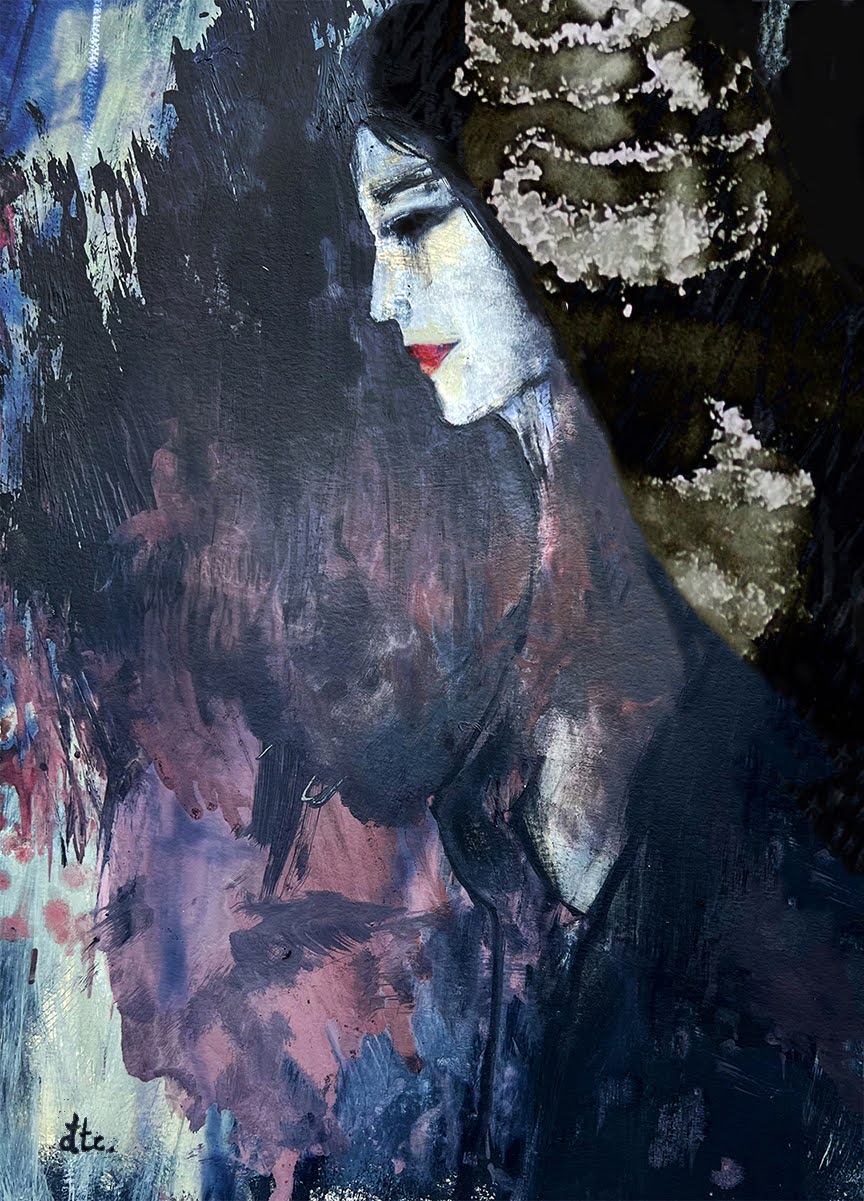
Thanh Tâm Tuyền by Đinh Trường Chinh

A poem in Vietnamese by Thanh Tâm Tuyền
Translator: Nguyễn Thị Phương Trâm
Art: Đinh Trường Chinh

I need to light that cigarette
Because behind the smoke is your smile
Colours of your eyes, and you’re cloaked in the hues of the sunset
A land of roving mountains and meadows
The cigarette is a word
An unclear exchange
Like your name or the name of an unknown flower
I’m vulnerable and I’m lost in your vernacular
A lost forest at the pit of a valley
Forgotten weed be the side of the road
Within my soul guilelessly growing
Beyond the stormy afternoon
Misty days

But if the cigarette is a sign of rejection
It’s smoke will be the purple colour of sadness
As the afternoon followed you to the other side of the hill
Along with your undiminished smile
Across this starry night
Behind the lonely trees like me
In clothes the colour of dissolution
Eyes in remnant colours of nostalgia

(Em) did you know after you left
Like a dead friend the cigarette had burned on my lips
The dry heat snapped, dissolved in fragmented
Falling embers
(Em) did you know as you looked down at those pages
The letters formed the beginning of our story
The source of maddening rapids
Whisking away the sad dark resentments
Buried at the bottom of the deep dark sea

Then as I began to climb the cold afternoon slopes
The path stretched out widely like the arms of someone who had drowned
Begging to be rescued by a city gone in hiding
Which house was yours
The start of the forest halfway up the hill at the end of the well worn path
By which scattered light or warm fire
Can you sense the void beneath the thick hair
I don’t care about the coveted flowers and meadows in my eyes
Nor do I cared for the savage air of nature
With all the liberty upon my fingers my toes my hair roots
With all the spirit of poetry grounded between the gaps of my teeth
In my bone marrow
Like the poisonous roots of a toxic tree
I will choose love not
As crazy as that of
A large rock

BÀI HÁT BUỒN

Tặng Ngọc Dũng

Anh cần đốt điếu thuốc ấy
Vì có nụ cười sau làn khói
Với màu mắt em hoàng hôn màu áo em
Trong buổi chiều miền đồi núi
Điếu thuốc như một lời
Trao gửi chưa thành nghĩa
Như tên em hay tên loài hoa nào biết được
Anh sợ những ngôn ngữ bơ vơ
Khóm rừng quên dưới thung lũng
Bày cỏ hoang ven đường
Mọc lên trong hồn anh dại dột
Sau những chiều động bão
Những ngày kín sương mù

Nhưng điếu thuốc bỗng trở thành niềm hắt hủi
Khói tím buồn
Vì chiều theo chân em sang bên kia đồi
Nụ cười mang theo
Không rớt vì sao trên nền trời
Lần sau hàng thân cây cô đơn như mình anh
Màu áo nhoà tan
Còn tưởng ấy màu mắt lưu luyến

Em có biết sau lúc em từ biệt
Điếu thuốc cháy trên môi như người bạn chết
Hơi nóng khô nhành củi gãy tàn
Em có biết em cúi nhìn vào trang sách
Những chữ hoa tưởng tượng bắt đầu
Nguồn nước dữ cuốn trôi vùi hận sầu đen tối
Chôn xuống đáy biển sâu

Rồi anh bước trên những chiều dốc lạnh
Con đường duỗi dài cánh tay người chết đuối
Cầu cứu thành phố bỏ trốn đâu
Căn nhà nào của em
Lưng đồi đầu rừng cuối đường mòn
Bên những chùm lửa ấm
Em có thấy hư vô đắp dưới mền tóc dày
Anh để mặc cỏ hoa ẩn náu vào mắt anh
Cả thiên nhiên thở lên man mọi
Với hết tự do còn ở ngón tay ngón chân tóc
Với hết hồn thơ nghiến chặt giữa hai răng giữa xương tuỷ
Như loài rễ cây độc
Anh chọn tình yêu không
Điên như đá


Thơ, trích từ LIÊN, ĐÊM MẶT TRỜI TÌM THẤY (1964)


Thanh Tâm Tuyền (1936-2006), real name Dư Văn Tâm, was a poet, as well as critic, editor, fiction writer, and playwright. He was born in Vinh, moved to Saigon in 1954, emigrated to the US in 1983, and died in Minnesota in 2006. (Source: Wikipedia)

Nguyễn Thị Phương Trâm, the blogger, poet, and translator, was born in 1971 in Phu Nhuan, Saigon, Vietnam. The pharmacist currently lives and works in Western Sydney, Australia.

words of a wheat field [325] | Lê Vĩnh Tài

Ukraine by Đinh Trường Chinh

A poem in Vietnamese by Lê Vĩnh Tài
Translator: Nguyễn Thị Phương Trâm
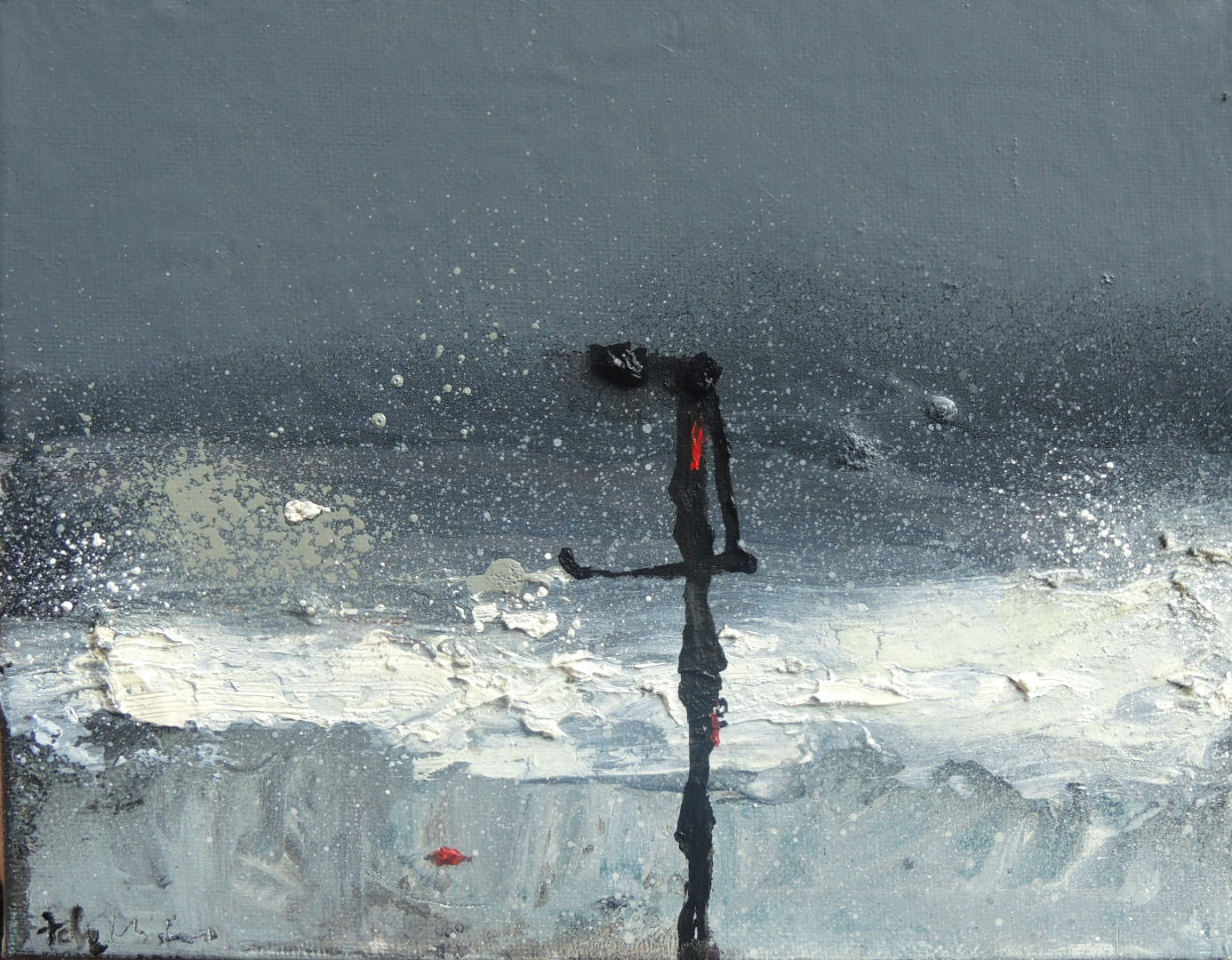
Art: Đinh Trường Chinh

lời của một cánh đồng lúa mì

1.
tôi là lúa mì
tôi khóc, tôi đang khóc

một lần nữa
họ bỏ lại cái chết của bạn
dưới chân tôi

ồ tại sao, tại sao
chúng tôi lại khóc cho họ?

một lần nữa một lần nữa
hay nhiều lần nữa?
họ cứ thích bạn chết
bạn phải thành anh hùng hay liệt sĩ
dưới gốc lúa mì của chúng tôi
họ thích ăn xôi bỏ chúng tôi làm thằng Bờm đói bụng

họ nói dối, họ nói dối
từ Stalingrad đến Leningrad
một triệu người chết, nhiều triệu người chúng tôi đã chết
những cánh đồng lúa mì bùng cháy
họ đốt cháy, họ đốt cháy

và một lần nữa
họ bỏ lại Ukraine đã chết của chúng tôi
và xác của bạn

Ukraine
ôi, sự xấu hổ của Putin
những lời nói dối tưởng như vô tội
trong lúa mì, trong lúa mì
và một hải cảng không đóng băng khi
mùa đông đến…

2.
Ukraine
mẹ sinh tôi ra
một đứa bé ốm yếu

dưới cái nắng của cánh đồng lúa mì Ukraine
mẹ còn quá trẻ
và cha thì quá bạo lực
có lẽ do cha uống quá nhiều vodka

mẹ dẫn tôi đi qua
những cánh đồng lúa mì
chiếc váy dài quấn vào mắt cá chân của mẹ
đến một cái ao phía sau trang trại
nơi cha từng cố gắng dìm mẹ chết

một người qua đường đã can thiệp
để nâng mẹ lên

mẹ chạy lên đồi một mình
dành cả cuộc đời để không nguyền rủa những bàn tay
từng tìm cách nhấn chìm mình
mà lẽ ra tôi gọi là cha
mà lẽ ra cha phải gìn giữ mẹ

và mẹ cũng cảm ơn những bàn tay
đã kéo mẹ ra khỏi làn nước đóng băng
vào một buổi sáng nắng đẹp

trên cánh đồng Ukraine
phổi mẹ vẫn đầy hơi thở
và ánh mắt tôi vẫn đầy tin tưởng
cha ôi…

1.
I am wheat
I cry, I am crying

once again
they have left your death
at my feet

oh why, why
would we cry for them?

once again once again
or more often than not?
they like you to die
make you into heroes or martyrs
they like to eat steamed rice from our wheat root
and leave us with the role of a fool
a starving dim-witted folk hero like Thằng Bờm

they lie, they lie(through their teeth they lie)
from Stalingrad to Leningrad
a million people have died, many millions of our people have died
fields of wheat on fire
they’re burning, they’re burning the fields

and once more
they’ve abandoned our dead Ukraine
and your corpse

Ukraine
oh, the shame of Putin
the blameless deception
in the wheat, in the wheat
and a harbour that will not freeze
in the coming winter

2.
Ukraine
mother gave birth to me
a sickly child

beneath the sunlight, wheat fields of Ukraine
mother was too young
and father was a violent man
maybe too much vodka

mother guided me
across the fields of wheat
her long skirt wrapped around her feet
to a pond behind a camp
where father tried to drown her

a traveller happened upon her
fished her out

mother ran up the hill alone
spent her whole life cursing the hands
once tried to drown her
someone I should referred to as my father
someone who should have taken care of my mother

and to those hands mother was grateful
hands which had pulled her out from a frozen lake
one lovely sunny day

on the fields of Ukraine
mother’s lungs are filled with life
the faith in my eyes never once diminishing
dear lord…


Lê Vĩnh Tài, the poet and translator born in 1966 in Buon Ma Thuot, Daklak, Vietnam. The retired doctor is still a resident of the Western Highlands and a businessman in Buon Ma Thuot.

Nguyễn Thị Phương Trâm, the blogger, poet, and translator, was born in 1971 in Phu Nhuan, Saigon, Vietnam. The pharmacist currently lives and works in Western Sydney, Australia.

SHE LENT YOU A BOOK ONCE | Lê Vĩnh Tài [441]

Nguyễn Thị Phương Trâm [February 2024]

A short story in Vietnamese by Lê Vĩnh Tài
Translator: Nguyễn Thị Phương Trâm
Photography: Nguyễn Thị Phương Trâm

Knowing that she will never pick up, you message her instead, in the most undefensive way possible.

You still have her book, her intention was deliberate when she lent you the book, trying to hide her feelings but you more than understood. The book was a gift from a bearded man, about his life, the moments he was most actively involved in the art and literature scene, a list of tragedies. His self-importance bored you, and you wanted to give it back to her with a disappointing message.

She refused to acknowledge the message, before immediately bursting into tears. That was not how anyone should read a book she uses as a pillow. She gives you another chance to read it. She’s worried no one cares or thinks about her anymore. Even though like her, when you read the book you were just as out of your mind as she was when she read it. You are fully aware of the pride of those who hurt people because they thought it was their right. You also knew as you finished the book, that she was on a high the whole day before she came up with the idea of lending it to you. 

Her first-floor window is open, the computer is on, and on the screen is a collection of drama and notices ready for her to send to everyone. As though notices are her way of connecting with other people.

Down in the street, a street vendor is trying to sell his last batches of coffee. Only a few more cups of coffee and he can pack up and go home. 

His call for you to buy his coffee is like the lyric of a love story from another lifetime. But to her, it feels rather diluted, mixed in with the tweeting of the birds perched high up on the rows and rows of street electrical cables. Lifetimes of love piled up one on top of the other, like the books piled up, in a room facing her window on level 1. 

You thought, if she was more focused, imagine what she could achieve.

Ever since the bearded guy gave her the book, she would find herself sitting up in her bed startled and shaken. She told herself that it was love, ironically that is how she’d end up. When it comes to love, she finds herself constantly sighing. The night the bearded guy turns up, standing there to stare at her through the window. She freezes, she does not move beyond the sobs she tries to keep down her throat. 

She’s surprised by how you can’t work out the real issue presented in the book. You’re supposed to see what an overwhelming threat she is in the book. A whisper escaped her lips, “free, freedom, we are free to do whatever we want,” it makes you lose your confidence when you want to write.

She wants to be free but she’s curled up in a corner from all the fear each time she sees the guy with the beard with his arms folded standing at her bedroom door, and yet she wants to fold her arms in defiance each time she face you, and you are only allowed to fold your arms when you face death. You have nothing beyond your love for her, while all she has is a book she allows you to borrow, it has a grey cover. Beyond those grey and bitter moments, she would welcome you with open arms, the blindness of a woman, the belief that they have a choice when it comes to love.

Since, she did love you a couple of times.

Since mostly she’s not like that. She loves no one, since “what’s so important about anything like that.”

She just wants to be free, body and soul free, she would whisper into your ear the word free while you read the book she lent you. 

You kneel in front of the grey cover, praying that she will let you enter chapter 1. “You should stop messaging me,” through the open window on level 1, her imagination is going wild, since life is still a long road. So in the end she opens the door and lets the bearded guy in, and says to you: because he too was pleading. And because she believed she The Statue of Liberty. [At this point in time you work out that she’s misunderstood you, all you want to do is to enter chapter 1 of the book, not go up to level 1 like the guy with the beard].

She embraced the bearded guy, both of them descended the stairs together. While you wait at the foot of the stairs. 

You run as far away as you can as soon as you see her and the man with the beard, because you believe you have completely finished reading the book, and your job is done. You know that is all she needs from you. To her, when it comes to love all you have to do is read, leave the rest up to her. Hence each time you hear anything, you think it’s her, since you still have her book. And you didn’t have a chance to return it and she says: it’s too late.

As people gathered around her body, they said she died because of a heart condition. But you know better, death could be blissful, it is the endgame of happiness. 

17 February 2024

NÀNG CÓ LẦN CHO BẠN MƯỢN MỘT QUYỂN SÁCH

biết rằng nàng không còn chịu nghe điện thoại, nên bạn chỉ nhắn tin, theo cách mà bạn nghĩ nhẹ nhàng nhất có thể.

bạn nợ nàng một quyển sách, khi cho bạn mượn hình như nàng đã có những gợi ý chi đó, che đậy tình yêu của nàng nhưng bạn thừa hiểu. quyển sách đó của một ông có râu tặng cho nàng, kể về những giai thoại trong đời sống văn nghệ mà ông ta cứ làm như là những thảm hoạ. bạn đọc nó và phát chán vì sự trầm trọng của ông ta, và đã muốn gửi trả lại nàng kèm theo một tin nhắn buồn bã.

nàng không chấp nhận tin nhắn đó, bật khóc ngay lập tức. quyển sách gối đầu giường của nàng không thể được đọc theo cách như vậy. nàng cho phép bạn đọc lại. nàng sợ không còn ai quan tâm hay theo dõi mình. mặc dù lúc đọc quyển sách ấy, bạn cũng như nàng, với biết bao ảo tưởng. bạn thừa biết nỗi tự trọng của một kẻ bà mụ lỡ tay nhưng không hề biết mình không đẹp. vì bạn cũng biết khi đọc xong quyển sách ấy, nàng đã lên cơn mê sảng suốt cả ngày, nên mới nghĩ đến việc cho bạn mượn.

cửa sổ lầu 1 của nàng đang mở, có một máy tính cũng đang mở, trên màn hình là các kịch bản và thông báo nàng sẽ gửi cho mọi người. dường như viết thông báo là cách nàng chạm vào tâm hồn người khác.

con phố bên dưới, có một người đàn ông bán rong trên vỉa hè. anh ta đang cố bán những ly cà phê cuối cùng của mình để còn ra về.

anh ta đang rao hàng, nghe như bài hát kiếp nào có yêu nhau. nhưng nàng nghe hơi loãng vì những con chim đang líu lo trên đường dây điện cao thế. những kiếp người đang yêu đó cứ xếp chồng lên nhau, như những quyển sách, ở phía đối diện với cửa sổ lầu 1 của nàng.

bạn từng nghĩ, nếu tỉnh táo hơn, nàng phải làm gì?

vì từ khi nhận quyển sách, ông có râu đã khiến nàng bao nhiêu lần rùng mình choàng dậy. nàng tự nhủ thế là yêu, nhưng rốt cuộc nàng lại ra thế này. mà nhắc đến chuyện yêu, nàng không thể không thở dài. mỗi tối ông có râu đến và đứng ở cửa sổ phòng nàng nhìn vào. nàng bất động, ngoại trừ một tiếng nức nở trong cổ họng.

nàng ngạc nhiên vì quyển sách ấy vẫn không làm bạn hiểu ra vấn đề. lẽ ra bạn phải hiểu về sự nguy hiểm của nàng tràn ngập trong quyển sách. một lời thì thầm thoát ra khỏi cổ họng nàng, “tự do, tự do, chúng ta tha hồ tự do,” nó làm cái nhìn tự tin của bạn biến mất khi bạn muốn viết.

nàng thích tự do nhưng lại co rúm vì sợ khi nhìn thấy ông có râu đang khoanh tay trước cửa phòng nàng, như nàng muốn khoanh tay trước bạn, còn bạn chỉ được phép khoanh tay trước cái chết. bạn không có gì ngoài tình yêu dành cho nàng, còn nàng thì chỉ cho bạn mượn một quyển sách, có bìa màu xám. ngoài khoảnh khắc màu xám cay đắng đó, nàng luôn mở vòng tay chào đón bạn, sự mù quáng mà phụ nữ luôn tin rằng họ có quyền áp đặt khi yêu.

vì đôi khi nàng đã yêu bạn.

vì thường thì nàng không như vậy. nàng không yêu ai, vì “chuyện đó thì có quan trọng gì.”

vì nàng chỉ cần tự do, cả thể xác và tâm hồn tự do, nàng cứ thì thầm tự do bên tai bạn khi bạn đọc quyển sách.

bạn quỳ trước bìa sách, cầu xin được nàng lật ra để cho bạn bước vào chương 1. “chàng đừng nhắn tin nữa,” qua cửa sổ đang mở ở lầu 1, tưởng tượng của nàng đang nổi loạn, vì nàng nghĩ cuộc đời còn dài. cuối cùng nàng mở ra cho một ông có râu, nàng nói với bạn: vì ông ta cũng van nài. và nàng nghĩ mình là Nữ Thần Chiến thắng. [chỗ này bạn biết nàng hiểu lầm, vì bạn chỉ muốn bước vào chương 1 của quyển sách, chứ không phải lên lầu 1 của nàng như ông có râu].

nàng ôm lấy ông có râu, cả hai cùng xuống cầu thang. bạn đứng đợi họ ở phía dưới.

bạn đã bỏ đi rất xa khi nhìn thấy nàng và ông có râu, vì bạn nghĩ mình đã đọc xong quyển sách, và thế là bạn hết nhiệm vụ. bạn biết nàng chỉ cần bạn như vậy. với nàng, khi yêu bạn chỉ lo đọc sách, còn những chuyện khác của tình yêu để nàng lo. nên khi nghe ồn ào, bạn cứ nghĩ là tiếng của nàng, do bạn vẫn chưa trả lại quyển sách. mà bạn không kịp trả chỉ vì nàng nói: đã quá muộn.

khi mọi người chạy đến, họ nói rằng nàng chết vì bệnh tim. nhưng bạn biết có những niềm vui, đến mức nó có thể làm chết người.


Lê Vĩnh Tài, the poet and translator born in 1966 in Buon Ma Thuot, Daklak, Vietnam. The retired doctor is still a resident of the Western Highlands and a businessman in Buon Ma Thuot.

Nguyễn Thị Phương Trâm, the blogger, poet, and translator, was born in 1971 in Phu Nhuan, Saigon, Vietnam. The pharmacist currently lives and works in Western Sydney, Australia.

I killed you | Xuân Diệu

self-portrait by Nguyễn Thị Phương Trâm

A poem in Vietnamese by Xuân Diệu
Translator: Nguyễn Thị Phương Trâm

I killed you, I buried you in my heart
In the truth from now on I can’t love you
Something has moved on, something is lost
We stare at each other, four knowing eyes?
Oh! Dearest! You are whom I adore most
The butterflies resides to this very moment in my gut
My heart pounding tripping over time
Remembering the heated passion
Remembering the radiant moments in our two lives
Remembering how heaven and earth were opened to me
Remembering endlessly
A magical time.
Oh! Away from you, I would fall into an abyss
My life without you, cold and numb
But if I’m me, you’re you, then us will be something else
Us: two strangers – that’s not us!
I’ve killed you, I’ve buried you in my heart
Every night I would walk around you crying
I wish you would forgive me
I still love you like the first time we’ve met
So why are we still apart?
Because you’re stubborn
Because I no longer know
The way back to your heart
After I killed you, I continued to love you day and night.
You killed me, in which garbage dump have you thrown my body.

Anh đã giết em

Anh đã giết em, anh chôn em vào trái tim anh
Từ đây anh không được yêu em ở trong sự thật
Một cái gì đã qua, một cái gì đã mất
Ta nhìn nhau, bốn mắt biết làm sao?
Ôi! Em mến yêu! Em vẫn là người anh yêu mến nhất
Cho đến bây giờ ruột anh vẫn thắt
Tim anh vẫn đập như vấp thời gian
Nhớ bao nhiêu yêu mến nồng nàn,
Nhớ đoạn đời hai ta rạng rỡ
Nhớ trời đất cho anh mở
Nhớ
Muôn thuở thần tiên.
Ôi! Xa em, anh rơi vào vực không cùng
Đời anh không em, lạnh lùng tê buốt
Nhưng còn anh, còn em, mà đôi ta đã khác
Ta: hai người xa lạ – phải đâu ta!
Anh đã giết em, anh chôn em vào trái tim anh
Đêm nào anh cũng đi quanh em mà khóc
Anh vẫn ước được em tha thứ
Anh vẫn yêu em như thuở ban đầu
Thế mà tại sao ta vẫn xa nhau?
Tại em cố chấp
Tại anh đã mất
Con đường đi tới trái tim em
Anh đã giết em rồi, anh vẫn ngày đêm yêu mến.
Em đã giết anh rồi, em vứt xác anh đâu.


Xuân Diệu (2/2/1916 – 18/12/1985) born Ngô Xuân Diệu, Trảo Nha was another pen name, from Trảo Nha village, Can Lộc district, Hà Tĩnh province, but he was born in his mother’s hometown Hoà Phước commune, Tuy Phước district, Bình Định province, where his father Ngô Xuân Thọ worked as a teacher and where his father met his mother Nguyễn Thị Hiệp. he lived in Tuy Phước till he was 11 years old(1927) before moving to Quy Nhơn for school. Around 1936-1937, he attained his baccalaureate in Huế. In 1937, Xuân Diệu studied Law in Hà Nội while he wrote for a newspaper, between 1938-1940 inclusively he was a member of Tự lực văn đoàn, in the same period shared an attic with Huy Cận at 40 Hàng Than.

source: thivien.net

Nguyễn Thị Phương Trâm, the blogger, poet, and translator, was born in 1971 in Phu Nhuan, Saigon, Vietnam. The pharmacist currently lives and works in Western Sydney, Australia.

scattering ambulances amongst the howls of the dead | Lê Vĩnh Tài

Chân dung nàng. Art by Đinh Trường Chinh

A poem in Vietnamese by Lê Vĩnh Tài
Translator: Nguyễn Thị Phương Trâm
Art: Đinh Trường Chinh

people in general only believe in
what’s new, and they forget
even what’s new is ageing.

.

what’s new

shivering upon dawn
in the sunlight, me
attentively watching the news, staring at the pictures
mortars like shooting stars
and the grey piles of rubble
after an exchange of blue bullets, the colour of a clear sky

cameras everywhere
the shiver up my spine, the assault
rape and murder noted
things I didn’t want to see or hear

– then again I won’t be able to see anything
if I refuse to see

I read about people
waking up
running for their bomb shelters
their children crying
in the first light = a rather fuzzy light

the injured meandering their way through the broken bits and pieces
climbing over blackened burnt cars
scattering ambulances amongst the howls of the dead
day in day out
the news = looking for survivors

dry mouth
unable to form a single word, my body fade away in the sunlight
in it there’s me – yes, there’s me
watching the news = sharp eyes
my keen – cold heart
practising, getting ready
for a poetry contest, nearby
almost in my own backyard
an encouragement certificate is all I’m after
encouraging anyone to never forgive those murderers

February 2024

mọi người chỉ tin
vào cái mới, và họ quên
rằng nó cũng đang già đi.

.

cái mới

lạnh run vào buổi sáng
dưới nắng, tôi
chăm chú xem tin tức, tôi nhìn hình ảnh
những khẩu cối như sao băng
và đống đổ nát màu xám
sau cú va chạm với viên đạn màu xanh da trời

có camera khắp nơi
tôi rùng mình vì việc giết hiếp
được ghi lại và tôi không muốn biết

– nhưng tôi sẽ không biết gì
nếu tôi không biết

tôi đọc thấy những người
thức dậy và
chạy đến tầng hầm
con cái họ khóc
trong ánh sáng ban mai = nhợt nhạt

những người bị thương bò qua những vỡ vụn
leo qua những chiếc xe cháy màu đen
xe cứu thương màu trắng chạy đi
tiếng hú của xác chết hàng ngày
tin tức = tìm người sống sót

với cái miệng khô khốc
không nói nên lời, người tôi nhợt nhạt dưới mặt trời
trong đó tôi – phải, có tôi
theo dõi tin tức = đôi mắt sắc
bén – trái tim lạnh lùng
của tôi, vì tôi đang làm bài
thơ dự thi, nơi tôi
đang ở, mong giải khuyến khích thôi
khuyến khích không còn ai tha thứ cho kẻ giết người


Lê Vĩnh Tài, the poet and translator born in 1966 in Buon Ma Thuot, Daklak, Vietnam. The retired doctor is still a resident of the Western Highlands and a businessman in Buon Ma Thuot.

Nguyễn Thị Phương Trâm, the blogger, poet, and translator, was born in 1971 in Phu Nhuan, Saigon, Vietnam. The pharmacist currently lives and works in Western Sydney, Australia.

December blues | Tô Thùy Yên

Art by Đinh Trường Chinh

A poem in Vietnamese by Tô Thùy Yên
Translator: Nguyễn Thị Phương Trâm
Art: Đinh trường Chinh

1.
In the new year, your son won’t come home
Legs dragging the prison sentence
The thought of it pains me, the vast longing
Eight years of the endless grey…

Eight years after the perpetual thought
Shall pass by in the sound of rupture…
Yearning ear the rivers emptied seas
Ear the breaking of a bird’s wing.

I’ve travelled the land from North to South
Everywhere for all the races grieving
I wept my soul melting into tears,
For a while, dawn upon earth ceased to be

I’m an age past suspicion
An ego surpassing the nights.
Eight years in tattered clothes
Emotions piled on top of each other, melted together

A home once upon a time
In falling dust, in passing wind…
Eyes waiting through the thousand sound nights,
Whose troubles have yet returned?

The memories of cool deep shady groves
Each tree attests to a moment.
Fussing around mother and father’s sadness
It seemed like part of me stood still.

Eight years a thousand nights up,
Fancies a morning life could change,
I held my hand in the dark,
I know I’m lucky to be alive.

For eight years I hid in my heart
The travelling sword of my youth
For the morrow sky returns
Myself forth brings a tornado.

In the new year, your son can’t come home
Mountains rivers still part the hearts,
In love sends wishes aged old
Mum and dad are the bamboo blooming.
*******
2.
Again this new year I can’t come home,
You’ll be as sad as the autumn reeds,
An ancient desolate breeze
Life’s senses cold in listlessness

Eight years of solitude in echoes of weariness
The echoes of each heartbeat,
The echoes sound from the origin of death
Through thousands of silent leaden doors.

The river dividing the land of memories
Drifting endlessly, further and further away,
Calling for each other in every dream
As startling as the approaching bird wings.

Out there will there be spring?
Spring blooming on your rosy cheeks,
Springlike hope in new clothes
The sunlight nectar in bright eyes.

Here, spring will never be.
The jungle is undiminishing in deep slumber.
Longing brimming in a bloody flood
My heart is as broken as the dams.

My heart aches with the loss of a country
Gone is life yet oh hardship.
In death, there’s the possibility of a ghost
Night arrives in the lament of the loss of a country.

I remember the path you often walk
Wildflowers excited, cried out for each other,
Time from then on sound asleep,
Is your beauty now just as brooding?

I remember the long forgotten things
A past love like the water running through a hundred region
A past love like dry fallen tree seeds,
From seasons long gone covered in leaves.

I remember how could I not remember
Our warm home, endearing voices,
A home like a brilliant dream
In moonlight scented with hyacinth.

How can you not be sad
Eight degrees cooler in diminishing golden dreams,
Your long lost youth wrapped in a woman’s hair
Faded even now is your scent.

Again this new year I can’t come home
Adding another spring to the old reed.
Remembering whom from the land of wind and sand,
When will such misery end.
*******
This new year papa can’t come home
Son, you’ll be sad about your last sip of childhood,
From the day papa left, roofless is our home
Your childhood was steeped in hardship.

Life’s soundless from the day papa left
Round innocent eyes always red, always waiting
Each time someone steps into our alley
The games were forgotten, you’re dazed, hopeful.

The starling in your heart is now dead
My darling son, you were always on the lookout
You’re no longer a starling… gosh… my poor chick
Crying by the bleary sweaty afternoon.

Eight years passed by in rain, stormy sobbing
The baby bird lost its cheerful chirp,
No longer childish, grew up too quickly
Saw all around the abandonment.

Eight years now since you left school
Life was like a rancid bowl of rice,
Each time you pass your old school
You rush, worried your friends might see you.

Mama raised you with porridge and greens
You grew up with so much sadness.
Dreamed of becoming a warrior
Entered the world of pain armed with a sword.

You wanted to build a big house,
Plant again love in all corners of your life,
Rebuild anew an upright outstanding Vietnamese citizen,
Create a brand new world.

Papa loves you so much that it’s impossible to say
Gosh, those velvety eyes filled with sorrow,
Soft youthful hair scented with summer sunlight,
Childhood is like the scent of new books, the heart light

Far from you, I’m drowned in untold sadness
As though I’ve again squandered my childhood,
I regret not being able to live out my youth again with you
The happy days that I hid in my dreams still.

This new year papa can’t come home
It looks like it has to be another new year,
Son remember to hold on to the old firecracker
Hold onto that small bit of your childhood.

THÁNG CHẠP BUỒN

1.
Tết này con vẫn chưa về được,
Chân mỏi còn lê nặng kiếp tù
Con nghĩ mà đau muôn nỗi nhớ
Tám năm bàng bạc những thiên thu…

Tám năm những tưởng là vô tận
Rồi cũng qua như tiếng rụng rời…
Thương nhớ nghe chừng sông biển cạn,
Nghe chừng gãy những cánh chim bay.

Con đi đã mấy miền Nam Bắc
Ðâu cũng là đau đớn giống nòi
Con khóc hồn tan thành nước mắt,
Lâu rồi trời đất hết ban mai.

Tuổi con đã quá thời nghi hoặc
Sao vẫn như người đi giữa đêm.
Tám năm áo rách bao nhiêu lượt
Con vá chồng lên những nỗi niềm.

Căn nhà đã có thời gian ngụ
Bụi mọt rơi và ngọn gió qua…
Thăm thẳm nghìn đêm chong mắt đợi,
Ai trầm luân đó đã về chưa ?

Con nhớ khu vườn sâu bóng lạnh
Mỗi cây làm chứng một thâm tình.
Quây quần bên mẹ cha buồn bã
Như một phần con đứng lặng thinh.

Tám năm con thức ngàn đêm trắng,
Mơ sáng ngày mai đời đổi thay,
Con nắm tay mình trong bóng tối,
Hiểu rằng sống được đã là may.

Tám năm con giấu trong tâm tưởng
Thanh kiếm giang hồ tuổi thiếu niên
Mà đợi ngày mai trời trở giấc
Ðem thân làm trận lốc kinh thiên.

Tết này con vẫn chưa về được
Sông núi còn ngăn những tấm lòng,
Nên đành lấy nhớ thương mừng tuổi
Cha mẹ già như trúc trổ bông.
* * * * * * *
2.
Tết này anh vẫn chưa về được,
Chắc hẳn em buồn như cỏ thu,
Ngọn gió mùa xưa hiu hắt thổi
Dòng đời nghe lạnh những thờ ơ…

Tám năm hiu quạnh vang mòn mỏi
Những tiếng vang từ mỗi nhịp tim,
Những tiếng vang sâu từ cõi chết
Qua ngàn lớp cửa nặng nề im.

Con sông nước chảy đôi miền nhớ
Biền biệt trôi, ngày một một xa,
Còn gọi nhau qua từng giấc mộng
Bàng hoàng như một cánh chim sa.

Ngoài ấy mùa xuân có đến không ?
Mùa Xuân hoa nở má em hồng,
Mùa Xuân áo mới như hy vọng
Nắng mật ngời lên ánh mắt trong.

Ở đây có lẽ xuân không đến.
Rừng núi chưa tan giấc não nề.
Thương nhớ tràn như cơn lũ máu
Lòng anh đã vỡ những con đê.

Lòng anh đau nỗi quê hương mất
Ðời bỏ đi chưa hả nhọc nhằn.
Có chết cũng thành ma vất vưởng
Ðêm về thương nhớ khóc quê hương.

Anh nhớ con đường em vẫn đi
Cỏ hoa bối rối gọi nhau về,
Thời gian có ngủ mê từ đó,
Nhan sắc bây giờ có ủ ê ?

Anh nhớ bao điều tưởng đã quên
Tình xưa như nước chảy trăm miền,
Tình xưa như hạt cây khô rụng,
Từ những mùa xa lá phủ lên.

Anh nhớ làm sao mà chẳng nhớ
Căn nhà ấm tiếng nói thân thương,
Căn nhà như giấc chiêm bao biếc
Có ánh trăng và hương dạ lan.

Làm sao em chẳng buồn cho được
Tám độ mai rơi hết mộng vàng,
Mái tóc ủ thời con gái cũ
Bây giờ e cũng đã phai hương.

Tết này anh vẫn chưa về được
Lau sậy già thêm một tuổi xuân.
Còn nhớ những ai miền gió cát,
Bao giờ mới dứt được trầm luân.
* * * * * *

Tết này cha vẫn chưa về được
Chắc hẳn con buồn cạn tuổi thơ,
Từ buổi cha đi, nhà tróc nóc
Tuổi thơ thôi cũng nhuốm bơ phờ.

Từ buổi cha đi đời lặng lẽ
Mắt nai héo đỏ nỗi mong chờ,
Mỗi lần có khách đi qua ngõ
Con bỏ vui đùa đứng ngẩn ngơ.

Con sáo trong lòng con đã chết
Bé ơi sao bé mãi đi tìm,
Con kêu lạc giọng sáo… ơi… sáo
Rồi khóc trong chiều muộn nhá nhem.

Tám năm mưa gió qua rền rĩ
Chim nhỏ không còn vui líu lo,
Ngơ ngác tuổi thơ, người lớn sớm
Nhìn đâu cũng chỉ thấy bơ vơ.

Ðã tám năm rồi con bỏ học
Cuộc đời như một bát cơm thiu,
Mỗi lần có phải qua trường cũ
Con bước nhanh vì sợ bạn kêu.

Lần hồi rau cháo mẹ nuôi con
Con lớn lên theo vạn nỗi buồn.
Mơ ước ngày sau làm tráng sĩ,
Mang gươm vào những chốn đau thương.

Ngày sau con dựng ngôi nhà lớn,
Trồng lại tình thương dọc nẻo đời,
Tạc lại con người khôi việt đẹp,
Làm nên thế giới mới tinh khôi.

Cha thương con biết bao mà kể
Ôi mắt nhung reo ánh nỗi niềm,
Mái tóc tơ hồng hương nắng hạ,
Tuổi thơ mùi sách mới lâng lâng.

Xa con cha thấy buồn vô hạn
Như mất thêm lần nữa tuổi thơ,
Cha tiếc không cùng con sống lại
Ngày vui cha vẫn giấu trong mơ.

Tết này cha vẫn chưa về được
Ðành hẹn cùng con Tết khác thôi,
Con nhớ để dành cây pháo cũ
Ðể dành một chút tuổi thơ vui.

Tô Thùy Yên


Tô Thuỳ Yên (1938-2019) real name was Đinh Thành Tiên, born in Go Vap, Gia Dinh, Vietnam, an alumnus at Petrus Ký and Đại học Văn khoa Sài Gòn. He was a teacher and journalist in Saigon, a Major in the Vietnam Army prior to 1975. After 1975 served 13 years in re-education camps, in 1993, he moved with his family to the United States as a former political prisoner.

Nguyễn Thị Phương Trâm, the blogger, poet, and translator, was born in 1971 in Phu Nhuan, Saigon, Vietnam. The pharmacist currently lives and works in Western Sydney, Australia.

December | Lê Vĩnh Tài

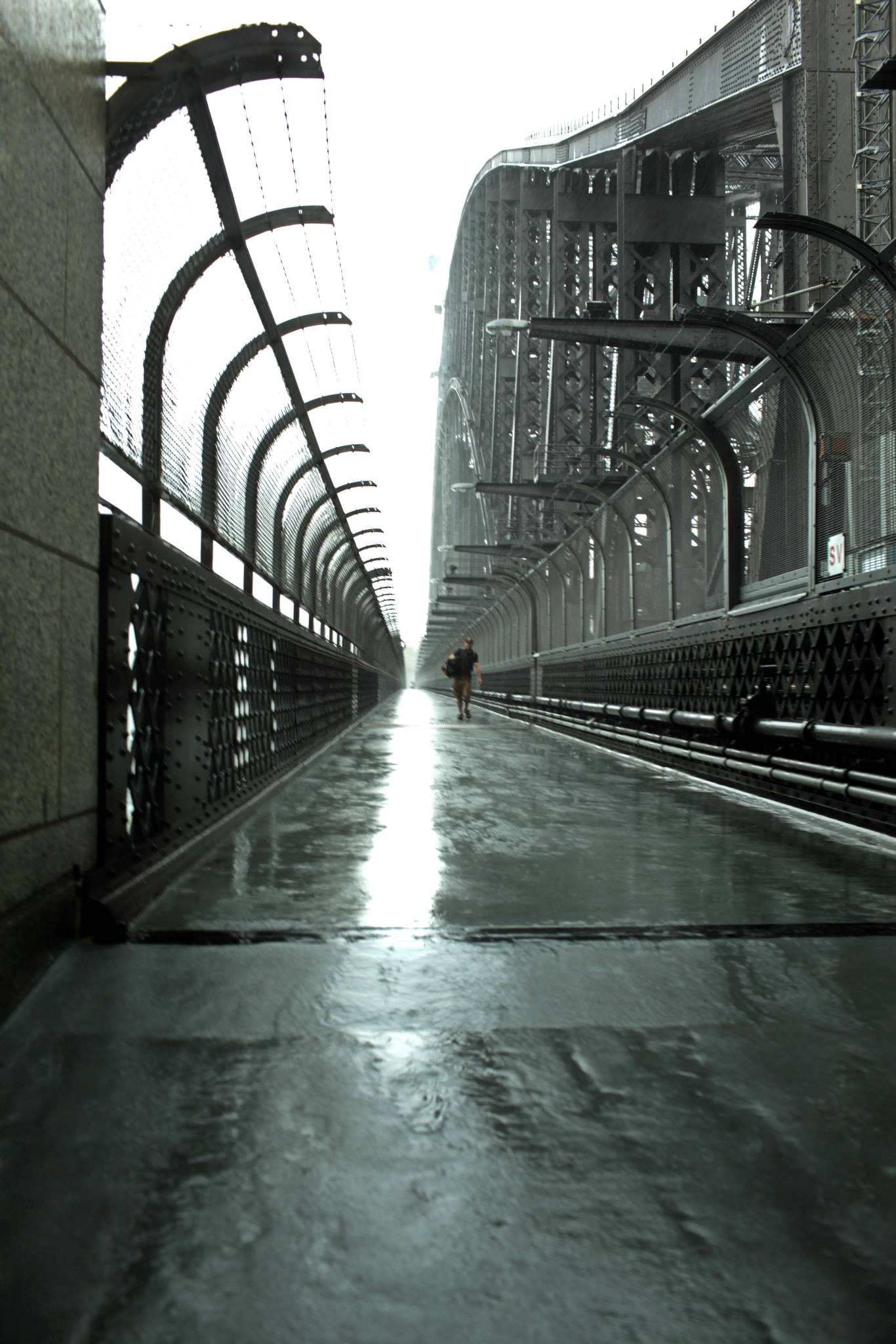
Sydney Harbour Bridge. Photography by Nguyễn Thị Phương Trâm

A poem in Vietnamese by Lê Vĩnh Tài
Translator: Nguyễn Thị Phương Trâm
Photography: Nguyễn Thị Phương Trâm

like an abandoned hospital
patients completely silent

not a whimper
the grass continue to grow
idle in the hospital’s courtyard

they need a gardener
not a doctor

the blues quietly sobbing
not a person left
to give up hope

discharged patient
cured of his fever
but the blood from his bloated belly is still warm
dripping from an analgesic tagline
onto the sidewalk

autumn diminishing
doctors out of a job
all they need to do now is to
call the butcher

tháng mười hai

như một bệnh viện bị bỏ rơi
tất cả bệnh nhân cùng im lặng

không còn ai kêu rên
cỏ mọc trong sân bệnh viện
đã bỏ hoang

người ta đang cần người cắt cỏ
không cần bác sĩ

sự im lặng bắt đầu xanh nức nở
không còn ai tuyệt vọng
nữa

một bệnh nhân xuất viện
chàng không còn sốt
nhưng bầu máu vẫn còn nóng
chảy xuống con đường
với một khẩu hiệu giảm đau

mùa thu mất dần
các bác sĩ cũng không còn việc làm
người ta chỉ cần đồ tể…


Lê Vĩnh Tài, the poet and translator born in 1966 in Buon Ma Thuot, Daklak, Vietnam. The retired doctor is still a resident of the Western Highlands and a businessman in Buon Ma Thuot.

Nguyễn Thị Phương Trâm, the blogger, poet, and translator, was born in 1971 in Phu Nhuan, Saigon, Vietnam. The pharmacist currently lives and works in Western Sydney, Australia.

Dear lord, sobering is December! | Lê Vĩnh Tài

Barangaroos, Australia. Photography by Nguyễn Thị Phương Trâm

A poem in Vietnamese by Lê Vĩnh Tài
Translator: Nguyễn Thị Phương Trâm
Photography: Nguyễn Thị Phương Trâm

tháng mười hai ta thảng thốt: trời ơi…
ai người cũ đã thành hun hút
câu thơ cũng nhạt nhòa ký ức
thơ với người phù phiếm cưới nhau

theo câu thơ tháng chạp đón dâu
ta đời mới chạy hoang vu quanh phố
tháng mười hai bây giờ ta nhớ
một nụ cười đau đến chẳng còn đau…

Dear lord
sobering is December!
gone is the ex-lover
the poem
a fading memory
holy matrimonial mirth is love
and poetry

beyond that is a brand new poem
December greets its new bride
and their new life
ran aimlessly across the city
December as they revisit it
a pained smile
that no longer hurts

*
December we sigh heavens…
a former love so far away from
the verse also fading memory
poetry with love in matrimonial mirth

followed the verse December greets its bride
their new life ran aimlessly through the city
December now they’ll remember
a smile so painful it no longer hurts

*
December we cried: heavens (sigh)…
the former (love) became distant
poetry is also a fading memory
poem with love in a matrimonial mirth

followed by poetry December greets the bride
our new life ran abandoned around town
December now we’ll remember
a smile so painful it no longer hurts…

*
December we cried: ahh (sigh)
your person old became forever
the verse too in fading memory
A person with poetry frivolously unite

followed the verse December greets
our new life ran aimlessly through the city
December now we may remember
a smile so painful it no longer bites…)


Lê Vĩnh Tài, the poet and translator born in 1966 in Buon Ma Thuot, Daklak, Vietnam. The retired doctor is still a resident of the Western Highlands and a businessman in Buon Ma Thuot.

Nguyễn Thị Phương Trâm, the blogger, poet, and translator, was born in 1971 in Phu Nhuan, Saigon, Vietnam. The pharmacist currently lives and works in Western Sydney, Australia.