Still husband material? | Lý Đợi [1]

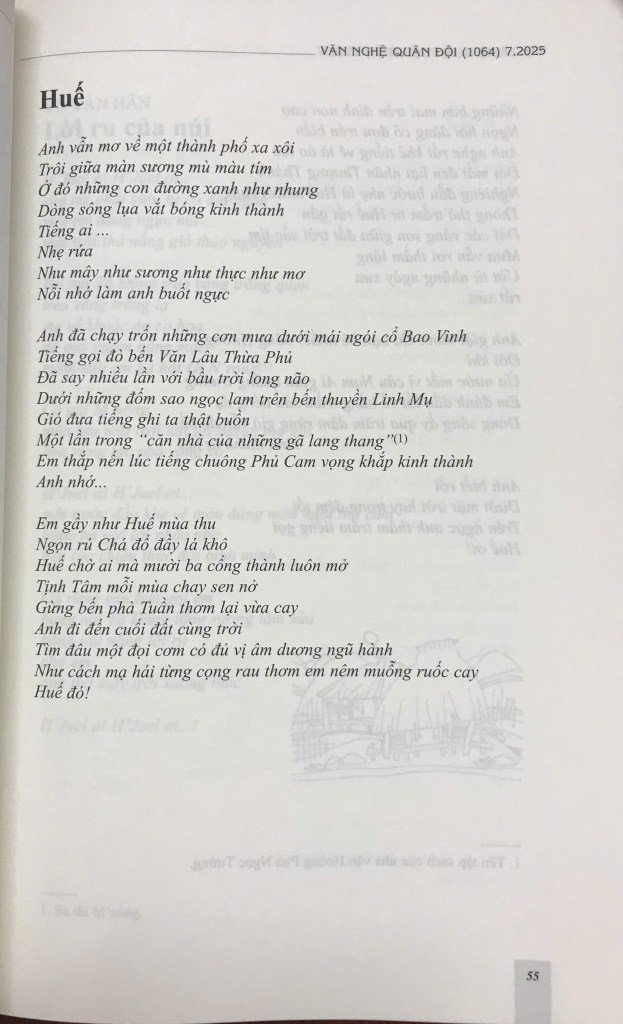
Nhà thơ Lý Đợi (Ảnh: Họa sĩ Phạm An Hải)

poem by Lý Đợi
translation by Nguyễn Thị Phương Trâm

a woman with money
three time divorced
looking for a guy as advertised
with a set with criteria:
single
who will never be a brute
who will never abandon a lady

who can fuck.

one autumn morning
the cypress door bell rang
and there outside the door was a monk
both his hands tied
there because of the ad in the classified
and she was surprised
and unsettled
because there indeed was a dick

the man took his time said:
as you can see… I’m single
and can’t in any way hurt you [hands tied]…

but how will you perform your task well she sighed
hold on to your dick, be that guy
confined?

I guarantee you it’s not blind
how else did you think I rang the bell on that cypress door!
[and what else am I supposed to do with the hand grenade in my tights? He implored]

Vẫn làm chồng tốt?


Một người đàn bà giàu sụ,
đã ba lần ly dị,
có đăng báo tìm cu
với các tiêu chuẩn:
Độc thân,
Không có thói vũ phu,
Không rời bỏ mệnh phụ
Và…
Biết đụ.

Vào buổi sáng mùa thu
chuông reo ngoài cửa pơ-mu
hoá ra một thầy tu
hai tay cột chặt
đến vì mẩu rao vặt
người đàn bà ngạc nhiên
và dằn vặt
vì đây đúng là một ngữ cặc

Người đàn ông đó thong thả nói:
cô thấy đấy… tôi đang độc thân
và không thể đánh cô được [vì tay trói]…

Nhưng anh làm sao có thể thực hiện tốt nhiệm vụ
của một người cầm cu
trong tư thế lao tù?

Đảm bảo với cô là nó không mù
Thế cô nghĩ tôi bấm chuông bằng gì khi đứng trước cửa pơ-mu!
[cũng như tôi phải làm gì với quả lựu đạn chày trong túi quần mùa thu?]

[chuyên đề TÌNH YÊU VÀ TÌNH DỤC TRONG VĂN CHƯƠNG]


Lý Đợi (1979), Born in 1978 in Khuc Luy village, Dien Minh commune, Dien Ban district, Quang Nam province. Bachelor of Literature, 2001. As of 2008, after five years of writing, he had published three solo works and approximately twenty-five collaborative works in Vietnam and abroad. His poetry and translated poems have also appeared in several literary magazines and websites in Vietnamese and English. He has also participated in poetry performances, presentations, documentary films, workshops, and exhibitions at the Goethe Institute in Korea, China, Germany, and Vietnam. A key member of the Open Mouth group, which includes Bùi Chát, Khúc Duy, Nguyễn Quán, Lý Đợi and others. He co-initiated and promoted the photocopied work printing movement in Vietnam. He co-founded the Paper Scraps Publishing House. He currently lives in Saigon and works as a journalist.

Nguyễn Thị Phương Trâm, the blogger, poet, and translator, was born in 1971 in Phu Nhuan, Saigon, Vietnam. The pharmacist currently lives and works in Western Sydney, Australia.

LÝ ĐỢI

Nhà thơ Lý Đợi (Ảnh: Họa sĩ Phạm An Hải)

in Vietnamese by Lý Đợi
translation by Nguyễn Thị Phương Trâm


Lý Đợi (1979), Born in 1978 in Khuc Luy village, Dien Minh commune, Dien Ban district, Quang Nam province. Bachelor of Literature, 2001. As of 2008, after five years of writing, he had published three solo works and approximately twenty-five collaborative works in Vietnam and abroad. His poetry and translated poems have also appeared in several literary magazines and websites in Vietnamese and English. He has also participated in poetry performances, presentations, documentary films, workshops, and exhibitions at the Goethe Institute in Korea, China, Germany, and Vietnam. A key member of the Open Mouth group, which includes Bùi Chát, Khúc Duy, Nguyễn Quán, Lý Đợi and others. He co-initiated and promoted the photocopied work printing movement in Vietnam. He co-founded the Paper Scraps Publishing House. He currently lives in Saigon and works as a journalist.

Nguyễn Thị Phương Trâm, the blogger, poet, and translator, was born in 1971 in Phu Nhuan, Saigon, Vietnam. The pharmacist currently lives and works in Western Sydney, Australia.

What is poetry? | Bùi Chát

poem by Bùi Chát
translation by Nguyễn Thị Phương Trâm

What is poetry?

– How the f..k would I know!
You’re the poet, you tell me!


Bùi Chát is the poet, writer, publisher and artist’s pen name. Bùi Quang Viễn was born on October 22, 1979, at Hố Nai, Biên Hòa, Đồng Nai Province, Việt Nam. Born to family of patriotic Catholic refugees from the North in 1954.

Graduated in 2001 from the Faculty of Literature, Linguistics, and Journalism of Hồ Chí Minh City University of Social Sciences and Humanities. Bùi Chát named and cofounded Nhóm Mở Miệng (Open Mouth Group) with the poet and writer Lý Đợi, promoting Graveyard & Garbage Poetry.

Nhà Xuất bản Giấy Vụn (Scrap Paper Publishing House), also founded by Bùi Chát, distributions of xerographically structured sensitive works by “pavement poets”. In 2004, Bùi Chát and cofounder Lý Đợi were detained for two days for distributing flyers at a poetry reading raided by the authority. In 2005, the culture department blocked their performance at the Goethe Institute in Hà Nội.

In 2011, Bùi Chát was awarded the IPA Freedom to Publish Prize “for his exemplary courage in upholding the freedom to publish.” He was arrested on his return to Việt Nam after receiving the award in Buenos Aires and detained for several days.

Nguyễn Thị Phương Trâm, the blogger, poet, and translator, was born in 1971 in Phu Nhuan, Saigon, Vietnam. The pharmacist currently lives and works in Western Sydney, Australia.
l i g h t | Trần Duy Trung

Trần Duy Trung, a photo taken by 8 year old Su. 2025

A poem in Vietnamese by Trần Duy Trung
Translator: Nguyễn Thị Phương Trâm

you discern from nature
a book written by the Creator
a generous vernacular
the wonder in your every breath

you should open your mind to the light

again as I find myself reading the night
somewhat infinite
the shadow of nihilism
and death is a blank sheet of paper.

again as I find myself reading the sky
by its ancient language
encounter the unfamiliar star
a fallen ego thus far
inside the pain and the scars.

as I discern myself in a moment of deep thought
moment of silence
the vernacular within
the very moment now, not since

see myself there
see myself nowhere
what is born
what is gone

I’m a part of everything
and everything a part of me
me being everything
and everything is within me

á n h s á n g


bạn đọc từ thiên nhiên, cuốn sách của Thượng đế
thứ ngôn ngữ rộng lớn,
những rung động trong hơi thở bạn

hãy mở ra và lấy cho mình một chút ánh sáng

tôi đang đọc lại đêm
một thứ gì đó dường như bất tận
một cái bóng của hư không,
một trang trắng của cái chết.

tôi đọc lại bầu trời
ngôn ngữ của cổ xưa
đọc lại tôi từ một vì sao lạ
một cái tôi trong tự ngã
những gì của khổ đau.

tôi đọc tôi một khắc giờ thẳm sâu
ngôn ngữ của thinh lặng
một thế giới từ bên trong,
một khắc giờ của thực tại

tôi thấy tôi ở đó
tôi thấy tôi không ở đó
những gì vừa sinh ra
những gì vừa đi mất

tôi chính là vạn vật
vạn vật trùm lên tôi
tôi trùm lên vạn vật
vạn vật chẳng ngoài tôi(*)

tdt. đêm cuối cùng năm cũ.
(*)4 câu thơ của nhà thơ Nguyễn Thị Thuỳ Linh.


Trần Duy Trung, the poet born 1981, Truc Ninh, Nam Dinh, current lives in Nha Trang, Vietnam.

Nguyễn Thị Phương Trâm, the blogger, poet, and translator, was born in 1971 in Phu Nhuan, Saigon, Vietnam. The pharmacist currently lives and works in Western Sydney, Australia.

A footnote on a journey | Bùi Chát

Khai mạc 'Đang trôi'. Art by Bùi Chát. Photo by Trà Cù Lủ

poem by Bùi Chát
translation by Nguyễn Thị Phương Trâm

You left me in a rush as though
you’re retreating from a fight where I’m
completed bogged

Chú thích cho một cuộc đi


Em rời bỏ tôi
Vội vã như rút khỏi cuộc chiến
Tôi đã sa lầy

(Chúng ta đang trôi đi đâu?! – Nxb Đà Nẵng 2025)


Bùi Chát is the poet, writer, publisher and artist’s pen name. Bùi Quang Viễn was born on October 22, 1979, at Hố Nai, Biên Hòa, Đồng Nai Province, Việt Nam. Born to family of patriotic Catholic refugees from the North in 1954.

Graduated in 2001 from the Faculty of Literature, Linguistics, and Journalism of Hồ Chí Minh City University of Social Sciences and Humanities. Bùi Chát named and cofounded Nhóm Mở Miệng (Open Mouth Group) with the poet and writer Lý Đợi, promoting Graveyard & Garbage Poetry.

Nhà Xuất bản Giấy Vụn (Scrap Paper Publishing House), also founded by Bùi Chát, distributions of xerographically structured sensitive works by “pavement poets”. In 2004, Bùi Chát and cofounder Lý Đợi were detained for two days for distributing flyers at a poetry reading raided by the authority. In 2005, the culture department blocked their performance at the Goethe Institute in Hà Nội.

In 2011, Bùi Chát was awarded the IPA Freedom to Publish Prize “for his exemplary courage in upholding the freedom to publish.” He was arrested on his return to Việt Nam after receiving the award in Buenos Aires and detained for several days.

Nguyễn Thị Phương Trâm, the blogger, poet, and translator, was born in 1971 in Phu Nhuan, Saigon, Vietnam. The pharmacist currently lives and works in Western Sydney, Australia.
An Oxymoron | Bùi Chát

poem by Bùi Chát
translation by Nguyễn Thị Phương Trâm

1.
I am a witness to many deaths
Sad. Pitiful
Horrifying, to the point where…

Death is something no one dare


2.
I am a witness to many deaths
Sad
Pitiful
Horrifying
to the point where…

Living is something no one dare

Nghịch lí


1.
Tôi đã chứng kiến nhiều cái chết
Buồn. Thê thảm
Kinh hoàng, đến nỗi…

Không còn ai dám chết


2.
Tôi đã chứng kiến nhiều cái chết
Buồn
Thê thảm
Kinh hoàng
đến mức…

Không còn ai dám sống

(Chúng ta đang trôi đi đâu?! – Nxb Đà Nẵng 2025)


Bùi Chát is the poet, writer, publisher and artist’s pen name. Bùi Quang Viễn was born on October 22, 1979, at Hố Nai, Biên Hòa, Đồng Nai Province, Việt Nam. Born to family of patriotic Catholic refugees from the North in 1954.

Graduated in 2001 from the Faculty of Literature, Linguistics, and Journalism of Hồ Chí Minh City University of Social Sciences and Humanities. Bùi Chát named and cofounded Nhóm Mở Miệng (Open Mouth Group) with the poet and writer Lý Đợi, promoting Graveyard & Garbage Poetry.

Nhà Xuất bản Giấy Vụn (Scrap Paper Publishing House), also founded by Bùi Chát, distributions of xerographically structured sensitive works by “pavement poets”. In 2004, Bùi Chát and cofounder Lý Đợi were detained for two days for distributing flyers at a poetry reading raided by the authority. In 2005, the culture department blocked their performance at the Goethe Institute in Hà Nội.

In 2011, Bùi Chát was awarded the IPA Freedom to Publish Prize “for his exemplary courage in upholding the freedom to publish.” He was arrested on his return to Việt Nam after receiving the award in Buenos Aires and detained for several days.

Nguyễn Thị Phương Trâm, the blogger, poet, and translator, was born in 1971 in Phu Nhuan, Saigon, Vietnam. The pharmacist currently lives and works in Western Sydney, Australia.

pointless | Bùi Chát

poem by Bùi Chát
translation by Nguyễn Thị Phương Trâm

“Whoever uses the spirit that is in him creatively is an artist.
To make living itself an art, that is the goal.”

― Henry Miller, Big Sur and the Oranges of Hieronymus Bosch

the end is inevitable
don’t you want to go out with a bang?
try not to bored people to death

the same drama over and over again
a bunch of amateurs
inept actors always in the wrong role
saying the wrong lines

why the same sad tragedy?
do you think your audience are fools?
or no one has enough courage to write something new?

the end is inevitable
so choose the best way to go
dragging it out is pointless
to the sacrifice of so many patron!

Vô ích


Sau trước gì cũng xong
Phải chăng chọn một cái kết phù hợp?
Đừng để người xem nhìn nhau ngán ngẩm

Một vở kịch diễn đi diễn lại
Mà diễn viên toàn người nghiệp dư
Lần nào cũng không đúng vai
Lúc nào cũng sai lời thoại

Sao để mọi người xem mãi vở kịch tồi tệ?
Tụi bay nghĩ chẳng người nào hiểu kịch?
Hoặc không còn ai dám dựng vở mới?

Sau trước gì cũng xong
Hãy chọn một kết thúc hợp lý
Kéo dài chi vô ích
Mất hết khách bi chừ!


Bùi Chát is the poet, writer, publisher and artist’s pen name. Bùi Quang Viễn was born on October 22, 1979, at Hố Nai, Biên Hòa, Đồng Nai Province, Việt Nam. Born to family of patriotic Catholic refugees from the North in 1954.

Graduated in 2001 from the Faculty of Literature, Linguistics, and Journalism of Hồ Chí Minh City University of Social Sciences and Humanities. Bùi Chát named and cofounded Nhóm Mở Miệng (Open Mouth Group) with the poet and writer Lý Đợi, promoting Graveyard & Garbage Poetry.

Nhà Xuất bản Giấy Vụn (Scrap Paper Publishing House), also founded by Bùi Chát, distributions of xerographically structured sensitive works by “pavement poets”. In 2004, Bùi Chát and cofounder Lý Đợi were detained for two days for distributing flyers at a poetry reading raided by the authority. In 2005, the culture department blocked their performance at the Goethe Institute in Hà Nội.

In 2011, Bùi Chát was awarded the IPA Freedom to Publish Prize “for his exemplary courage in upholding the freedom to publish.” He was arrested on his return to Việt Nam after receiving the award in Buenos Aires and detained for several days.

Nguyễn Thị Phương Trâm, the blogger, poet, and translator, was born in 1971 in Phu Nhuan, Saigon, Vietnam. The pharmacist currently lives and works in Western Sydney, Australia.

Swine, pigs & Poetry | Bùi Chát

Bùi Quang Viễn, Photo by Trà Cù Lủ

editorial by Bùi Chát
translation by Nguyễn Thị Phương Trâm

1.

Swine and Pigs are 2 completely different kinds of animals, Swine are swine and Pigs are Pigs, Pigs are Northern creatures and Swine are Southern animals. The fate of Swine and Pigs are nothing alike. Pigs will be skinned alive, their lard used to bake cake, Swine follow the arts they make porn. Between Pigs and Swine there is not just a divide in geography, but a huge gap between rich and poor, nobility and commoners, blue blood and farmers.

Swine as an identity have been around for how long no one knows, but it has to be at least before the war. A war that was dragged on and on at the detriment of both Swine and Pigs. Pigs fought in the name of their breed, Swine chased after their freedom to live. Pigs wanted a collective, unification on all fronts, they started the war for a simple reason: on this earth there can only be Pigs. Swine, with the help of those with like minds fought back with everything they got, refused to give in, so they can keep their identity, they want to be called Swine.

Finally the war ended, wins and advantages belonged to the Pigs, even though after half a century, after all the trial and imposition, Swine are not Pigs, and Pigs are no longer Pigs either, neither side cared about reunification or harmony.

But at a glance there still, rows after rows and line after line, there are pigs pen full of Swine and Pigs.

2.

Dương Tường – a poet and translator is adept in how to live with Pigs, said: The first person who called a Thrush a Thrush before it had a name was indeed a poet. I don’t know! I don’t know for sure if the person who named a Dragonfly Dragonfly, Grasshopper a Grasshopper, Mallard a Mallard was a poet or not.

It should be obvious that – I was born and raised in the land of Swine – as a poet but not once did I managed to name any thing/creature. I have composed hundreds of poems amongst them some have been published. I am a poet not because of the hundred of poems, my problem is that I believed I was a poet before I composed those poems, or it is very possible that I was able to compose those poems because I believed that I was and still am a poet. Sometimes I would wonder if I’m still a poet, and I have called myself a veteran of not war but poetry especially in the past ten years, a period of time when I have not touch or be near anything to do with poetry, reading or writing, both.

Even if I am not a poet, I can still discern cat call via the cries of Pigs-Swine what one would defined as Feline since it did cry “meow meow”, the Elephant’s trumpet in the oink oink of Pigs-Swine that is called an Elephant sound because of it long nose, and much like a crow because it is a crow, the way say a Cow is called a Cow since it would often squawk “caw caw”, “moo, moooo”…

and of course it is rudimentary that one can not apply this rule to just anything, for instance if one were to apply this rule when it comes to a Dog then it would bark “wow wow”, “ruff ruff”, “woof woof”, or one might call a Dog a Woof of a Wolf…

Derived from arguments between two regions of Pigs-Swine despite whether speech was formed or not, anyone can be a poet if this is what they want. With the desire to change the vernacular.

3.

Poetry was not an art that came first, even more so that it was not an art that had first began here. Even so, this land’s desire to change the vernacular is rather commendable.

I do not know the exactly statistic, but personally I believe that after a quarter of a century that the Pigs have been in charge there has been a 25 to 30% decline in the vernacular of Swine. Admittedly significant was the Swine’s efforts in trying protect and preserve their heritage, when they were displaced, when they were forced to leave, the most valuable asset they took with them was their vernacular. Roaming all over the world, proudly speaking their language amongst other communities, print newspapers, write and publish literature, and in whatever they might be doing they applied their vernacular. The conservation effort of the Swine populace may have succeeded if it weren’t for the effort to destroy, in other words, without the House of Pigs’ effort to change the language.

But in truth whether the house of Pigs were deliberate in trying to change the vernacular the vernacular itself was already changing, the way it would say within the politics of imperial courts it had its own evolution, and everyone can become a poet in their way.

If we truly believe the legendary tale of the Tower of Babel then what should be on our mind? The Tower of Babel does not only represent the birth of language, but also the metaphor specifically for the formation of each language. The Tower of Babel can not reside any where else but within each language, is the history of each language not the history of The Tower of Babel?!!

I like the idea of a poem being like The Tower of Babel, and it being intrinsically the will of the vernacular more so than the will of the poet. The poet clearly plays the role of the creator, he wants his creation, his poem to remain flawed, hence the words, terminologies, images in the poem finds it impossible to truly communicate, form a bond strong enough to be called friends, connect to then break, fall apart… so the poem may remain forever incomplete, forever a failure.

Reading and writing within our vernacular means reading and writing within a state of utter nonsense, utter chaos, where the conciousness is left in a state of turmoil of undefined ideas, creating and destroying simultaneously, war and peace, just as old as it is new, at the same time beg and borrow mend regenerate, born again.

In each writing endeavour, I find myself endeavouring to build another tower of Babel, while reading is an endeavour to destroy it.

Even though the subject of art was not born first, the undeniable possibility is that when art is bound by the vernacular it becomes an art that is most sustainable, and possibly the last subject of art that will survive in the end.

The business of poetry begins with the vernacular, its survival is parralel with the vernacular, it’s not easy to replace poetry with anything else but the vernacular.

Heo, lợn & thơ

Bùi Chát

1.

Heo và Lợn thực tế là 2 sinh vật hoàn toàn khác nhau, Heo là Heo và Lợn là Lợn, Lợn sinh ra ở miền Bắc và Heo sinh ra ở miền Nam. Số phận của Lợn và Heo cũng chẳng giống gì nhau. Lợn chắc chắn bị bức hại, lột da làm bánh (bánh da Lợn), Heo chạy theo nghệ thuật, làm diễn viên, sống chết vinh nhục với điện ảnh (phim con Heo). Giữa Lợn và Heo không chỉ là khoảng cách về không gian địa lý, mà còn là khoảng cách của giàu nghèo, của sang với hèn, của bần nông và quý tộc.

Tên gọi Heo có từ khi nào thì không biết, nhưng phải có trước cuộc chiến. Một cuộc chiến có thể nói là lê thê và tốn kém giữa Heo và Lợn. Lợn nhân danh giống nòi, Heo theo đuổi tự do. Lợn đã muốn thâu tóm, nhất thống mọi mặt, khởi động cuộc chiến với lý do hết sức đơn giản: trên mảnh đất này tất cả phải là Lợn. Heo, với sự giúp sức của đồng bọn chống trả quyết liệt, không chịu nhượng bộ, chỉ để được gọi tên đúng như mong muốn, là Heo.

Rốt cuộc chiến tranh kết thúc, thắng lợi thuộc về nhà Lợn, tuy nhiên sau gần nửa thế kỷ, dù đã rất cố gắng áp đặt, nhưng Heo vẫn không phải là Lợn, Lợn cũng chẳng còn là Lợn nữa, chẳng bên nào quan tâm đến hòa hợp và thống nhất.

Nhưng thỉnh thoảng cũng thấy đâu đó, hàng hàng lớp lớp, cả một bọn mặt Lợn tim Heo.

2.

Dương Tường – một nhà thơ và dịch giả có nhiều kinh nghiệm ở xứ Lợn, nói: Người đầu tiên gọi con Chích Choè là Chích Choè khi nó còn khuyết danh, người đó đích thực là nhà thơ. Tôi thì không chắc lắm! Tôi cũng không dám chắc những người đặt tên cho con Chuồn Chuồn là Chuồn Chuồn, Châu Chấu là Châu Chấu, Le Le là Le Le có phải là nhà thơ không nữa.

Dĩ nhiên tôi – sinh ra và lớn lên trong miền Heo – là một nhà thơ dù tôi chưa biết đặt tên cho bất kỳ con/vật nào. Tôi cũng đã làm hàng trăm bài thơ và xuất bản một ít trong số đó. Không phải vì hàng trăm bài thơ đó mà tôi trở thành nhà thơ, vấn đề là tôi luôn nghĩ mình là một nhà thơ trước khi viết những bài thơ đó, hoặc có thể vì nghĩ mình là nhà thơ nên tôi mới viết được những bài đó cũng nên. Đôi khi tôi cũng hay tự nhủ không biết mình có phải là một nhà thơ không nữa, và tôi cũng từng gọi mình là cựu nhà thơ trong mười năm, đó là khoảng thời gian tôi không đụng chạm gì đến thơ hoặc những gì liên quan thơ, dù là đọc hay viết.

Nhưng nếu không phải là một nhà thơ, tôi cũng sẽ thấy rõ con Mèo trong tiếng Lợn-Heo được gọi là Mèo vì có thể nó đã kêu “meo meo”, con Voi trong tiếng Lợn-Heo được gọi là Voi có lẽ vì nó có cái vòi, và tương tự con Quạ được gọi là Quạ, con Bò được gọi là Bò vì nó thường kêu “quạ quạ”, “b..òòò, bòòò”…

Đương nhiên ta không thể áp dụng quy luật ấy cho tất cả mọi sự vật, lấy ví dụ nếu buộc phải áp dụng quy luật ấy cho con Chó thì hoặc là con Chó phải sủa “nó nó”, “chó chó”, “ó, ó” hoặc con Chó phải được gọi là con Gâu hay con Gấu….

Hiểu theo cách lập luận của hai miền Lợn-Heo thì dẫu có sáng tạo ra ngôn ngữ hay không, bất cứ ai cũng có thể trở thành nhà thơ nếu họ có nhu cầu. Nhu cầu làm biến đổi ngôn ngữ.

3.

Thơ không phải là môn nghệ thuật ra đời sớm nhất, càng không phải là môn nghệ thuật ra đời ở xứ sở này. Tuy nhiên, nhu cầu làm biến đổi ngôn ngữ ở nơi đây thì quả là đáng nể.

Tôi chưa biết có một thống kê rõ ràng cụ thể nào, nhưng theo suy đoán chủ quan của tôi thì có tới 25 đến 30% cách dùng tử của miền Heo bị biến mất chỉ sau 1/4 thế kỷ nhà Lợn làm chủ. Cho dù nỗ lực bảo tồn, bảo vệ của nhà Heo phải thừa nhận là đáng kể, tài sản quý giá nhất mà họ có thể mang theo khi di tản là ngôn ngữ. Dong ruổi khắp địa cầu, sử dụng thường xuyên một cách tự hào trong những cộng đồng ngôn ngữ khác, làm báo, làm văn học, làm xuất bản, và làm gì thì họ cũng dùng ngôn ngữ của họ. Nỗ lực bảo tồn ngôn ngữ của dân Heo biết đâu có thể đã thành công nếu không có nỗ lực phá huỷ, nói cách khác nếu không có nỗ lực làm biến đổi ngôn ngữ của nhà Lợn.

Nhưng thực tình mà nói dù cho nhà Lợn có ý thức hay không ý thức về việc làm biến chuyển ngôn ngữ thì bản thân ngôn ngữ cũng tự biến chuyển, nói theo kiểu chính trị cung đình là tự diễn biến. Ngôn ngữ đã tự diễn biến, và mỗi người tham gia vào tiến trình ngôn ngữ đều ý thức được vai trò tự diễn biến của mình, rồi mỗi người đều đã có thể trở thành nhà thơ theo một cách riêng.

Nếu thực sự chấp nhận huyền thoại Tháp Babel thì ta phải nghĩ gì? Tháp Babel không chỉ là biểu tượng cho sự ra đời của các ngôn ngữ, mà còn là ẩn dụ cho sự hình thành từng ngôn ngữ cụ thể. Tháp Babel đã ở đâu nếu không phải là ở trong chính từng ngôn ngữ, chẳng phải lịch sử của mỗi ngôn ngữ là lịch sử của Tháp Babel hay sao?!!

Tôi thích hình dung bài thơ như một tháp Babel, và tôi cũng nghĩ bài thơ được hình thành từ ý chí nội tại của ngôn ngữ hơn là ý chí của nhà thơ. Nhà thơ chắc hẳn luôn cho mình có vai trò như thượng đế, hắn có bao giờ muốn bài thơ được hoàn thành đâu, vì vậy hắn đã làm cho các từ ngữ, hình ảnh trong bài thơ không thể nào hiểu được nhau, chạm được nhau để bàn bạc, liên kết mà phải chia rẽ, tan vỡ… để bài thơ luôn luôn phải dở dang, luôn luôn phải thất bại.

Đọc và viết trong ngôn ngữ của chúng tôi là đọc và viết trong sự quàng xiên, hổ lốn, đấy tỉnh xáo trộn từ chuyện này qua chuyện kia, vừa sáng tạo vừa phá hủy, vừa hòa bình vừa chiến tranh, vừa cũ lại vừa mới, vừa vay mượn chắp vá lại vừa tái tạo, hồi sinh.

Mỗi nỗ lực viết, tôi tự thấy là mỗi nỗ lực xây dựng tháp Babel, còn mỗi nỗ lực đọc là nỗ lực phá hủy nó.

Tuy không phải là môn nghệ thuật ra đời sớm nhất, nhưng biết đâu nghệ thuật gắn liền với ngôn ngữ có thể sẽ là môn nghệ thuật tồn tại lâu dài nhất, và cũng có thể sẽ là môn nghệ thuật cuối cùng cho đến khi mọi thứ kết thúc.

Thơ khởi nghiệp từ ngôn ngữ, tồn tại cùng ngôn ngữ, thật khó có thể thay thế thơ bằng thứ gì khác ngoài ngôn ngữ.


Bùi Chát is the poet, writer, publisher and artist’s pen name. Bùi Quang Viễn was born on October 22, 1979, at Hố Nai, Biên Hòa, Đồng Nai Province, Việt Nam. Born to family of patriotic Catholic refugees from the North in 1954.

Graduated in 2001 from the Faculty of Literature, Linguistics, and Journalism of Hồ Chí Minh City University of Social Sciences and Humanities. Bùi Chát named and cofounded Nhóm Mở Miệng (Open Mouth Group) with the poet and writer Lý Đợi, promoting Graveyard & Garbage Poetry.

Nhà Xuất bản Giấy Vụn (Scrap Paper Publishing House), also founded by Bùi Chát, distributions of xerographically structured sensitive works by “pavement poets”. In 2004, Bùi Chát and cofounder Lý Đợi were detained for two days for distributing flyers at a poetry reading raided by the authority. In 2005, the culture department blocked their performance at the Goethe Institute in Hà Nội.

In 2011, Bùi Chát was awarded the IPA Freedom to Publish Prize “for his exemplary courage in upholding the freedom to publish.” He was arrested on his return to Việt Nam after receiving the award in Buenos Aires and detained for several days.

Nguyễn Thị Phương Trâm, the blogger, poet, and translator, was born in 1971 in Phu Nhuan, Saigon, Vietnam. The pharmacist currently lives and works in Western Sydney, Australia.