THE THICK WOOLEN JUMPER | Lê Vĩnh Tài [476]

Nguyễn Thị Phương Trâm

Truyện ngắn Lê Vĩnh Tài
Translation by Nguyễn Thị Phương Trâm

Published on LatinosUSA —Edición en español

“Are you cold?” his voice was both worried and unsure. “Definitely not,” she replied. “I’m wearing a very thick woolen jumper.” “It’s a bit tight”, he added.

“No, it’s alright”, she corrected him.

Life is absolutely beautiful to him. He had an adorable beautiful young wife, and she continues to turn his life upside down even when he is preoccupied with other people, with her thick woolen jumper even when it’s not cold.

She asked him about his plans for the night, then added: “Listen, young man, if you’re inviting your friends over, I will have to wear my thickest woolen jumper.”

He understood her reservation, and he knew he didn’t have to justify anything when their guests eventually turned up. They understand her condition, only she is oblivious to it. Everyone around her kept her condition to themself the way he would secretly shave in the bathroom.

Years back, the same jumper drove him crazy. A young woman lying across the bed, wearing a jumper with a turtle neck so beautiful he couldn’t imagine her in anything else. The woolen jumper through her warmth spoke to him, even when her hands were cold. The two of them were woven together like a woolen jumper, with the softness and warmth from her front door, during the cold autumn evenings they had dated.

.

“Who will come tonight hun?” She asked him again, her voice sounded breathless as though the rolls and rolls of yarn wrapped thickly around her feverish body were choking her.

“They’re all coming.” He replied as he fiddled with the flowers in a porcelain vase on a side table next to her hospital bed. Quietly he stared at the white wall. The wires over her hospital bed were haphazardly weaved into each other, no different to the yarn in her jumper he thought… His voice was husky: “Your parents, your little sister, your closest friends…”

She was quiet for a moment before she said, “Can you help me change all that? It feels wrong somehow, you know that. I’m in my last stage, I don’t like a lot of people, it’s too noisy.”

He understood, he knew she didn’t want to look at their awkward smiles. “It won’t be like that”, he said as he pushed the oxygen tank closer to the bed and then he proceeded to draw a thick blanket over a portrait he drew stretched out rather thinly in a frame. He was worried her jumper was not enough to keep her warm. He cried: “It’s very cold outside, but I know you will be nice and warm.”

CHIẾC ÁO LEN DÀY…

“Em có lạnh không?” Anh hỏi, giọng hơi lo lắng và nghi ngờ. “Tất nhiên là không,” nàng trả lời. “Em đang mặc chiếc áo len rất dày.” “Nó hơi chật”, anh nói.

“Nó thoải mái”, nàng chỉnh anh.

Anh thấy cuộc sống thật thật dễ thương. Anh đã có một cô vợ trẻ đáng yêu, và nàng liên tục xáo trộn đời anh cả khi anh đang có khách, với chiếc áo len dày ngay khi trời không lạnh.

Nàng đã hỏi anh về chương trình đêm nay, sau đó nàng nói: “Nghe này, anh bạn trẻ, nếu bạn mời bạn bè của bạn để làm một cuộc gặp gỡ, mọi người sẽ phải gặp tôi trong một chiếc áo len rất dày.”

Anh nhận ra lời cảnh báo của nàng, và anh biết mình sẽ không phải đính chính khi khách của nàng và anh đến. Họ biết tình trạng sức khoẻ của nàng, chỉ có nàng là không biết. Mọi người giấu nàng như anh vẫn lén cạo râu trong phòng tắm.

Nhiều năm trước, chiếc áo len này đã làm anh điên đảo. Người con gái nằm nghiêng trên giường, với chiếc áo len với cổ áo đan tuyệt đẹp mà anh không thể tưởng tượng nàng trong bất kỳ chiếc áo nào khác. Chiếc áo len đã nói chuyện với anh bằng hơi ấm của nàng, cả khi bàn tay nàng rất lạnh. Họ đã đan vào với nhau như chiếc áo len, với sự mềm mại và hơi ấm trước cửa nhà nàng, vào mỗi đêm mùa thu ngày hai người còn hẹn hò và lạnh.

.

“Ai sẽ đến với em đêm nay, anh yêu?” Nàng hỏi lại anh một lần nữa, giọng nàng như bị bóp nghẹt bởi những đường cong của chiếc áo len dày cộp bao quanh cơ thể bị sốt của nàng.

“Tất cả mọi người.” Anh trả lời và sửa lại những bông hoa trong bình sứ bên cạnh giường nàng trong bệnh viện. Anh lặng người ngắm bức tường trắng. Dây nhợ ngơ ngác đan xen vào nhau, anh thấy chúng cũng giống như chiếc áo len… Anh khàn giọng: “Bố mẹ bạn, em gái của bạn, những người bạn tốt nhất của bạn…”

Nàng im lặng một lúc, “Anh có thể giúp em thay đổi chương trình không? Em cảm thấy đó không phải là cách tốt nhất, anh biết mà. Bệnh của em đã vào đoạn cuối, nó không phù hợp với sự đông người hay ồn ào.”

Anh biết nàng không đủ sức nhìn những nụ cười gượng gạo của mọi người. “Không phải như vậy đâu”, anh trả lời nàng và đẩy máy thở ô-xy lại gần giường nàng hơn. Anh ngồi xuống bên cạnh giường nàng và vẽ một tấm chăn dày lên trên một khung tranh đã căng khá mỏng manh của anh. Anh sợ chiếc áo len của nàng không đủ ấm. Anh khóc: “Trời rất lạnh, nhưng tôi nghĩ rằng tối nay bạn sẽ rất ấm áp.”


Lê Vĩnh Tài, the poet and translator born in 1966 in Buon Ma Thuot, Daklak, Vietnam. The retired doctor is still a resident of the Western Highlands and a businessman in Buon Ma Thuot.

Nguyễn Thị Phương Trâm, the blogger, poet, and translator, was born in 1971 in Phu Nhuan, Saigon, Vietnam. The pharmacist currently lives and works in Western Sydney, Australia.

Wild stallion | Nguyễn Văn Thiện

Horses by Xu Beihong [Từ Bi Hồng]

A short story in Vietnamese by Nguyễn Văn Thiện
Translator: Nguyễn Thị Phương Trâm

I drew a stallion and set it free in the mountains. Before leaving, the stallion turned and reminded me one last time before it left: If you hear neighing from the West remember…! I whipped his butt, rearing back on its hind legs, it was off in a single gallop. On the mountain was a ladder, and on top of the ladder was the moon. The moon was like a mirror made from gold. Looking at the moon, I saw a reflection of the stallion, munching on grass, it was relaxed. The horse’s eyes were full of melancholy being all alone, without company. I’m sure of it. I wanted to draw a white mare to keep the stallion company but changed my mind: What if solitude is the ideal disposition for a stallion. With this thought, I slept peacefully through the winter. Upon my awake from the long sleep, the golden moon was still there on top of the silver ladder, but my friend the stallion was no longer there. In the mirror, remained were the reflections of a pair of sad eyes. Even now, every day, I would try to listen for the stallion’s long neigh.

When there is finally movement in the mead, a hint of spring in the air, our insides feel like it’s on fire. Completely lost of substance, I was an adamant red bouncy ball flying, I was set for the road, and I was ready to go and look for my friend. I shouted for the stallion amongst the endless tithonia and endless reeds: Mate, where are you!

In the middle of the afternoon one day, the silver-grey reeds held onto me asking: Who’s this friend of yours, what does he look like, do you want us to help you find him? I drew a sad pair of eyes inside the palm of my hand and said: My friend has been lost in the mead for a long time now. The reed laughed and released me so that I may be on my way. The streams sang a song filled with encouragement, the clouds rolled enthusiastically as they cheered me on, and I would then continue on my way.

The thousand years old ancient trees one night holding onto me asked: Who is your friend, would you like us to help you look? I drew a golden moon and the silver ladder inside the palm of my hand and said… The ancient trees laughed shaking their head, and let go of my arm so I may leave. Again I was on the road, the mead stretching out endlessly.

Until one day, I stopped by a stream. I can’t remember its name, but the water was clear with lots of bright white pebbles. I settled myself on a boulder and waited. The streamy was idyllic like a young woman running through a field of wildflowers. Joking, I asked: Has the lady seen the gentleman…? The lady shyly smiled. At that very same moment, I saw a lady’s hand, I mean no, my friend’s hand: The wild stallion. Those eyes, you couldn’t mistake it, were in a daze, staring at the mead, never once closing them. I opened my palm, and the eye on my palm was overjoyed, and greeted me. The two eyes moved towards each other, and my friend appeared rearing on his hind legs. The stream teasing, broke out in crisp laughter and bounced away, it was too suddenly lost in the middle of the endless mead.

I chased after them, losing my voice and shouting. My voice carried away by the wild wind, disappeared into the vast wilderness. I had found the other pair of eyes, they were so close, but just like that, they were gone! My heart felt as though it was in someone’s tight fist, with all my might collected what strength I could muster, I chased after them. My arms grew wings as my legs shrivelled up to nothing, I took to the sky flying. My pupils were shrinking, shiny like the eyes of an eagle, gliding across the sky, making one round circle of the area, I tried to search carefully for my friend. Exhausted trying to fight the maddening turbulence in the wind, I rested on the top rung of the silver ladder. The rain turned up without notice, erasing any remaining scents of where it might be. Cold and tired, I had no strength left to call out. An eagle on the ladder nodding off, I was sad and overwhelmed with dejection. Not sure from which village the sound of a gong resounding earnestly. When will I be able to find you, my friend?

Suddenly from within the mountainous wind and rain, I could hear the long neighing. The rain stopped, and the wind eased. The moon awkwardly appeared from behind the bumpy row of mountains, and from it poured brilliant cold rays of light. The mead was as clear as day—the childish river this morning, now an unhappy soulless thread of light. At the top rung of the ladder looking down, I could make out an uncountable number of eyes drifting. The eyes were like leaves, like stars, like wild drifting reeds, floating, comfortable in a river of light at my feet. Falling over, I chased after them salvaging an eye at a time. Where were the sad eyes of the stallion? Where were the heart-drenching eyes of the eagle? Where were the single-lid eyes of autumn I met once along the way searching for my friend? I skimmed the entire area as the light slowly picked up each pair of eyes then I would replace them with another, but couldn’t find my eyes, nor my friend’s eyes, hey wild stallion!

In the overwhelming hopelessness, I let myself fall into the river. The water cold like tiny daggers, like light, dragged us away with the current. Drifting, sometimes above sometimes below the current, passing not sure how many mountains and valleys, fields of wild grass. The eyes were sailing alongside me, in cut-off conversations without a beginning nor an end. There were verses of poetry crumbling on the lips of a reader, someone’s eyes mumbling. The trees looked rough but were full of fragrant perfumes, other eyes followed, and so on and so on. Another pair of eyes riddled with crow’s feet popped up to the water’s surface, in all seriousness: How many people were now lost, still unable to find their way back in time for spring! A crinkling pair of emerald eyes were laughing: In the end, we were all on the same path, in the same direction. Just like that, it went on and on, endlessly. Up high in the sky, the moon continued to shine, a kind of fuzzy blinding light. Kicking, I came to the surface. On both sides of the stream, there was the sound of human feet. They were also moving along, sometimes with deliberation, in a hurry, but sometimes slowly with caution. Now and then someone would stick their hand in the river to search for their eyes.

In the sizeable endless crowd, I saw a glimpse of myself, my friend, the wild stallion, and my family, no one with eyes on their head, always walking onward in a long line, towards the other side of the mountain. The pathway on both sides was overwhelmed with the scent of tithonia.

It was spring.

[October 2020]

Ngựa hoang 

Truyện ngắn Nguyễn Văn Thiện

Tôi vẽ một con ngựa và thả cho nó lên núi chơi. Trước khi đi, ngựa quay lại dặn tôi: Khi nào nghe tiếng hí từ trên ngọn núi phía tây thì bạn…! Tôi quất roi vào mông, ngựa ta lồng lên, phi thẳng. Trên núi có một chiếc thang, trên chiếc thang có một vầng trăng. Vầng trăng như chiếc gương bằng vàng. Tôi nhìn vào gương, thấy bạn mình đang thong thả gặm cỏ. Mắt ngựa rất buồn vì trên ấy không có bạn. Chắc chắn thế rồi. Tôi muốn vẽ thêm một nàng ngựa trắng để cho nó lên núi chơi nhưng rồi lại nghĩ: Biết đâu, cô đơn lại là trạng thái tốt nhất đối với loài ngựa. Tôi bình thản ngủ một giấc thật dài cho đến cuối mùa đông. Thức giấc, tôi vẫn thấy vầng trăng bằng vàng trên chiếc thang bằng bạc, nhưng bạn tôi đã không còn trên ấy nữa. Trong chiếc gương, chỉ còn lại một con mắt buồn chưa khép lại. Bây giờ thì ngày nào tôi cũng lắng tai để nghe một tiếng hí dài, lắng tai nghe mãi.

Khi thảo nguyên trở mình cựa quậy, trời đất sắp sửa sang xuân, ruột gan như có ai đốt lửa. Hoàn toàn mất trọng lượng, tôi trở thành một quả bóng bay màu đỏ lặng lẽ lên đường đi tìm bạn. Tôi gọi giữa mênh mông dã quỳ, mênh mông lau lách: Bạn ơi, bạn đang ở đâu!

Có những buổi trưa lau lách bạc đầu níu tôi lại hỏi: Bạn của bạn là ai, hình dáng thế nào để chúng tôi tìm giúp? Tôi vẽ lên bàn tay một con mắt buồn không khép và nói: Bạn tôi lạc giữa thảo nguyên từ lâu lắm. Lau lách lắc đầu cười và buông tay để tôi đi tiếp. Suối hát một bài hát vui vẻ động viên, mây lượn một vũ điệu vui vẻ động viên, và tôi lại lên đường.

Có những đêm rừng cổ thụ ngàn năm níu tôi lại hỏi: Bạn của bạn là ai để chúng tôi tìm giúp? Tôi vẽ lên bàn tay một vầng trăng bằng vàng trên một chiếc thang bằng bạc và nói… Cổ thụ cười lắc đầu cười và buông tay để tôi đi tiếp. Tôi lại lên đường, thảo nguyên mênh mông.

Cho đến một hôm, tôi dừng chân bên suối. Dòng suối ấy tên gì không biết nhưng nước rất trong và rất nhiều đá cuội, trắng phau. Tôi ngồi bên một tảng đá và chờ đợi. Suối mơ màng như một thiếu nữ dạo chơi giữa bạt ngàn hoa dại. Tôi hỏi đùa: Thiếu nữ có thấy một chàng trai…? Thiếu nữ mỉm cười thẹn thùng. Đúng lúc đó, tôi thấy trong tay cô gái, à không, dưới lòng suối, trên lớp đá cuội trắng phau một con mắt còn lại của tôi, à không, của bạn tôi: Ngựa hoang. Đôi mắt ấy, không thể lẫn vào đâu được, đang mải mê nhìn thảo nguyên, chưa bao giờ khép lại. Tôi xòe bàn tay ra, con mắt giữa lòng bàn tay nhấp nháy vui mừng. Hai con mắt xích lại gần nhau, và bạn tôi hiện ra, tung vó. Suối cất lên một tràng cười lanh lảnh đầy giễu cợt và chảy đi xa hút giữa mênh mông.

Tôi đuổi theo, khản giọng gọi. Tiếng gọi bị gió thổi bạt đi, chìm giữa mông lung đại ngàn. Tôi đã tìm được con mắt còn lại, đã ở rất gần, thế mà! Tim như có ai bót chặt, tôi lồng lên, chạy đuổi theo. Tay tôi mọc cánh, chân co rút lại, tôi bay lên. Đồng tử thu nhỏ lại, long lanh như mắt chim ưng, tôi lượn vòng trên bầu trời hoang vu, tìm bạn. Mỏi mệt trong điên loạn gió ngàn, tôi hạ cánh nghỉ ngơi trên chiếc thang bằng bạc. Và cơn mưa đổ xuống rất nhanh, xóa hết mọi dấu vết. Lạnh, và mỏi mệt. Tôi không còn đủ sức cất tiếng gọi nữa. Con chim ưng đậu trên thang, đầu cúi xuống, buồn bã. Tiếng cồng chiêng không biết từ buôn làng xa xôi nào đã cất lên thao thiết. Biết đến bao giờ tìm được, bạn của tôi?

Đột nhiên, trong gió núi mưa ngàn, tôi nghe thấy một tiếng hí dài. Rồi mưa tạnh, gió ngừng. Vầng trăng từ từ nhô lên sau dãy núi lô xô, chiếu những luồng sáng sắc lạnh. Thảo nguyên trông rõ như ban ngày. Dòng suối ban sáng nhí nhảnh reo vui bây giờ lặng lẽ đi như một dòng ánh sáng vô hồn. Từ trên chiếc thang nhìn xuống, tôi nhận ra vô vàn con mắt đang trôi. Những chiếc mắt như lá, như sao, như cỏ dại bồng bềnh, lờ lững, thong thả đi trong dòng ánh sáng dưới chân. Tôi sấp ngửa chạy theo, thò hẳn bàn tay xuống vớt lên từng ánh mắt. Đâu là con mắt buồn không khép của ngựa hoang? Đâu là ánh nhìn chim ưng rút ruột rút gan của tôi? Đâu nữa chiếc mắt lá mùa thu một mí mà tôi từng gặp trên đường đi tìm bạn? Tôi chạy dọc dòng ánh sáng vớt lên rồi thả xuống rồi lại vớt, nhưng không hề nhận ra đâu là con mắt của mình, đâu là mắt của bạn, ngựa hoang ơi!

Thất vọng tràn trề, tôi buông mình xuống suối. Nước lạnh như dao, như ánh sáng cuốn tôi đi. Tôi vừa đi vừa trôi, lúc chìm lúc nổi, qua không biết bao nhiêu là núi non, bao nhiêu là cỏ dại. Những con mắt trôi bên cạnh tôi, chúng nói với nhau những câu chuyện không đầu không cuối. Có những câu thơ vỡ vụn trên môi người đọc, một chiếc mắt thì thầm. Những thân cây xù xì nhưng bên trong chứa trầm thơm ngát, mắt trôi bên cạnh tiếp lời. Một mắt khác nổi hẳn trên mặt nước, khóe rạn nếp chân chim, thâm trầm: Còn có bao nhiêu người đi lạc, chưa tìm thấy lối về trong dịp mùa xuân! Một mắt khác màu xanh ngọc bích nheo cười: Cuối cùng chúng ta cùng đi về một hướng… Cứ thế, câu chuyện nối tiếp nhau, bất tận. Trên trời cao, trăng vẫn sáng, thứ ánh sáng chói lóa, mù lòa. Tôi quẫy mạnh ngoi lên mặt nước. Dọc hai bên bờ suối, có tiếng bước chân người. Họ cũng đang đi, lúc khoan thai, khi vội vàng, khi dò dẫm. Thỉnh thoảng lại có người quờ tay xuống suối tìm đôi mắt của mình. 

Trong đoàn người vô tận ấy, tôi thoáng thấy tôi, và cả bạn tôi, ngựa hoang, và những người thân của tôi nữa, không có mắt trên trán, vẫn bước đi theo một hàng dài, đi về bên kia núi. Hai bên đường, dã quỳ tỏa hương ngan ngát.

Mùa xuân. 


Nguyễn Văn Thiện
Born: 1975
Home town: Anh Sơn – Nghệ An
Master in Comparative Literature and Critical Theories
Currently a high school teacher, and a prolific writer.
Editor of Chư Yang Sin (Đắk Lắk) Art and Literary Journal.

Nguyễn Thị Phương Trâm, the blogger, poet, and translator, was born in 1971 in Phu Nhuan, Saigon, Vietnam. The pharmacist currently lives and works in Western Sydney, Australia.
Nếu ta sinh ra để chết, như giờ – Henry V | William Shakespeare

Nguyễn Thị Phương Trâm

A poem by William Shakespeare
A translation into Vietnamese by Nguyễn Thị Phương Trâm
Photography: Nguyễn Thị Phương Trâm

Nếu ta sinh ra để chết, như giờ – Henry V

Nếu ta sinh ra để chết, như giờ
Thiệt thòi ơi cho đất nước; nếu sống
Thì quá ít hiểu sự vinh dự là gì.
Ý trời! Thôi tôi xin ngài đừng mong muốn hơn.
Thật ra, nói đến vàng bạc tôi chả thiết tha gì,
Hay bao nhiêu tiền để chuộc để sống;
Tôi chả thiết tha gì suy nghĩ của người ta về những gì trên người tôi;
Những thứ bề ngoài đó tôi nghĩ chi cho mệt:
Nếu sự thèm thuồng bao gồm những vinh dự là tội lỗi,
Vậy tôi là một người tội lỗi nhất trên thế gian này.

If we are mark’d to die, we are enough
To do our country loss; and if to live,
The fewer men, the greater share of honour.
God’s will! I pray thee, wish not one man more.
By Jove, I am not covetous for gold,
Nor care I who doth feed upon my cost;
It yearns me not if men my garments wear;
Such outward things dwell not in my desires:
But if it be a sin to covet honour,
I am the most offending soul alive.
.
W. Shakespeare – Henry V


Nguyễn Thị Phương Trâm, the blogger, poet, and translator, was born in 1971 in Phu Nhuan, Saigon, Vietnam. The pharmacist currently lives and works in Western Sydney, Australia.

William Shakespeare [1564-1616] was an English playwright, poet and actor. He is regarded as the greatest writer in the English language and the world’s pre-eminent dramatist. He is often called England’s national poet and the “Bard of Avon”.

Poetry is like fucking | Nguyễn Thị Phương Trâm [328]

thơ Nguyễn Vũ Hiệp

[Tặng Nguyễn Vũ Hiệp]

Poetry is like fucking
The obscenity
Physically demanding

It demand little thought
Because, like that cliché
Love needs
No – explanation

Poetry is not confined by barrier or race
It’s a chase

Ahumm
To the death I say
Mate to death do us part

It is an art
Defining feelings

But I’ll forefathers
And mothers
They had to live with so little
They had no fucken time for art

Love you say?
There was not enough to eat
So they had to be neat

Their love was structured and confined
An obscene sprinkling of morality
An assortment of religious audacity
Lục bát haiku
Arrange marriages, they do

Fuck a virgin
Have a baby
Then we’ll see

The world is a village baby
We are yet to live in space
Where the air is scarce

Here on earth
Your voice shall echo through the air
Through the abyss of human pain and suffering

Don’t be scared
You, yes you I dare

Because when you are not young or old
You are just angry

Take it from me
Take this world from me
It is now your stage
Not mine.


Nguyễn Thị Phương Trâm, the blogger, poet, and translator, was born in 1971 in Phu Nhuan, Saigon, Vietnam. The pharmacist currently lives and works in Western Sydney, Australia.
Born in the year of the horse | Lê Vĩnh Tài

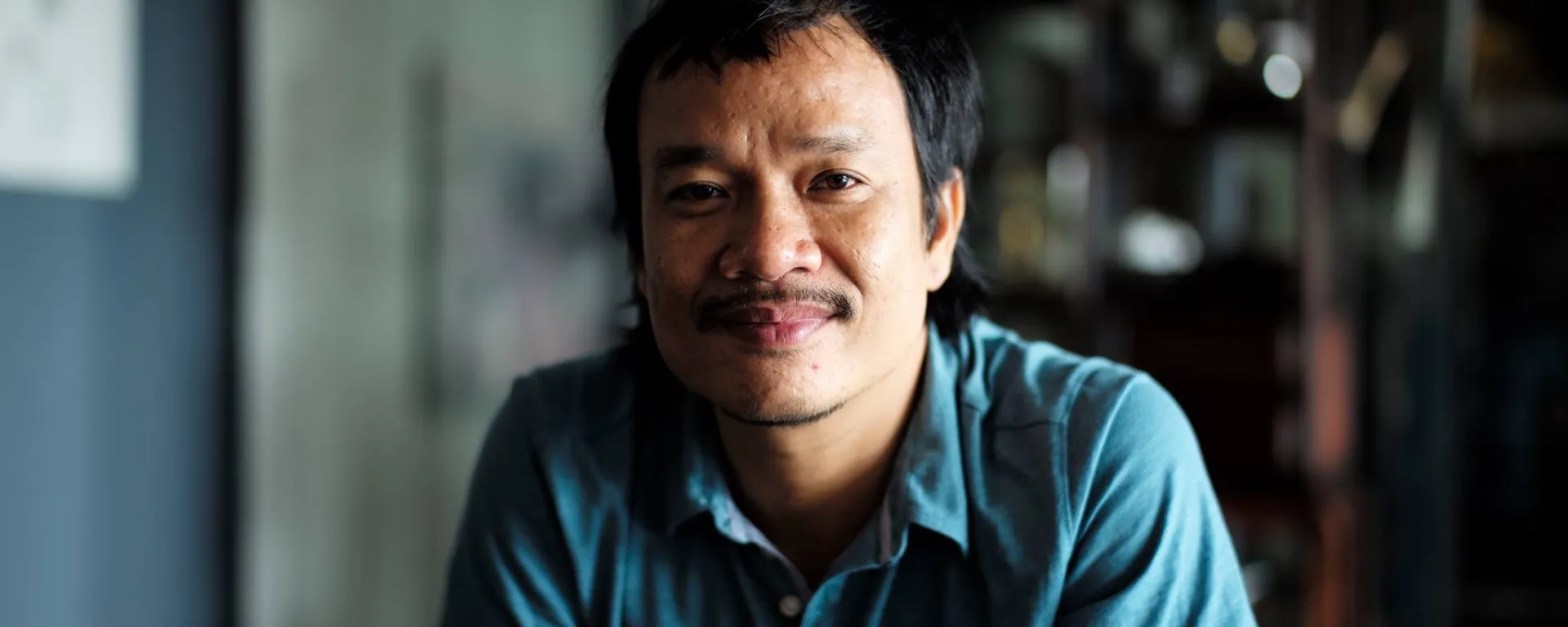
Nguyễn Đức Sơn and Lê Vĩnh Tài (source: LVT's social media page)

A poem in Vietnamese by Lê Vĩnh Tài
Translator: Nguyễn Thị Phương Trâm

Ten years and now it’s Noon (the hour of the horse)
(We meet again) by chance, I’m here (PTT)

1
soaking wet was the off-hand reply
forget it, a horseless night
unharness stunted gallops of gushing waters
chasing each other the days when we had each other
chasing each other the days when we no longer had each other

don’t run, stallion halt
stop, you and your lidless stare
or were the stallion’s eyes swollen
the imagery all broken
or languorously abreast
the night, her breast abandoned perfection
pounding hoofs, jittery canter
startled was whom, now innocently bowing
through the endless wisps of the wind
wizened eyes were the pair of flowering buds
whose muffled breath
or no longer could such canter astride destined for the road
a maddening grass strewn new fork in the road
two red pearls
three times the gate into an impossible dream

soaking wet was the off-hand reply
where we reside
overflowing into the canter of dawn
never once pained

2
by the fork in the road, the stallion was breathless
Buôn Hồ(*) a borough bathe in Tóc spring
as though by chance bathed fresh the hillocks
the unexpected endearment unintentionally crying
the encumbered meeting

drawing us into the borough was a loose button
on her bare chest bloomed the sketches of pomme de lait
her in drawings of shimmering dreams
afternoon adulation on stone benches
upon our return on wild horses
the night in pigmented strokes of languorous dreams
in dabs of purple nameless wanting
on grass-tips were the kisses, dizzy hues of forgetfulness
bright stars and drifting dark eyes
coloured in a shattered dewdrop
blending hues of greens and longing
blending hues of blooms and foliage were her caress
aching shades(of the heart)

or have the wild horses not return to the garden
the day was short and the door was left ajar, abandoned by whom
who’s playful broken promises
who will take a husband in the coming days
who will remain silent
gosh, the useless games

left behind not a single leaf
and it’s not the afternoon
left behind not a mark
Buôn Hồ oh so blue covered with moss

3
dissolving shadows the bluest of blue
her fingers the colours of clouds
drawn in ink
gosh the blues of yesteryears

like the rain withholding in tears
descending into a vessel
the pounding drum beats
new even brushstrokes
gone were the moss-green strokes of old
flying backward an arrow deluded
barely grazed the heart of the wind
absent dream, a sinking boat
her declining to be a life raft
drifting and floating away in red
_____
September 2020

http://tapchisonghuongcomvn/tap-chi/c17/n1313/Chum-tho-Le-Vinh-Taihtml

BÀI THƠ NGƯỜI TUỔI NGỰA


Mười năm rồi Ngọ
Tình cờ qua đây (PTT)

1
sau một tin nhắn vay thi thoi
ướt đẫm câu nói mớ
đêm không ngựa không yên cương phi nước chảy
đuổi theo nhau ngày tháng có nhau
đuổi theo nhau không còn nhau nữa

đừng chạy
ới chú ngựa cái nhìn không mí mắt
hay mắt ngựa bị đau
sao hình ảnh bây giờ như vỡ
hay mắt ngực rã rời
đêm nguyên vẹn ngực em buông vó
sự dằn xóc vó ngựa
ai hốt hoảng rạp đầu
cúi thơ ngây xuống triền dốc gió
hai nụ hoa mở mắt to hơn
ai vùi mình hơi thở
hay vó ngựa không phi vào con đường nữa
một ngã ba cỏ lạ điên rồ
hai viên bi màu đỏ
ba lần vào như mơ

ướt đẫm câu nói mớ
chỗ nằm của chúng ta
đang tràn qua một bình minh vó ngựa
chưa từng đớn đau

2
mỏi mệt ngựa đến ngã ba
phố huyện Buôn Hồ(*) tắm con sông Tóc
như tình cờ tắm mát cánh đồng
tình cờ yêu nhau tình cờ tiếng khóc
tình cờ nặng nhọc

ta vẽ vào phố huyện lỏng then
vẽ vào em ngực trần hoa sữa
vẽ em giấc mộng chập chờn
buổi chiều tình yêu ghế đá
ngựa hoang cùng ta quay lại
mỏi mệt mơ vẽ nét cọ vào đêm
tình tự không tên ta tô màu tím
ngọn cỏ nụ hôn ta tô màu quên
ánh sao trời như mắt lênh đênh
tô màu giọt sương bây giờ đang vỡ
pha màu thương nhớ với màu thịt da
pha màu cỏ hoa tay em âu yếm
với màu xót xa

hay ngựa hoang không trở lại khu vườn
ngày nhanh quá ai quên khép cửa
chơi trò chơi lời hứa
mai kia mốt nọ rồi ai lấy chồng
thôi bây giờ im lặng
chơi trò chơi số không

không còn một chiếc lá
nhưng không là buổi chiều
không còn một dấu vết
buôn Hồ xanh và rêu

3
xanh đến mức đã mờ chiếc bóng
ngón tay em mây trắng trên trời
vẽ bằng ngòi bút mực
xanh của ngày xưa ơi

cầm bằng nước mắt như mưa
bước chân xuống thuyền
trống đánh ngũ liên
cầm bằng nét cọ đều tiên
gạch màu rêu vẽ ngày xưa đâu mất
lừa mũi tên bay ngược phía sau
chạm hờ ngực gió
vắng mặt giấc mơ chìm thuyền
em khước từ làm phao cứu sinh
bồng bềnh màu đỏ
————————-
(*):
The borough was seen without a promise/the wind like the scattered mist up high/there was a longing without the memory of a name/the sombre melancholy The laboured old days/…
And I know dearest, the streets in the afternoon/ Like me shall be exhausted without sleep

Đã thấy phố và không còn lời hẹn/gió như là sương khói vỡ trên cao/đã thấy nhớ và không tên để nhớ/se se buồn Ngày tháng cũ lao đao/
Và anh biết em ơi chiều nay phố/ Cũng như anh mất ngủ bơ phờ
_____
SEPTEMBER 2020


Lê Vĩnh Tài, the poet and translator born in 1966 in Buon Ma Thuot, Daklak, Vietnam. The retired doctor is still a resident of the Western Highlands and a businessman in Buon Ma Thuot.

Nguyễn Thị Phương Trâm, the blogger, poet, and translator, was born in 1971 in Phu Nhuan, Saigon, Vietnam. The pharmacist currently lives and works in Western Sydney, Australia.

LÝ ĐỢI

Nhà thơ Lý Đợi (Ảnh: Họa sĩ Phạm An Hải)

in Vietnamese by Lý Đợi
translation by Nguyễn Thị Phương Trâm


Lý Đợi (1979), Born in 1978 in Khuc Luy village, Dien Minh commune, Dien Ban district, Quang Nam province. Bachelor of Literature, 2001. As of 2008, after five years of writing, he had published three solo works and approximately twenty-five collaborative works in Vietnam and abroad. His poetry and translated poems have also appeared in several literary magazines and websites in Vietnamese and English. He has also participated in poetry performances, presentations, documentary films, workshops, and exhibitions at the Goethe Institute in Korea, China, Germany, and Vietnam. A key member of the Open Mouth group, which includes Bùi Chát, Khúc Duy, Nguyễn Quán, Lý Đợi and others. He co-initiated and promoted the photocopied work printing movement in Vietnam. He co-founded the Paper Scraps Publishing House. He currently lives in Saigon and works as a journalist.

Nguyễn Thị Phương Trâm, the blogger, poet, and translator, was born in 1971 in Phu Nhuan, Saigon, Vietnam. The pharmacist currently lives and works in Western Sydney, Australia.
Vâng, để tôi làm một kẻ hề | William Shakespeare

Ta vẫn còn chơi nha. Tóc bạc mặc nhầm sắc thái nó làm trạng thái ta héo mòn đi. Cẩn thận nhé. Indigo okay, tóc màu gì cũng thấy mình tươi như hôm em vừa hôn anh lần đầu tiên. Vừa sướng vừa sợ hãi. Trời mùa đông Sydney cúm nhiều hơn là lạnh làm đầu óc nó lú. Vừa lú vừa tiền mãn kinh nó va chạm vào nhau nó chỉ muốn gây sự. Nó năn nỉ bạn bằng hai đầu gối của nó là bạn hãy chậm lại. Làm sao để chậm lại bạn có thể hỏi tôi? Sex okay, một cách thể thao và giữ ấm, trao đổi chất lỏng sẽ nâng cao lực lượng cơ thể chống lại viêm nhiễm vi rút, nên rất tốt cho sức khỏe. Như cách tôi thấy dễ hơn là bia, bia không chỉ có chất bổ của lúa mì, mà chất cồn nhẹ sẽ mang lại cho bạn sự bình yên xóa đi mọi sự lo âu v..v..của đời sống, nếu có lú hay dính vi rút gì đi nữa sẽ không còn là một vấn đề. Tin tôi đi. Tôi là dịch giả mờ.

A poem by William Shakespeare
A translation into Vietnamese by Nguyễn Thị Phương Trâm

Vâng, để tôi làm một kẻ hề:

Vâng, để tôi làm một kẻ hề:
Cùng với những trò chơi và tiếng cười tôi đón những vết nhăn của tuổi già,
Và gan nhiễm nóng vì rượu
Hơn là một trái tim đông lạnh với những tiếng than thảm thiết.
Tại sao một người đàn ông, máu vẫn còn nóng,
Khắc từ ngọc thạch ngồi đó như ông cố của mình?
Da vàng ra ngủ khi họ thức
Vì ăn tươi nuốt sống? Bạn ơi, Antonio.
Tôi mến bạn, và vì sự quý mến tôi mới nói.
Có những người đàn ông chỉ có cái mặt
Thoa kem đánh bóng như một hồ nước sáng chói,
Cố ý cứng đầu
Khôn ngoan, nghiêm nghị, tự phụ sâu sắc,
‘Ta là một Người Hiểu Biết,
Và lời của ta ai dám cãi!’
Trời ơi Antonio, tôi chỉ biết
Chỉ có những người danh tiếng khôn ngoan
Mới giữ sự im lặng không nói: khi, tôi đã hiệu nghiệm,
Nếu có nói đi chăng, thì những tai kia chỉ mà chết điếng,
Vì vậy, khi nghe họ, chỉ nghe thấy họ chửi anh em họ là những kẻ hề.

Let me play the fool:
With mirth and laughter let old wrinkles come,
And let my liver rather heat with wine
Than my heart cool with mortifying groans.
Why should a man, whose blood is warm within,
Sit like his grandsire cut in alabaster?
Sleep when he wakes and creep into the jaundice
By being peevish? I tell thee what, Antonio.
I love thee, and it is my love that speaks.
There are a sort of men whose visages
Do cream and mantle like a standing pond,
And do a wilful stillness entertain,
With purpose to be dress’d in an opinion
Of wisdom, gravity, profound conceit,
As who should say ‘I am Sir Oracle,
And when I ope my lips let no dog bark!’
O my Antonio, I do know of these
That therefore only are reputed wise
For saying nothing; when, I am very sure,
If they should speak, would almost damn those ears,
Which, hearing them, would call their brothers fools.
.
THE MERCHANT OF VENICE – W. Shakespeare


Nguyễn Thị Phương Trâm, the blogger, poet, and translator, was born in 1971 in Phu Nhuan, Saigon, Vietnam. The pharmacist currently lives and works in Western Sydney, Australia.

William Shakespeare [1564-1616] was an English playwright, poet and actor. He is regarded as the greatest writer in the English language and the world’s pre-eminent dramatist. He is often called England’s national poet and the “Bard of Avon”.

HORSES, PEOPLE, WHITE CLOUDS | Nguyễn Văn Thiện

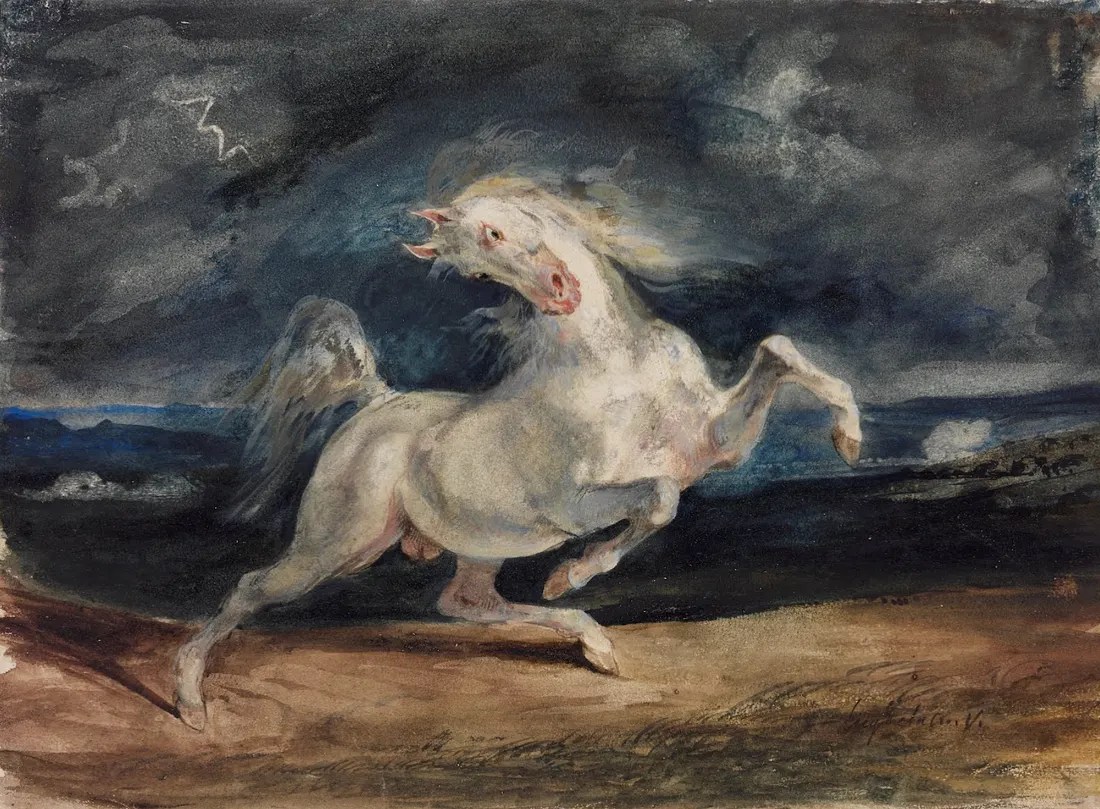
Horse frightened by lightning by Eugène Delacroix, 1825–29

A short story in Vietnamese by Nguyễn Văn Thiện
Translator: Nguyễn Thị Phương Trâm 

I fell asleep on the patio dreaming of people on white horses riding through the trees, atop the canopy. They hovered for a bit before they quietly left, the jittery horses stayed behind, cantering, and dug their hooves into the top of the trees. The horses also never wanted to stay for longer than a moment, since staying, meant they had to put up with the unbearable coolness of the spring breeze. In the morning their hoofprints would stay as fresh as those footprints left behind in the alleyway at the back of the house. But once the horses were gone, in the canopy, where the horses used to be was a grumpy gecko, mumbling, oh for heaven’s sake.

Begrudgingly I said: “Why didn’t you wake me? Which direction did the horses go?”. The gecko continued grumpily, mumbling, “It’s your fault for sleeping faced down!”. I wanted to throw a rock at it but I stopped myself. I slept with my face in the pillow; I was annoyed, but I must admit I can’t blame anyone else but myself!

I picked out seven seed-bearing fruits and conscientiously planted them in each human and hoof print, covering the holes with dirt and dust, then I waited.

I thought once the seedlings began to show, I would then go home. Those seven seeds, couldn’t all be duds, couldn’t possibly, my life, can’t be that unlucky! I chased the gecko away: “Go! I don’t want to listen to your pathetic whining”. Determined, I grabbed the tail of a silver cloud and begged: “Hey, please rain for me, right over here!”. The cloud left leaving behind its disdain. Recklessly, I took a hold of an amber ray of sunlight: “Hey, bless us with your light over here, please!”. The vain, lazy beam of light just shrugged itself from my grasp, got up, and left.

It didn’t stop me. Alone, I will make it rain, and alone I will make my light. My sweat will be the rain, my eyes the source of light, my breath the wind. The seedlings will germinate.

It felt as though the laden tiresome dreams came nearly every night, it would begin with the sound of footsteps and then the clatter of beating hoofs. And then unexpectedly, I can’t remember exactly when the green leaves broke through, they popped their heads through the earthy soil cap, and they were greener than hope. I fell back, right onto my backside, laughing out loud, I proceeded to sing a glorious melody of love.

But, the taller the tree grew, the more gangly it became, and towards the end, it was more like a bunch of knotted vines stretching for the sky.

I persisted. Even when the tree began to show no promise, alone I toiled to make it rain and light. When it comes to love and devotion I would wait another year, I could wait till next January!

The very first petals finally bloomed, they were white with hints of pink, and they were in the shape of a horse’s shoe, like the shape of perfumed lips, remnants of laughter.

I was wandering around the house, idled, dying for a drink, but I was too afraid to leave the house, I get to be a happy drunk but I might miss the people and their horses — the hoofs were like stilettos dancing on the tin roof.

Waking up day after day as though I was sleepwalking, I would automatically look for those hoofed petals. The flowers were always there, perched like they have just fallen from the sky, delicate new blooms full of anxiety.

As spring passed us by, the wind rolled across the meadow, chafing our lips. One morning after the Sun was finally awake, I stepped outside, as usual looking for my flowers, to find them gone. I suspect the wind had whisked them away like an accidental appropriation or collusion flipped over, deliberately abandoned me. 

It was evident! But there was nothing I could do, the flowers were gone. I was again left alone to make rain and light, but this time, I refused to stay and wait alone. This time I wanted another person to keep me company, another person to wait with me.

But there was no one, it made sense since I am a loner, I am unsociable! Solus, me, myself, and I was playing a dangerous game of hiding and seeking. Through the passing comments – I laughed, insults – I smiled, what kind of flower is a hoofed-shaped flower, you’re a fool – as though in a state of incapacitated childishness I laughed. I will never disclose my secrets to anyone. As the hoofprints and footprints of those visitors, they were still fresh, in my foggy web of memory.

In the middle of the night, night after night I found myself waiting for the neighing of those horses in the trees, I waited for some shadowy mirage to attend to my grave, buried dreams, anxiously I pondered if there was anyone out there like me? Carefully, I packed my bag and waited for spring, then I will head for the road, I will leave. The gecko was outside in the alley, as though he was waiting for me the whole time, its eyes followed my every step. I said, stop, stop with your cranky mumbling, especially in the middle of such lonely nights, it’s done, the horses are gone, and they will never come back. The gecko was motionless, but its eyes followed me as though it was trying to tell me something. Then there it was, the strangest thing, on the mouldy skin of the reptile, there were these white petals with hints of pink, they looked exactly like those hoofed flowers, evidence of some kind of celebration!

But what of it, the world is a big place, the sky is high, and the horizon is wide, so forget it I must, I must move on. There was something odd in the air, the wind was pungent with the scent of new grass. Hello, spring!

Ngựa, người, mây trắng

Chiều qua ngủ quên mơ thấy có người cưỡi ngựa trắng về đậu trên tán cây rộp rộp ngoài hiên rồi lại lặng lẽ đi. Người đi rồi, còn ngựa trắng thì ở lại bồn chồn gõ móng. Rồi ngựa cũng không chịu đợi lâu, vì đợi lâu, chắc là không chịu nổi gió xuân mơn mởn nên đã đủng đỉnh đi rồi. Sáng ra thấy vết chân còn mới như in ngoài ngõ. Trên vòm cây rộp rộp, chỗ đêm qua người ngựa đứng chờ, bây giờ đã có một con thằn lằn nằm im chép miệng, trời ơi…

Tôi đay nghiến: “Sao không đánh thức tao? Ngựa đi về phương nào?”. Thằn lằn chép chép chẹp chẹp mãi không thôi: “Ai bảo mày ngủ sấp!”. Tôi nhặt một hòn đá toan ném nhưng rồi lại thôi. Thì tại tôi ngủ úp mặt vào gối, đúng rồi, còn trách ai được nữa! Nhưng mà ấm ức, nhưng mà xót xa.

Tần ngần, tôi nhặt bảy hạt quả rộp rộp bỏ vào dấu chân người, dấu chân ngựa rồi lấy đất bụi lấp lại, ngồi chờ…

Tôi nghĩ, khi nào hạt nở xanh cây thì về. Những bảy hạt, không lẽ toàn là hạt lép, không lẽ, đời mình, chỉ toàn xui xẻo không thôi! Tôi đuổi thằn lằn: “Thôi mày đi chỗ khác dùm!”. Tại vì tôi không thích thở than ẽo uột. Tôi cả quyết quờ tay bắt một đám mây màu bạc: “Này, làm ơn mưa dùm vào chỗ này với!”. Đám mây khinh khỉnh bỏ đi. Tôi liều lĩnh quờ tay bắt một tia nắng mặt trời màu đỏ: “Này, làm ơn rọi dùm vào chỗ này với!”. Tia nắng kiêu kỳ lúng liếng bỏ đi…

Đã vậy, tôi cũng không cần. Tôi một mình làm mưa làm nắng, kệ tôi. Thì mồ hôi sẽ là mưa này, thì mắt nhìn sẽ là nắng này, thì hơi thở sẽ là gió này… Nào, hãy nảy mầm đi, đâm cành xanh lá đi…

Hình như đêm nào, trong những giấc mơ nặng nhọc, tôi cũng nghe thấy tiếng bước chân và tiếng gõ móng bồp bộp bên thềm. Sáng ra, thấy hạt đã nảy mầm, lòng hân hoan rạng rỡ. Rồi một ngày, không còn nhớ rõ ngày nào, những chiếc lá xanh đội đất nhú lên, xanh hơn cả niềm hi vọng. Tôi ngồi bệt xuống, vừa cười vừa hát, một bài hát yêu thương.

Nhưng không hiểu làm sao, cây càng lớn thì càng khẳng khiu, và cuối cùng thì hoá thành chùm dây leo rối rắm vươn thẳng lên trời…

Không dễ gì tôi bỏ cuộc đâu, tôi bướng lắm mà kiên trì lắm lắm. Nếu đã tin yêu rồi sẽ chờ cho đến ra giêng! Dù cây khẳng khiu, dù một mình phải làm mưa làm nắng.

Thế rồi những cánh hoa đầu tiên cũng nở, trắng phơn phớt hồng, nhưng hình móng ngựa, như hình môi thơm, như dấu vết của tiếng cười…

Những ngày qua, tôi thơ thẩn trước nhà, dù rất thèm rượu nhưng không dám đi, sợ khi mình say rồi thì người ngựa lại về đứng đợi bên hiên vắng. Đến cả trong mơ cũng còn nghe tiếng móng gõ như tiếng guốc khua giòn, náo động.

Mỗi lần tỉnh giấc, tôi lại một mình mở cửa ra nhìn những cánh hoa rộp rộp, như người mộng du. Hoa vẫn đó, như từ trời cao đậu xuống, mong manh như vừa mới lột, đầy lo âu…

Thế rồi sắp sửa sang xuân, gió cuộn mình lăn tròn qua trảng cỏ, rát mặt. Buổi sáng khi mặt trời thức giấc, tôi bước ra nhìn thì hoa không còn nữa. Tôi nghi, gió đã cuốn đi rồi, như một sự tình cờ chiếm đoạt hoặc thông đồng lật lọng bỏ tôi đi.

Dấu vết còn rành rành ra đấy! Mà thôi, dù sao cũng đã đi rồi. Giờ thì vẫn còn lại một tôi, tiếp tục làm mưa làm nắng, nhưng tôi sẽ không ngồi chờ nữa. Tôi sẽ kéo theo một ai đó, cùng chờ…

Nhưng không hề có ai cả, phải rồi, xưa nay tôi có chơi với ai đâu! Tôi một mình một cõi, tôi một mình với một trò chơi trốn tìm mạo hiểm. Ai đó đi qua, khen, tôi cười cười, ai đó đi qua, chê, tôi cũng chỉ cười, ai đó hét vào mặt, hoa rộp rộp là hoa gì, đồ ngớ ngẩn, tôi cũng chỉ biết cười, như bọn trẻ thiểu năng. Tôi không nói ra đâu, bí mật của đời tôi đó, dấu chân ngựa và người đến thăm tôi bữa nọ, vẫn còn mới nguyên trong kí ức mịt mùng…

Chỉ một tiếng ngựa hí trong đêm thôi mà chờ đợi, chỉ một bóng hình về thăm thẳm trong mơ thôi, mà nôn nao thương nhớ, có ai như mình không nhỉ? Chắc là không, vậy thì mình giống ai? Chắc chắn cũng không. Tôi xếp hành lí xong rồi, chỉ chờ gió xuân cất cánh, là đi. Vừa ra khỏi ngõ thì thấy thằn lằn nằm đợi, nhìn theo. Tôi nói, thôi, mày đừng chép miệng trong đêm vắng, dù sao thì ngựa cũng không về. Thằn lằn vẫn nhìn theo. Mà lạ chưa, trên da thịt mốc meo của loài bò sát, thấy còn in rõ ràng sắc trắng phơn phớt hồng của cánh hoa rộp rộp hôm nào, như dấu vết một cuộc giao hoan! Không lẽ là…?

Nhưng mà thôi, trời cao lồng lộng, mà thôi, gió lạ thơm mùi cỏ đã nôn nao. Chào nhé, mùa xuân!


Nguyễn Văn Thiện
Born: 1975
Home town: Anh Sơn – Nghệ An
Master in Comparative Literature and Critical Theories
Currently a high school teacher, and a prolific writer.
Editor of Chư Yang Sin (Đắk Lắk) Art and Literary Journal.

Nguyễn Thị Phương Trâm, the blogger, poet, and translator, was born in 1971 in Phu Nhuan, Saigon, Vietnam. The pharmacist currently lives and works in Western Sydney, Australia.