On The Flipped Side | Nguyễn Văn Thiện

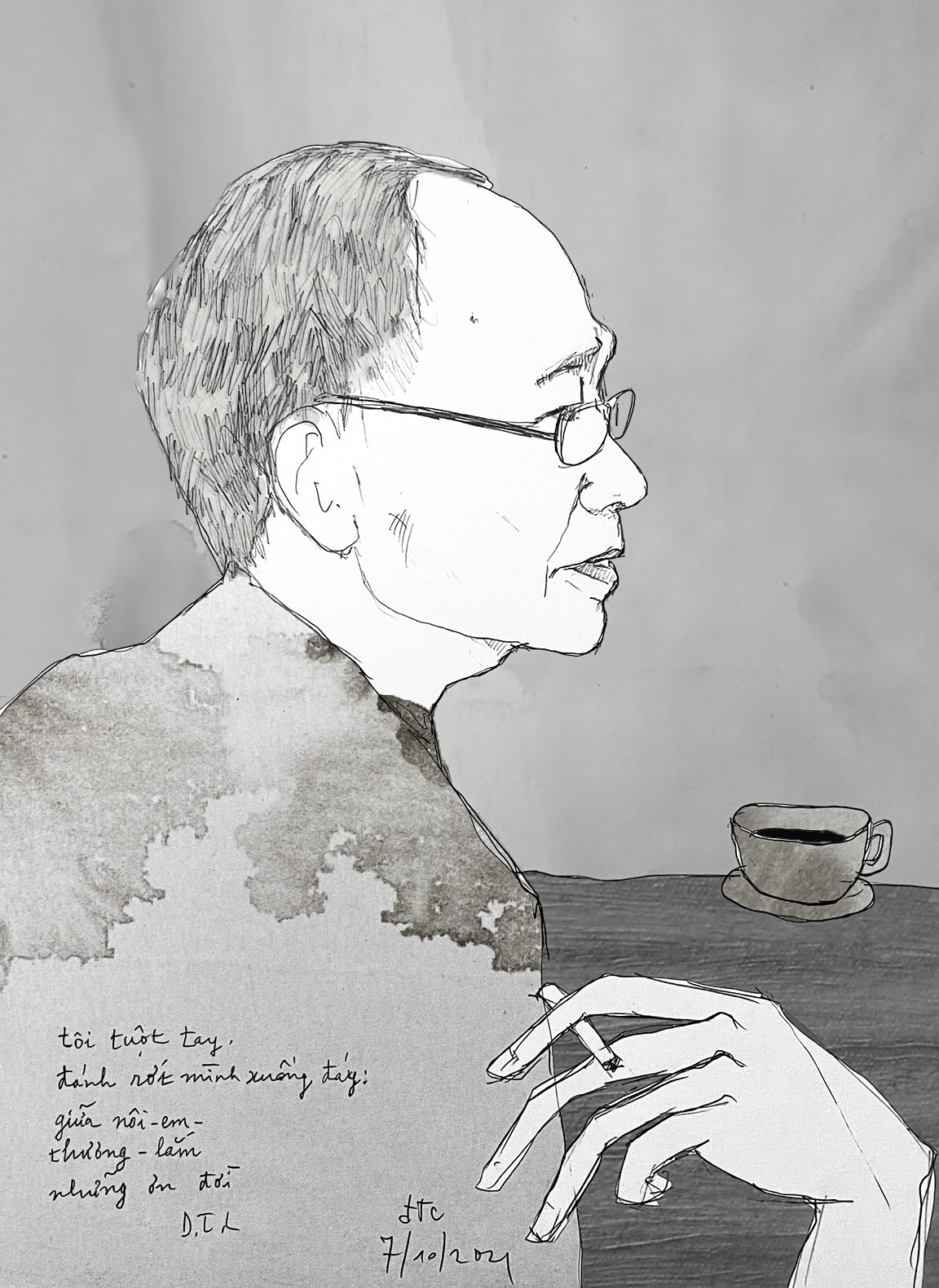
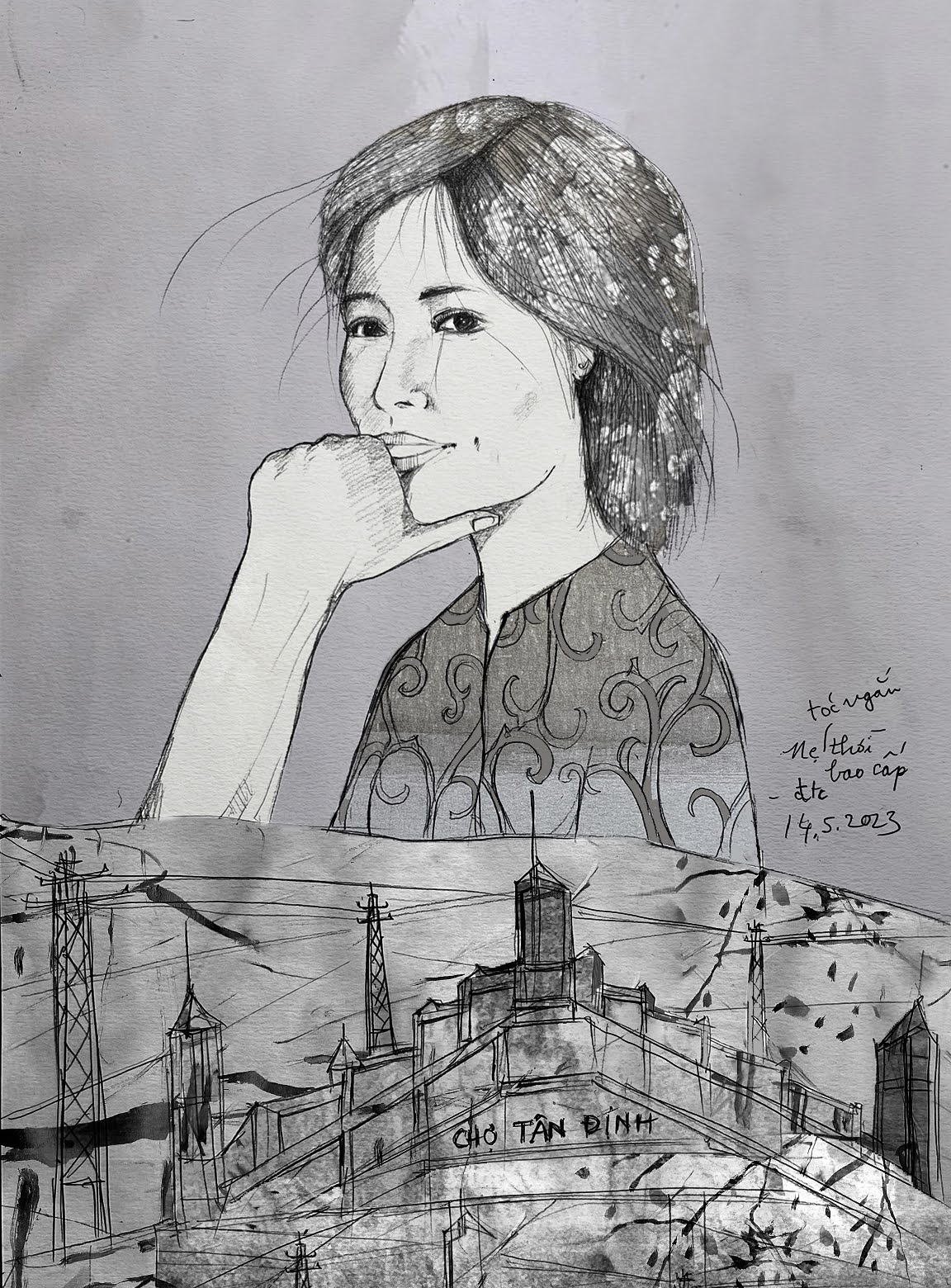
Hồ Nghe. Art by Đinh Trường Chinh

A Short story in Vietnamese by Nguyễn Văn Thiện
Translator: Nguyễn Thị Phương Trâm
Art: Đinh Trường Chinh

Something was broken, falling apart. First of all, it was a dewdrop. After that, the moon. Followed by the Sun. And then in the end after that…

Something was lost. First of all, it was a dewdrop. After that, the moon. Followed by the Sun. And then in the end…

Something was flipping. First of all then in the end…

A long time ago, we wanted to see a movie, but we didn’t have the money for tickets, so my friends and I sneaked our way to the back of the cinema and watched the movie from the other side of the screen. We watched the movie on the flipped side. The movie was not hard to follow, something about a bleeding horrid war!

I maintained this tradition from that point onward, I maintained my spot behind the screen, watching the world, watching the actors, on the flipped side.

I would wear my dark glasses!

Through the dark glasses, I viewed life like someone who was visually impaired; I viewed life through tinted glasses on the flipped side of the screen. The drop of dew broke into a violent wave as it rolled away, and the moon broke immediately into shards of ridiculous deceit. And when the Sun broke, in the chaos, I watched the flipped pieces drift away in the shape of people’s hearts.

I remained vigilant as I watched from behind the screen. Life falls to pieces, a collection of incidents, and there were faith and love, there were the exchanges of lies, more strange than the tales on Mount Chư Mang, more complicated, harder to understand.

As I watched the pieces fall apart, changing from white to black in the middle of the bright screen, a small bird, whistling passionately, its voice was proud and crystal clear. A forest materialised in an instant, just before the little bird stretched out like a rope, turned into a snake, and slithered away.

Have you ever seen, or come across anything like that? On the right side of the screen, the bird was still singing, and the audience was still in a trance. While as an abandoned delusional watcher, I saw the bird change into a snake before it slithered away, followed by a disappearing forest, leaving behind soulless drunken light, like the dull twinkling eyes of those on drugs in a dark corner in the middle of the night.

In an uncontrollable outburst, I shouted: “Hey, life is beautiful, life is good!”. On the right side of the screen, the audience was quiet, captivated by the thrill of a scene. A chase possibly, a shooting maybe, the stereo was so loud it felt as though a mountain was exploding, cracking open, erupting, like the summer hail storms. On the flipped side, shadowy forms of people were disappearing, leaving in procession, following one another into the distance—a crowd, like a wedding. There was a familiar face; it felt like we may have met some three hundred years ago in the past.

Again I shouted: “Hey, are you not a part of me!”.

The familiar face turned around, eyes squinting, searching, looked surprised, but continued to walk away with the crowd from three hundred years ago. 

A dewdrop shattered, followed by the moon.

The desire to watch from behind the screen no longer appealed to me, I wanted to finally end a habit that had become a tradition. The blurry screen was consistently deceiving my senses, and my eyes were tired. I decided to change my point of view, no more movies, I watched the crowd instead, I watched the audience on the other side of the screen, and I searched the crowd for anything that might interest me. Of course, there was nothing to see, but a jammed-packed crowd enthralled by a thrilling bloody tale. They took no notice of what was behind the screen, the sweaty nut job watching the movie through tinted glasses. I told myself; I preferred it this way! They don’t care, as the fight on the screen encapsulates them in a bubble. Admittedly from my point of view; the audience was dragged along via their noses by gifted directors and actors. They’re mesmerised, content, they’re happy. While in contrast, I was lost. Something was wrong, something was bent out of shape, I became more disturbed as I moved closer and closer to the screen, I found myself more and more frustrated, I found myself screaming: “Idiots!”. No one moved, not a millimeter, a thousand eyes still glued to the screen. “You brainless twits!”. By this point, an usher noticed me. Immediately, a handful of them heads straight for me. They pulled at my hair; my arms, and my legs, as they dragged me out of the front gate.

The leathery-skinned security guy at the gate, appeared somewhat educated, and asked me: “Did you have fun watching the movie from behind the screen?”. I said: “I don’t feel happy or sad!”. He continued, openly mocking: “Do you know what the movie is about?”. I said: “Of course, I know. Something was broken, falling apart. First of all, it was a dewdrop. After that, the moon. Followed by the Sun. And in the end…Something was lost. First of all, it was a dewdrop. After that, the moon. Followed by the Sun. And in the end…Something had flipped. First, it was then in the end…”. I was ready and prepared for the security guard to kick me in the ribs or slap me across my face, but nothing, he was silent and thoughtful, staring at the empty space in front of him. He turned slowly towards me, and met my gaze, as he silently wiped away the tears on his cheeks. He said, before I was thrown out the front gate in my large beehive glasses: “Look man, don’t watch the movie on the flipped side anymore, the bird is gone, the people here have moved on, there’s nothing left of that virtuous era of old…”.

I didn’t catch what he said at the end, his last words were drowned out by excited outbursts coming from the cinema, the audience reacting to a fast-paced, exciting, vigorous scene. Heading for the course of my life, I was no longer able to see anything else, except for a very familiar face, as though we may have met some three hundred years ago in the past.

Perhaps, I was reappearing as pieces of me patched together from three hundred years ago? That security guy, probably was someone I knew, from a time in a long gone distant past.

Only the movie on that full screen was the present day.

Something was broken, and falling apart…

Chơi trò lộn ngược

Có cái gì đó đang vỡ tan ra. Đầu tiên là một giọt sương. Sau đó là mặt trăng. Tiếp nữa là mặt trời. Và cuối cùng là…

Có cái gì đó đã mất rồi. Đầu tiên là giọt sương. Sau đó là mặt trăng. Tiếp nữa là mặt trời. Và cuối cùng là…

Có cái gì đó đang lộn nhào. Đầu tiên là và cuối cùng là…

Ta nhớ cái hồi xa lắc xa lơ đi xem phim chiếu bãi màn ảnh rộng, nhưng không có tiền mua vé, ta và các bạn bèn đứng phía sau tấm phông, và xem phim ngược. Kết quả là vẫn em xong bộ phim ấy, nhưng ở chiều ngược lại. Vẫn hiểu hết nội dung, kể về cuộc đấu tranh gì đó đại loại là đẫm máu, tuy nhiên, không rành mạch cho lắm!

Bây giờ, ta lại tiếp tục, tham dự vào một trò chơi, mà vị trí của ta là phía sau màn ảnh rộng, để xem cuộc đời, xem gương mặt các diễn viên, ở chiều ngược lại…

Vì vậy, ta thường mang kính đen!

Dù thường xuyên mang kính đen như một gã khiếm thị lơ láo nhìn đời, nhưng ta vẫn thấy cuộc sống màu hồng, bởi vì, ta đang ở vị trí phía sau màn ảnh để nhìn ngược lại. Giọt sương vỡ tan ra bỗng nhiên biến thành cơn sóng dữ cuồn cuộn cuốn đi, mặt trăng vừa vỡ tan ra lập tức trở thành những mảnh vụn dối lừa nham nhở. Và khi mặt trời vỡ tan ra thì ta bàng hoàng thấy, những nát vụn ngược xuôi không khác gì mảnh vỡ tim người.

Ta vẫn đứng phía sau màn ảnh để nhìn lên. Cuộc sống vẫn vỡ vụn và đơm đặt hình hài đủ loại chuyện kể, có tin yêu, có lọc lừa xuôi ngược, lạ hơn câu chuyện về núi Chư Mang ta từng kể cho bạn nghe, và, phức tạp, khó hiểu hơn nhiều…

Khi ta đang dõi theo những vỡ vụn đổi trắng thay đen thì giữa quầng sáng của màn hình, xuất hiện một chú chim nhỏ, đứng hót say sưa, giọng lảnh lót đầy kiêu ngạo. Và cả cánh rừng hối hả hiện ra. Liền đó, chú chim lập tức dài ra như sợi dây, biến thành con rắn, trườn đi. 

Bạn đã bao giờ xem chưa, đã bao giờ bắt gặp chưa? Phía trước màn ảnh, hình như con chim vẫn hót, khán giả vẫn say sưa và trầm trồ. Chỉ có mình ta, một khán giả bị ruồng bỏ, lạc loài với trí não đầy ảo tưởng, đã phát hiện ra, chú chim hóa rắn, và bò đi mất, cả cánh rừng cùng đã biến mất theo, chỉ còn lại quầng sáng vô hồn chiếu thẳng, như mắt người say thuốc nửa đêm…

Trong cơn tự kỷ không cách nào kiềm chế, ta hét toáng: “Ồ, đời toàn màu hồng, đẹp quá!”. Phía bên kia màn ảnh rộng cuộc đời, số đông khán giả vẫn đang nín lặng theo dõi bộ phim đang hồi gay cấn. Hình như là đuổi bắt, hình như là bắn nhau, âm thanh như lở núi, như mưa đá mùa hè. Ở phía ngược lại bên này, ta thấy những bóng hình rời bỏ, ra đi, theo con đường xa hun hút. Họ đi theo một đám đông, như là đám cưới. Có một gương mặt rất quen, như đã từng gặp ở đâu từ ba trăm năm trước.

Ta lại hét toáng lên: “Mình ơi!”.

Gương mặt rất quen ấy quay lại, nhíu mày, tỏ vẻ ngạc nhiên, rồi lại tiếp tục bước đi về phía đám đông của ba trăm năm trước.

Giọt sương vừa vỡ ra, mặt trăng cũng vừa vỡ ra…

Ta không muốn dõi theo màn hình nữa. Những hình ảnh không rõ ràng thường xuyên đánh lừa thị giác đã làm ta mỏi mắt. Ta di chuyển điểm nhìn, bây giờ, thôi đừng coi phim, mà nhìn xem, đám đông khán giả phía bên kia, có gì hay ho không. Tuyệt nhiên không có gì, chỉ là một đám đông say sưa dõi theo một câu chuyện máu me gay cấn. Họ cũng không thèm để ý rằng, phía sau bên kia màn ảnh, có một gã dở người ẩm ương đang xem phim ngược bằng cặp kính đen. Ta nói một mình rằng, ta thích thế đấy! Họ không quan tâm, câu chuyện đấm đá đang thu hút họ. Quan sát ở phía đối diện, ta nhận ra, họ đang bị gã đạo diễn giỏi nghề và những diễn viên kì cựu dắt mũi. Họ say mê, mãn nguyện vì điều đó. Chỉ còn lại một mình ta, lạc lõng đứng nhìn. Có cái gì đó là bất công, là không thỏa đáng, ta nghĩ thế, và tiến lại gần màn ảnh, hét to: “Đồ đám đông ngu muội!”. Vẫn không ai nhúc nhích, hàng ngàn cặp mắt cặp tai còn bận theo dõi màn hình. “Đồ đám đông không não!”. Đến lúc này thì có người để ý đến ta, đó là những nhân viên soát vé. Lập tức, một bọn hăm hở lao ra. Ta bị túm tóc bẻ tay lôi về phía trước cổng.

Một gã bảo vệ, có vẻ cũng có học hành, mặt đầy vẻ giễu nhại, hỏi ta: “Mày xem phim ngược từ phía sau, vui không?”. Ta nói: “Không có gì vui, không có gì buồn!”. Hắn lôi thôi hỏi tiếp, vẻ trêu chọc hiện rõ: “Mày có hiểu bộ phim kể chuyện gì không?”. Ta nói: “Đương nhiên là có hiểu. Có cái gì đó đang vỡ tan ra. Đầu tiên là một giọt sương. Sau đó là mặt trăng. Tiếp nữa là mặt trời. Và cuối cùng là… Có cái gì đó đã mất rồi. Đầu tiên là giọt sương. Sau đó là mặt trăng. Tiếp nữa là mặt trời. Và cuối cùng là… Có cái gì đó đang lộn nhào. Đầu tiên là và cuối cùng là…”. Ta đang đợi một cú đá vào mạng sườn hoặc một bạt tai từ gã bảo vệ, nhưng không, hắn ngẩng mặt ra nhìn, rồi nhìn ta, lặng lẽ gạt nước mắt. Trước khi ta bước ra cổng với cặp kính đen như hai tổ ong trên mặt, hắn nói theo: “Này, anh kia, về đi, đừng bao giờ đi xem phim ngược nữa, chim đã bay đi, người cũng đã thay hình đổi dạng, sẽ không còn gì là khảm khắc kinh cũ…”.

Mấy chữ cuối hắn nói, ta nghe không rõ, vì tiếng đám đông khán giả vừa ồ lên át mất. Chắc là phim lại đến cao trào. Ta bước đi về phía cuộc đời, không còn thấy gì nữa, ngoài một gương mặt rất quen, như thể đã từng gặp đâu đó khoảng ba trăm năm trước.

Không lẽ, ta bây giờ là ta của ba trăm năm trước hiện về? Gã bảo vệ kia, không lẽ, lại là người thân quen, từ xứ sở nào của quá khứ hiện về?

Chỉ có bộ phim trên màn ảnh rộng kia, là của ngày hôm nay.

Có cái gì đó đang vỡ ra…

Nguyễn Văn Thiện
Born: 1975
Home town: Anh Sơn – Nghệ An
Master in Comparative Literature and Critical Theories
Currently a high school teacher, and a prolific writer.
Editor of Chư Yang Sin (Đắk Lắk) Art and Literary Journal.

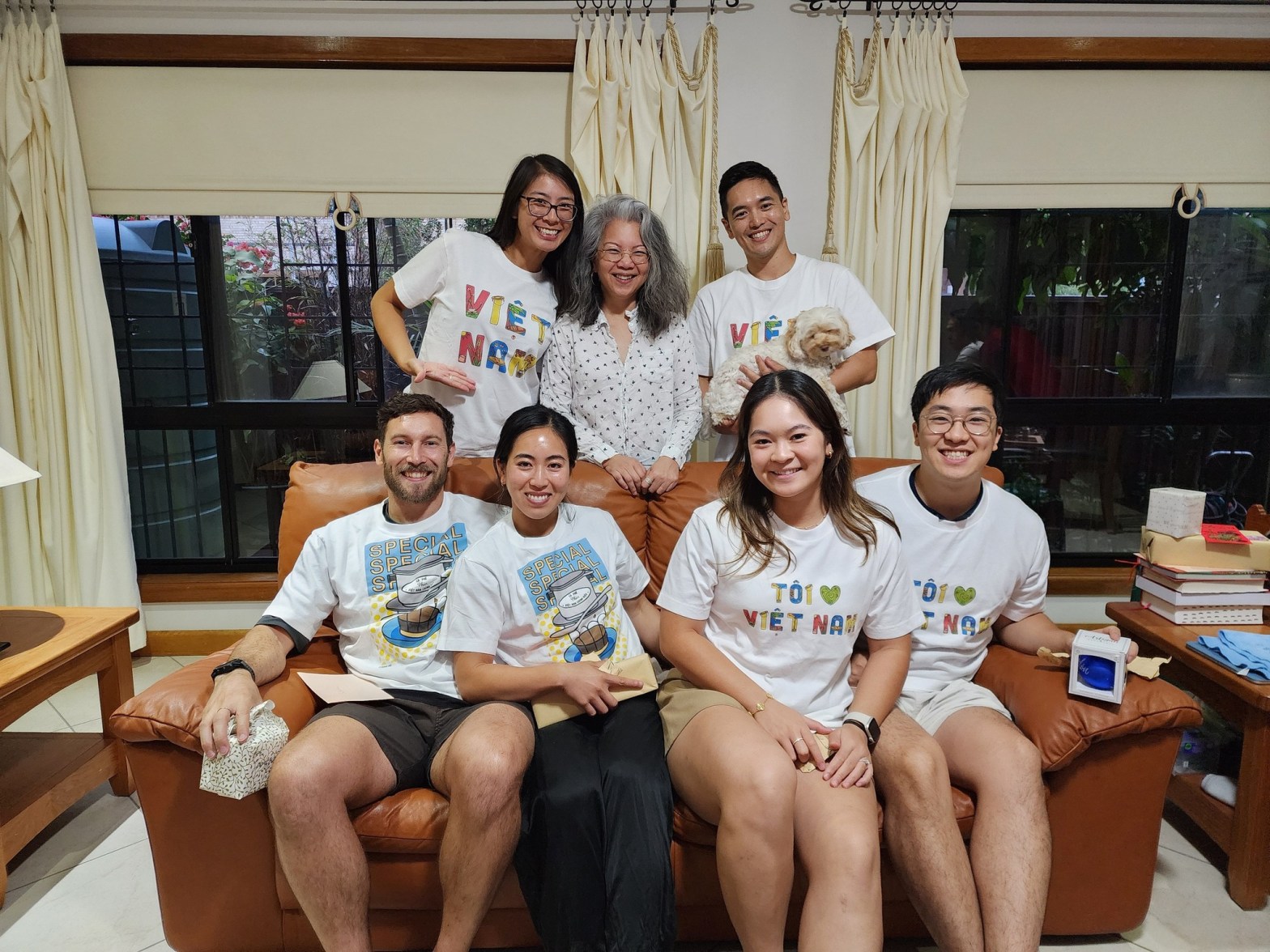
Nguyễn Thị Phương Trâm, the poet and translator, was born in 1971 in Phu Nhuan, Saigon, Vietnam. The pharmacist currently lives and works in Western Sydney, Australia.

Take me to the sea when I’m gone – Khi tôi chết hãy đem tôi ra biển | Du Tử Lê

Du Tử Lê by Đinh Trường Chinh

A poem in Vietnamese by Du Tử Lê
Translator: Nguyễn Thị Phương Trâm
Art: Đinh Trường Chinh


A translation for my father.

I learned the poem through my father, as a teenager, I never fully grasped the profound yearning and sadness in Du Tử Lê’s poem. Until I had translated the very last line, I finally had a glimpse of my father’s pain and the pain of soldiers like him; “The eternal exile of my soul”. 

I am sorry, I am sorry for your pain, I am sorry for your loss, I am sorry it has taken me so long, I am sorry it has taken an entire lifetime. 

Trâm


Take me to the sea when I’m gone


a life exiled shall never fill a barrow
nor the alien soil break down the flesh
how could a stagnant soul return home


Take me to the sea when I’m gone
the riptides shall take me
on the other side of the sea is my homeland
the bamboo groves evergreen through the ages


Take me to the sea when I’m gone
but don’t be in a rush to close my eyes
let my eyes set upon my homeland alas
just in case my body never reaches its destination


Take me to the sea when I’m gone
don’t hesitate ‘cause you’re worried about me
so many were fish food not long ago
another dried up corpse matters not


Take me to the sea when I’m gone
so I may meet again my children
so I may see the falling tears
from eyes sadder than the dark


Take me to the sea when I’m gone
sing the national anthem on the way
so long since it’s been sung
(the song is now a spectre)


When I’m gone the sadness too shall be gone
the eternal exile of my soul.

[March 2021]

Khi tôi chết hãy đem tôi ra biển


đời lưu vong không cả một ngôi mồ
vùi đất lạ thịt xương e khó rã
hồn không đi sao trở lại quê nhà


Khi tôi chết hãy đem tôi ra biển
nước ngược dòng sẽ đẩy xác trôi đi
bên kia biển là quê hương tôi đó
rặng tre xưa muôn tuổi vẫn xanh rì


Khi tôi chết hãy đem tôi ra biển
và nhớ đừng vội vuốt mắt cho tôi
cho tôi hướng vọng quê tôi lần cuối
biết đâu chừng xác tôi chẳng đến nơi


Khi tôi chết hãy đem tôi ra biển
đừng ngập ngừng vì ái ngại cho tôi
những năm trước bao người ngon miệng cá
thì sá gì thêm một xác cong queo


Khi tôi chết hãy đem tôi ra biển
cho tôi về gặp lại các con tôi
cho tôi về nhìn thấy lệ chúng rơi
từ những mắt đã buồn hơn bóng tối
Khi tôi chết hãy đem tôi ra biển
và trên đường hãy nhớ hát quốc ca
ôi lâu quá không còn ai hát nữa
(bài hát giờ cũng như một hồn ma)


Khi tôi chết nỗi buồn kia cũng hết
đời lưu vong tận tuyệt với linh hồn.


Du Tử Lê, born 1942, Kim Bang, Ha Nam, Vietnam. The poet was the author of more than 70 publications. He graduated from Saigon University of Literature, and he was an intern at a newspaper in Indianapolis, Indiana (1969). The poet died in 2019, in Garden Grove, California, United States.

Nguyễn Thị Phương Trâm, the blogger, poet, and translator, was born in 1971 in Phu Nhuan, Saigon, Vietnam. The pharmacist currently lives and works in Western Sydney, Australia.

30 tháng tư | Đinh Trường Chinh

A poem in Vietnamese by Đinh Trường Chinh
Translator: Nguyễn Thị Phương Trâm

April
I’ve got nothing to lose
no Saigon childhood
no mornings sitting at Brodard
nor La Pagode at dusk
nor Đêm Màu Hồng
nor Tự Do
no longer are the cool shades along Duy Tân
nor sugary lemonade sweetened via your lips


April
there’s nothing I desire
not a poem in my attache
standing in front of Gia Long
no Thái Thanh’s endless separation
no Thanh Thuý’s the tears upon the dance floor
no Bích Chiêu stretching out the boulevard
no ngày-xưa-Hoàng-Thị
no back and forth shouts of hey sweetie


April
I have nothing
besides a pair of broken thongs
watching a battalion in green, metal helmets
on a truck passing by our house singing
hands waving flags in the three colours of red, yellow, and blue
my morning watching
thousand and thousands of books
thrown into the fire in our backyard
hundreds of my father’s paintings
chopped into wood chip for the stove
the floral áo dài
my mother’s heels
scattered across the floor


April
noon
I’m home from school
the thrown open door
greeting strangers
in our lounge room
at their feet, the banana peel
they poured their tea
from my grandmother’s antique pot
served my parents
thoughtlessly
April
besides a city
lost of its name
What do I have left to lose ?


April 2018

NB It took me three years to fully translate the poem, perhaps it was not within my vernacular, perhaps I had found it was difficult for me to bring back to the surface such personal pain I don’t truly know But, I often find the words choked up at the back of my throat, the pause The pause of three years
April 2021
—-


30 tháng tư


tháng tư
tôi không có gì để mất
tôi không có tuổi trẻ thơ mộng ở Sài Gòn
không có những sáng ngồi Brodard
chiều La Pagode
không Đêm Màu Hồng
không cả Tự Do
tôi không có chiều Duy Tân bóng mát
không ly chanh đường uống ngọt môi em


tháng tư
tôi không có gì để nuối
không bài thơ nào trong cặp sách
đứng trước Gia Long
không Thái Thanh nghìn trùng xa cách
không Thanh Thuý rơi lệ vũ trường
không nghe Bích Chiêu nối dài đại lộ
không ngày-xưa-Hoàng-Thị
không có ai để gọi nhau bằng cưng

tháng tư
tôi có gì đâu
ngoài đôi dép nhựa đứt quai
đứng nhìn đoàn người áo xanh nón cối
hát ca trên chiếc xe tải đi qua nhà
tay phất cao lá cờ ba màu đỏ, vàng, xanh
tôi có một buổi sáng
đứng nhìn ngàn ngàn cuốn sách
bị ném trong đám lửa sau vườn
vài trăm bức tranh của Bố
chặt ra làm củi nấu cơm
những chiếc áo dài hoa
và nhiều đôi giày gót cao của Mẹ
vất vãi đầy sàn

tháng tư
tôi chỉ có một buổi trưa
đi học về
tông cửa chạy vào
khựng thấy những người lạ mặt
đang ngồi trong phòng khách nhà
vỏ chuối vất dưới chân
và họ rót chè
bằng ấm trà cổ Bà Nội để lại
mời Bố Mẹ tôi uống
rất vô tư
tháng tư
ngoài một thành phố
vừa mất tên
tôi có gì để mất ?


Đinh Trường Chinh, the poet, and artist was born in 1970 in South Vietnam. The poet currently works in IT in Virginia, U. S. A.

Nguyễn Thị Phương Trâm, the blogger, poet, and translator, was born in 1971 in Phu Nhuan, Saigon, Vietnam. The pharmacist currently lives and works in Western Sydney, Australia.

EM & ME | Lê Vĩnh Tài [421]

A poem in Vietnamese by Lê Vĩnh Tài
Translator: Nguyễn Thị Phương Trâm

THIRST

I want to share with you
what’s on my mind

the thirst
the way I miss you

but I can’t

the suggestion of me that shall be forgotten
Literally, it is my ghost

I’M BACK TO FEELING THE WAY I DID ONCE UPON A TIME


I prefer the past
so I’ll stay there
and wait for my turn

even on my dead bed
the worries will continue to plague me
she thinks it’s crazy, me watching
a dim light dangling from the ceiling of a room
big enough for one person
fall

shatter
turning her into inky darkness

me
even in the dark I could
discern life
because I have more than
enough light

then again, I’m but
a breath

she laughed: lucky for you
now, it is nothing
but the past

November 2023
____

I ALLOWED DEATH TO RUN AFTER ME

I don’t know who’s faster
but I hope we can eventually
be friends

not me
but death is still far too young
to die

I’m human still
learning to love my fill
I can’t die until
all the pain is paid
in full

because she is coursing through my vein
I must survive and live
not in vain

with the stack of old books
with the collection of her anthologies
that I will read until nothing is left
until the pages are crumbling before
she believes me

– the only way you will survive is to read all of it
bar none, the pain of love is reserved for all

December 2023
_

YOU ARE LOVE


do you want to stand here
right by my side
and watch the sunrise?

(today
tomorrow
and the day after
forever)

you(dear love)
my lover

we failed at planning
anything
for an affair
(resolute)
reaching a point of realization

December 2023

Nguyễn Thị Phương Trâm

KHÁT KHAO


tôi muốn chia sẻ
từ tâm trí mình

về nỗi khao khát
về cách tôi nhớ bạn

nhưng tôi không thể

ý tưởng mình sẽ bị lãng quên
chính là bóng ma của tôi


CUỐI CÙNG TÔI QUAY LẠI CẢM GIÁC CŨ


tôi thích quá khứ hơn
và tôi sẽ ở đó
xếp hàng chờ đến phiên mình

ngay cả khi chết
có thể tôi sẽ mắc chứng bệnh lo âu
mà nàng nói là điên rồ, tôi
nhìn một ngọn đèn mờ
treo trong phòng đủ cho một người
rơi xuống

vỡ tan
làm nàng tối đen như mực

tôi
thậm chí cả trong bóng tối
cũng nhận ra cuộc sống
vì tôi ánh sáng
quá nhiều

nhưng thôi, tôi chỉ là một hơi
thở

nàng cười: may cho chàng
thôi, mọi thứ đã qua


TÔI ĐỂ CÁI CHẾT CHẠY THEO


không biết nó có chạy nhanh hơn tôi không
và tôi hy vọng
cuối cùng chúng tôi là bạn

không phải tôi mà cái chết còn quá trẻ
để chết

tôi vẫn là một con người
tập cách yêu thương
không để mình chết
không để mình đau khổ mà không được gì

vì nàng chảy trong huyết quản
tôi, phải sống

với một giá sách cũ kỹ
với một tuyển tập của nàng
mà tôi phải đọc đến nát tan
nàng mới tin là tôi thuộc

– cách duy nhất để chàng được sống, là đọc nó
tất cả chúng ta đều đau khổ khi yêu

EM CHÍNH LÀ TÌNH YÊU


bạn có muốn
cùng tôi đứng đây
ngắm mặt trời mỗi sớm không?

em,
người yêu của anh

chúng ta thất bại trong việc lên kế hoạch
cho một cuộc tình
gần như đã hoàn thành


Lê Vĩnh Tài, the poet and translator born in 1966 in Buon Ma Thuot, Daklak, Vietnam. The retired doctor is still a resident of the Western Highlands and a businessman in Buon Ma Thuot.

Nguyễn Thị Phương Trâm, the blogger, poet, and translator, was born in 1971 in Phu Nhuan, Saigon, Vietnam. The pharmacist currently lives and works in Western Sydney, Australia.

Here’s some brutal honesty. | Nguyến Thị Phương Trâm

No different to elitists, those who are good translators do not need accolades, their work is their reward, they live it. Those who believe they are gods succumbs to mere popularity(the comrade’s way), they are slaves to fame “Do you know who I am!”..

So many people who have sold their soul for so little. They do not understand the word integrity.

But, each to their own. Just fuck off and leave me alone. I don’t need that kind of shit around me. If you want to intimidate me. Grow a pair of balls first or at least have talent. Otherwise piss off and do not waste my time.

Who ever wants to tell me to “calm down” can just as well FUCK OFF! I’m not 5 and neither are you. GROW THE FUCK UP! MY CHILDREN DID. TAKE ALL THE FUCKEN SCREEN SHOTS YOU WANT.

Honesty is not a sin. But what is sinful is a man who has no talent and loves paying for sex. 🙂

5 bài thơ cho Mẹ | Đinh Trường Chinh [48]

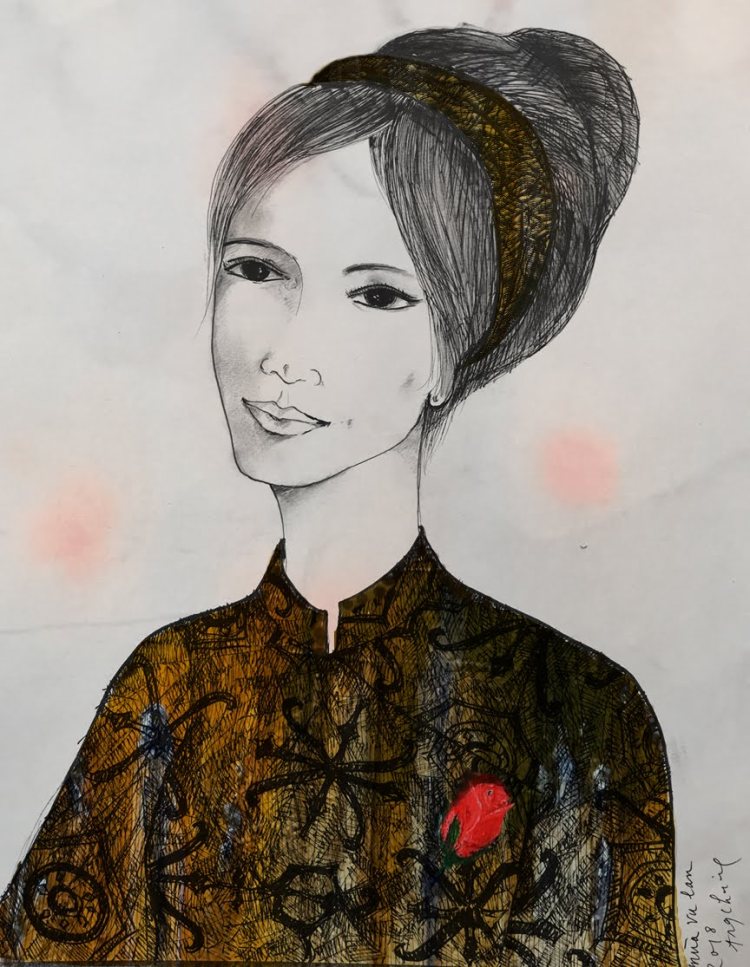
Đinh Trường Chinh's portrait of his mother

A poem in Vietnamese by Đinh Trường Chinh
Translator: Nguyễn Thị Phương Trâm
Art: Đinh Trường Chinh

the afternoon visiting my mother
through the hanging tree line
my mother sits in the dark
exhaling the days in quietude

– Who’s there?
– it’s me mum

sitting like a statue in the cold
warming one’s hands over
a fire hanging up one’s soul

a soul hung out to dry?
laden sadness in one’s eyes
the fading colour of my mother’s hair
the uncountable days faired

the moon barely rising and my mother already
embody a silent ripe moon
a waning lifetime a moment too soon.

𝔅à𝔦 1


chiều ghé về thăm mẹ
qua hàng cây liêu xiêu
mẹ ngồi trong bóng tối
thở những ngày quạnh hiu

-ai đó ?
– con về đây

ngồi sửng im ngày lạnh
hơ tay bếp lửa chiều
phơi cho hồn ráo tạnh

hồn ráo tạnh bao giờ
lòng ai không là tết
tóc mẹ giờ bạc phơ
đếm ngày qua không hết

trăng vừa đầy cho đêm
mẹ là rằm tịnh lặng
con mãi khuyết một đời
đời chưa dài
đã ngắn.

Đinh Trường Chinh’s portrait of his mother

here to see my mother one afternoon
one year
one cycle of the moon

my mother is a raindrop
and yet wet his her children’s life

memories in the front yard
waiting for our mother
to come home

now our mother’s heart is hard-pressed
by all the waiting
for her children to come home.

𝔅à𝔦 2


về đây thăm mẹ một chiều
một năm
một tháng
liêu xiêu một đời

mẹ là một giọt mưa rơi
mà sao thấm cả khoảng đời con xa

nhớ xưa ngồi trước thềm nhà
chiều trông ngóng bước chân xa mẹ về

chừ sao lòng mẹ bộn bề
trông con biền biệt chưa về thăm me.

Đinh Trường Chinh’s portrait of his mother

the afternoon serving mother
a bowl of rice
combing the glimmering dew
in mother’s hair

listening to mother’s words
of impermanence
lingering sadness and joy
as though none

will death be as light
as a feather in contrast to life
amidst the memory loss
standing, waiting
for her children
to come home

𝔅à𝔦 3


đơm cho mẹ
chén cơm chiều
chải cho mẹ
mái tóc nhiều điểm sương

nghe mẹ nói lẽ vô thường
có buồn, vui đó
mà dường như không

đời đâu nhẹ tựa lông hồng
giữa quên và nhớ
đứng trông con về.

Đinh Trường Chinh’s portrait of his mother

popped into the market for a pot of orchid
on the way to see my mother in July
closed buds ready to bloom on the side
of an autumn barely here

orchids for my mother’s birthday, the years
beyond her recollection
blooming flowers and forgotten seasons
time cowers and silent

popped in to see my mother in August
the orchids did not persist
left behind the bare stems
to my mother, all the same.

𝔅à𝔦 4


tháng bảy về thăm mẹ
ghé chợ mua chậu lan
những nụ hoa chưa nở
mùa thu vẫn chưa sang

mua lan mừng tuổi mẹ
mẹ quên mất tuổi mình
quên mùa hoa đang rộ
trong ngày tháng lặng thinh

tháng tám về thăm mẹ
lan đã rụng hết rồi
mẹ chỉ còn giữ lại
những nhánh gầy trơ thôi.

Đinh Trường Chinh’s portrait of his mother

the afternoon stewing a pot of fish
the caramelised bittersweetness of my mother’s cooking
the day setting, evaporating
life, bone withering

memories of mother’s lullabies
shimmering pots of tiny fish
memories of father’s lullabies
red cotton flowers

father has now gone to a far-off place
mother unable to sit up on any rainy day
the afternoon gnawing on fish bones
warm still is the meal of my childhood…

𝔅à𝔦 5


chiều nay kho trách cá
ăn nhớ mẹ mênh mang
ngày
cũng vừa xuống cạn
đời
cũng lúc xương tan

nhớ ngày xưa mẹ ru
bằng nồi rim cá nhỏ
nhớ ngày xưa ba ru
bằng màu hoa gạo đỏ

ba rồi đi xa mãi
mẹ rục những ngày mưa
chiều nay ăn khớp cá
còn nóng
bát cơm xưa….


Đinh Trường Chinh, the poet, and artist was born in 1970 in South Vietnam. The poet currently works in IT in Virginia, U. S. A.

Nguyễn Thị Phương Trâm, the blogger, poet, and translator, was born in 1971 in Phu Nhuan, Saigon, Vietnam. The pharmacist currently lives and works in Western Sydney, Australia.

NGUYỄN THANH THỦY

thơ Nguyễn Thanh Thủy
người dịch Nguyễn Thị Phương Trâm


Nguyễn Thanh Thủy is a poet currently living in Vietnam.

Nguyễn Thị Phương Trâm, the blogger, poet, and translator, was born in 1971 in Phu Nhuan, Saigon, Vietnam. The pharmacist currently lives and works in Western Sydney, Australia.